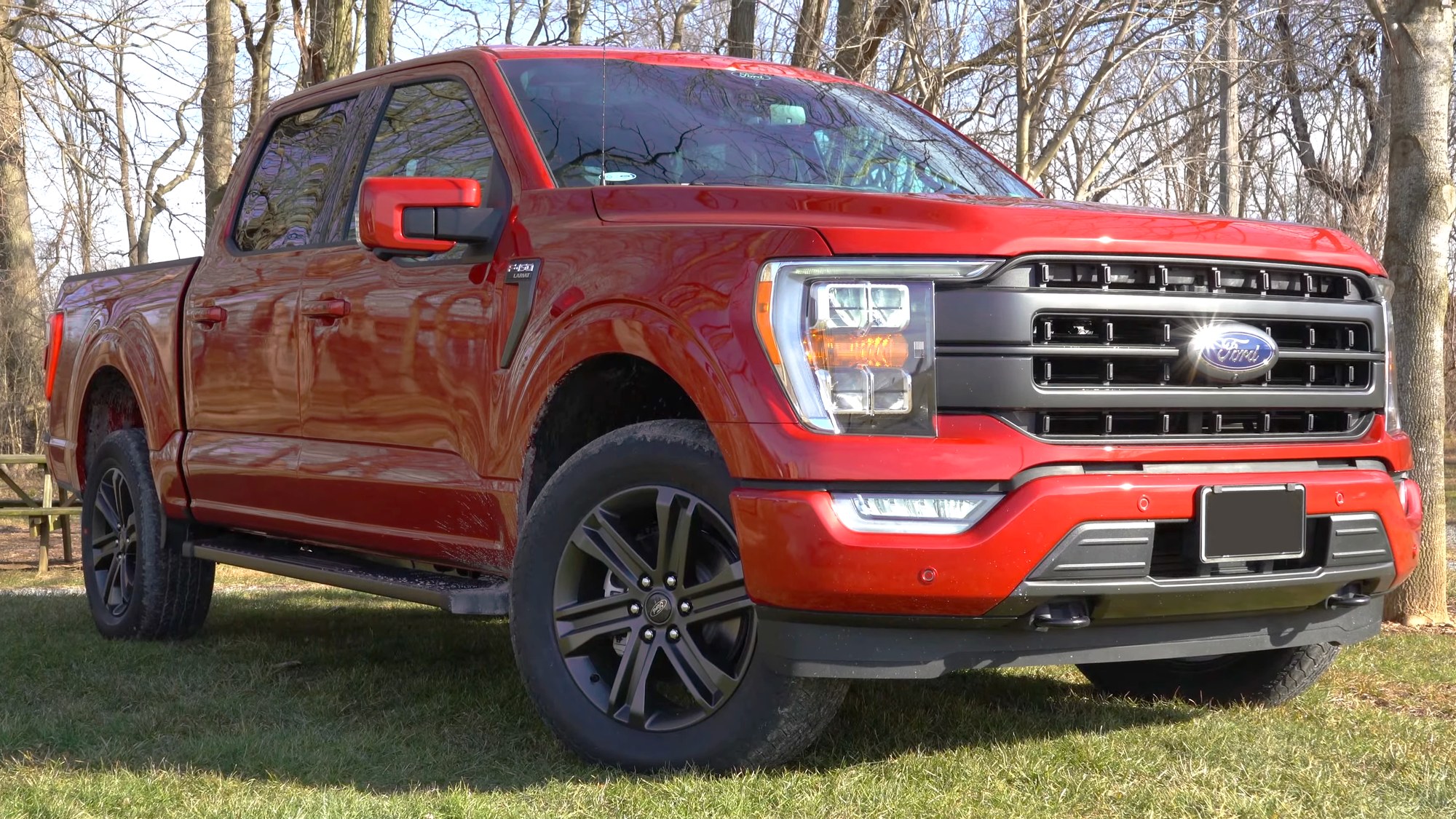
A fuel tank that is not properly secured to a truck’s frame can do more than rattle loose over time. It can leak fuel or detach entirely while the vehicle is moving. Ford has told the National Highway Traffic Safety Administration that this is possible on 223,472 F-150 pickups built across five model years, and dealers will inspect and replace the tank’s mounting straps at no charge wherever the defect is found. The recall does not require an owner to notice a symptom first; coverage runs by VIN across the affected build range. A loose fuel tank is the kind of defect that can go unnoticed for months of ordinary driving before it fails without warning, which is why Ford’s remedy is framed as a preventive inspection rather than a wait-and-see repair.
The Defect Ford Disclosed To Regulators
Recall campaign 26V578, filed under Ford’s internal number 26S69, describes a fuel tank mounting that “may be inadequate,” which can let the tank leak fuel or come loose while the truck is being driven, according to the recall record on file with NHTSA. The agency’s stated consequence covers two separate hazards: a road hazard from an unsecured tank striking the pavement or another vehicle, and a fire risk if leaking fuel reaches a heat source. Ford reported the defect to NHTSA on September 9, 2026. Unlike a warning light or a display defect, a fuel-tank mounting failure has no dashboard indicator at all, which is part of why NHTSA’s filing treats coverage as running by build range rather than by any symptom an owner could be expected to catch on their own.
NHTSA’s component classification for campaign 26V578 identifies the specific part group as the tank assembly’s mounting hardware, distinct from the tank itself, meaning the recall targets the straps and brackets holding the tank in place rather than the tank’s structural integrity. That narrower scope is also why Ford’s remedy is a strap inspection and replacement rather than a full tank replacement, a simpler and faster repair for both the dealer and the owner once a truck is in the service bay.
Inside the guide: A claim log and payment tracker, together with a large-print quick-start, are built for logging exactly this kind of inspection outcome across more than one dealer visit, whether a truck’s straps were replaced or found sound. Open The Settlement & Refund Recovery System.
Which F-150s Are Covered, By Model Year
The 223,472 trucks under campaign 26V578 span model years 2023 through 2027, meaning the affected range includes trucks built as recently as the current model year alongside trucks now three years old. NHTSA’s VIN search tool has listed the covered range since September 14, 2026, letting an owner check a specific truck without waiting for a letter to confirm it. Because the range covers trucks spanning the outgoing and current model years plus the newly introduced 2027 model, a buyer shopping for a used F-150 in the coming months should expect campaign 26V578 to come up on a VIN check regardless of which recent model year they consider.
A recall spanning five consecutive model years, from 2023 through the newly introduced 2027, shows the tank-mounting hardware in question carried through multiple production cycles before the defect was reported widely enough to trigger a federal filing on September 9, 2026. That the 2027 model year, only recently in production, is already included tells owners the issue was not resolved by whatever design or supplier changes separate one model year’s F-150 from the next.
The Free Strap Replacement And Its Timeline
Ford’s remedy, as described in the NHTSA filing, is that “dealers will inspect and replace the fuel tank straps, as necessary, free of charge.” Owner notification letters were expected to begin mailing September 21, 2026, and any owner who wants to confirm coverage or schedule service sooner can contact Ford directly at 1-866-436-7332, citing Ford’s recall number 26S69. Because the remedy is “as necessary,” a truck that inspects clean may not need new straps installed; the free replacement applies once a dealer confirms the defect is present. Ford has not attached a repair deadline to the campaign, so an owner who cannot get an immediate appointment is not at risk of losing the free remedy by scheduling service a few weeks out rather than the same week a letter arrives.
Ford’s own recall number, 26S69, sits alongside NHTSA’s 26V578 designation, a dual-numbering system automakers use so a dealer’s internal service records and the federal recall database both point to the same repair without requiring the customer to know which number applies where. An owner calling Ford’s customer line at 1-866-436-7332 can reference either number, since both point to the same inspection-and-strap-replacement remedy described in the federal filing.
The Added Cost Of A Fuel Leak On The Road
A dropped or leaking fuel tank is not a cosmetic problem: beyond the collision risk NHTSA cites, a fuel leak wastes gas an owner has already paid for and can strand a vehicle far from home, adding a tow bill to a repair that campaign 26V578 otherwise covers at no cost. That gap between a free dealer repair and an expensive roadside failure is exactly why NHTSA’s consequence language frames the defect as both a fire risk and a collision risk rather than a simple performance issue. For an F-150 owner who relies on the truck for regular driving, the free strap replacement removes both the safety exposure and the out-of-pocket risk of an emergency repair discovered on the road rather than caught at a scheduled dealer visit. A truck used for towing or hauling adds weight and vibration that a compromised strap is less equipped to withstand, which is one more reason the inspection is worth scheduling promptly even though Ford has set no fixed deadline for it.
What “As Necessary” Means For An F-150 Owner
Ford’s fuel-tank recall covers 223,472 trucks, but the remedy language, dealers will replace the straps “as necessary,” leaves the actual outcome of an inspection unrecorded anywhere but the service invoice a customer has to keep track of personally. An owner who is told no replacement was needed has no separate confirmation to fall back on if the same truck is inspected again later.
The Settlement & Refund Recovery System’s claim log and payment tracker, paired with its step-by-step filing walkthrough, are built to hold that kind of inspection-and-outcome record across more than one dealer visit.
Read the walkthrough before the next service appointment: The Settlement & Refund Recovery System.
This article was produced with AI assistance and checked against the primary sources linked above.