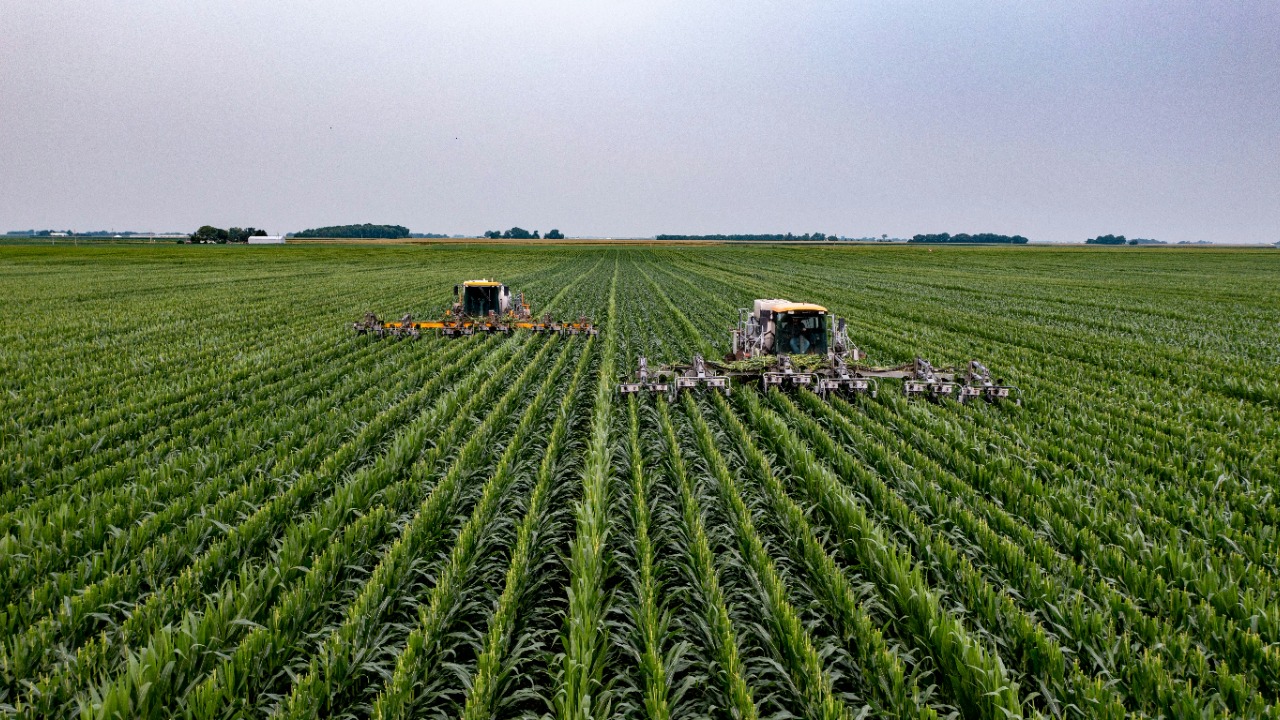
A farmer who sells land at retirement could be allowed to spread the resulting tax bill over four years under regulations that Treasury and the Internal Revenue Service proposed on Sept. 28, 2026. The plan is a proposal, not a final rule, and comments are open until Nov. 30, 2026. If adopted as written, it would replace one large payment in the year of sale with four equal annual payments of 25% each.
Section 1062 and the proposed installment election
The proposal implements Section 1062 of the Internal Revenue Code, which was added by the One, Big, Beautiful Bill Act signed July 4, 2025, as described in the Federal Register notice, document 2026-19888, published Sept. 29, 2026 under REG-117095-25. The IRS news release, IR-2026-115, says the rules would apply to qualified sales or exchanges in taxable years beginning after July 4, 2025. Nothing in the proposal is binding until Treasury finalizes it. The IRS current-month news release index confirms the Sept. 28 release date.
IRS chief executive Frank J. Bisignano said in the release that “farmers should have practical options when farmland is sold,” and that the rules would help keep farmland in agricultural use. The election is aimed at sellers who would otherwise owe the whole tax on a large gain in a single year.
Who would count as a qualifying seller and buyer
The proposal grows out of the same law that created the deductions for tips, overtime, car-loan interest and older filers, which the IRS describes on its One, Big, Beautiful Bill Act summary page. Section 1062 is a separate provision, though, and it deals with when tax on a sale is paid rather than how much income is taxed. It would be relevant only to sellers who fit the narrow definition below.
Under the proposal, qualified farmland property must be real property in the United States that was used for farming, or leased to a qualified farmer, during substantially all of the 10 years before the sale. That test is the reason the proposal speaks to retiring farmers: a seller has to have a long farming record with the land. A parcel bought a few years earlier as an investment would not fit that description.
The buyer must be an individual actively engaged in farming. The Federal Register notice defines a qualified farmer by reference to the federal agricultural rules at 7 U.S.C. 1308-1(b) and (c), so the buyer’s own farming activity, not just a purchase agreement, is what gets tested. A sale to a corporation or an investor would fall outside the election as the IRS describes it.
The 10-year covenant that follows the land
The property must also carry a legally enforceable restriction barring non-farm use for 10 years after the sale. According to the Federal Register notice, that covenant would run with the land and be recorded before or together with the deed transfer. The practical effect is that the seller’s tax break comes with a limit on what the new owner may later do with the land, which is worth raising with the buyer before a contract is signed.
The IRS release does not specify a hearing date, so written and electronic comments are the stated route for anyone with a view on the covenant or any other part of the proposal.
How the four payments would be timed
The first installment would be due on the regular federal income tax return due date for the year of the sale, without extensions. Each later installment would be due on the regular return due date for the following taxable year. A seller who filed an extension, of the kind described on the IRS Form 4868 page as extra time to file but not to pay, would still owe the first quarter of the tax on the ordinary date.
That timing means a farmland sale closing late in a year still creates a payment due the following April. A seller who plans a sale around retirement income would want the first 25% set aside before the return is filed. The proposal as summarized by the IRS does not address interest on the unpaid balance or what happens if the seller dies or the land is transferred during the four years, so those questions remain open until the text is final.
Partners, S corporation shareholders and trusts
Land is often held through a partnership, an S corporation or a trust. The IRS release says partners and S corporation shareholders generally make individual elections for their share of the gain, and that similar rules would apply where a trust or estate passes gain to beneficiaries. That means family members holding the same farm could reach different decisions.
The IRS says it will consider written or electronic submissions until Nov. 30, 2026, and the Federal Register notice directs online comments to Regulations.gov under REG-117095-25. Paper comments go to CC:PA:01:PR, Room 5503, Internal Revenue Service, P.O. Box 7604, Washington, DC 20044, and Nathan Cox of Income Tax & Accounting is listed as the contact at (202) 317-7006. Filing a comment is free and open to any farmer, buyer, lender or adviser.
Keeping IRS paperwork straight after a large sale
Older landowners who sell property or wind down a business often trade letters with the IRS over the following months. A held refund, a mismatched notice or a check that never arrives can stall for lack of a clear record.
The IRS Refund Recovery Kit is a 13-page kit that pairs a notice decoder with a refund status tracker spreadsheet, along with the refund-trace steps for Form 3911 and the three-year refund deadline.
Download The IRS Refund Recovery Kit to decode IRS notices →
This article was produced with AI assistance and checked against the primary sources linked above.