Bank of America’s Personal Schedule of Fees, effective Aug. 7, 2026, sets a $10.00 charge for each overdraft item, $30 to send a domestic wire and $15 to receive one. The figures describe the bank’s current price list, not a fee increase, and they sit beside monthly maintenance charges that range from $4.95 to $25.00 depending on the account. The schedule on the bank’s site is the controlling record for every number below.
The overdraft fee and its daily limit
The schedule lists an overdraft item fee of “$10.00 each item,” and adds that the bank “will not charge this fee for more than 2 overdraft items per day.” At that pricing, the most the item fee can reach in one day is $20. It also says SafeBalance accounts carry “No Overdraft Item Fees,” and that the bank does not charge an overdraft item fee “when we decline or return an item unpaid due to insufficient funds.”
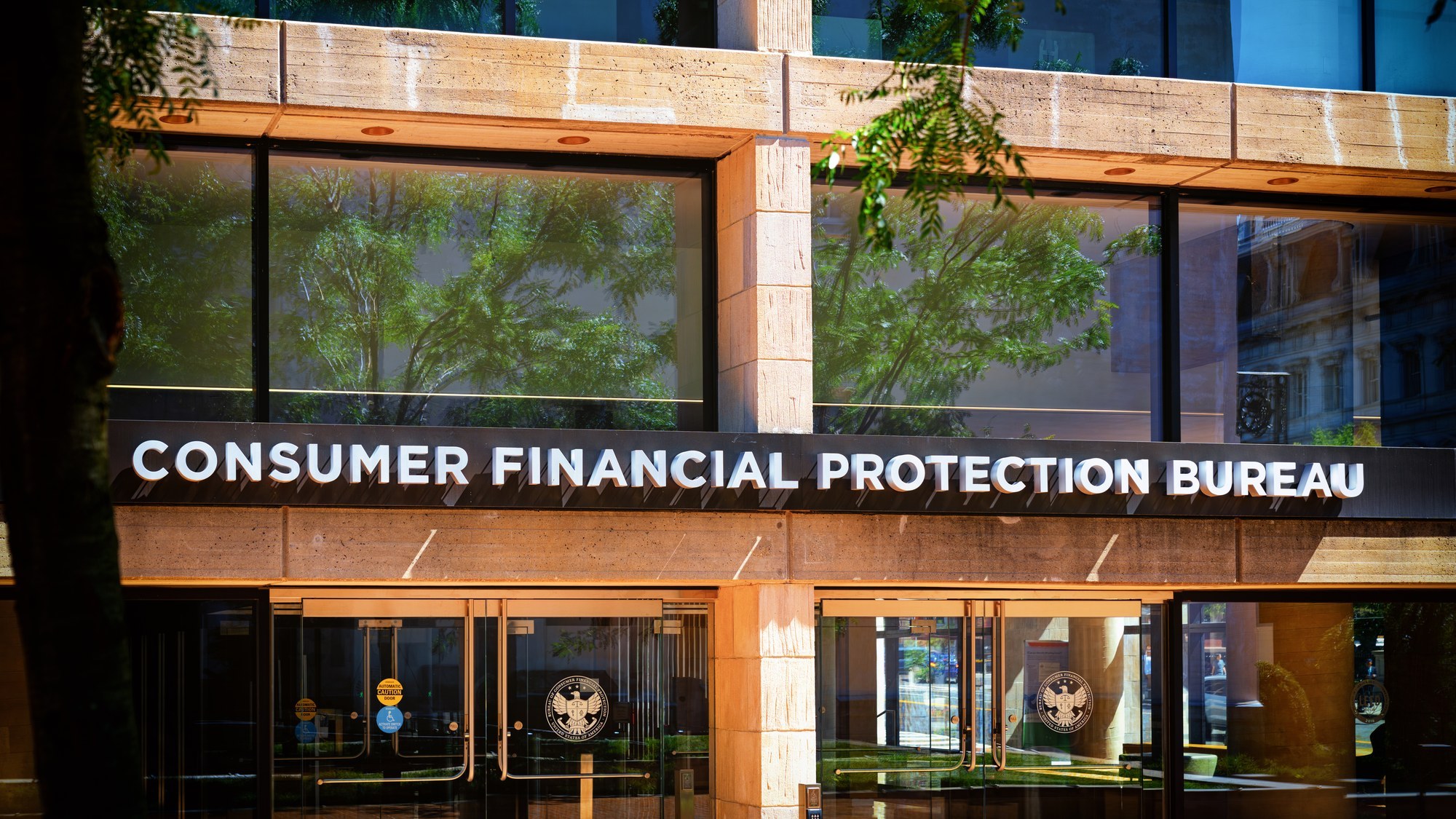
Federal rules govern which payments can trigger such a charge. The Consumer Financial Protection Bureau says on its overdraft fee page that “banks cannot charge you an overdraft fee” for one-time debit card transactions and ATM withdrawals unless the customer has explicitly opted in, a requirement written into Regulation E section 1005.17, while checks and recurring electronic payments can draw an overdraft fee without an opt-in. The bureau adds that a customer enrolled in overdraft coverage “can change your mind at any time” by notifying the bank, and that a customer who did not authorize debit overdraft protection but was charged anyway may file a complaint with the CFPB.
Wires: $30 out, $15 in, $45 abroad
The schedule prices wires by direction. A domestic outgoing wire costs $30, a domestic incoming wire costs $15, and an international outgoing wire in U.S. dollars costs $45. The $15 is charged for receiving money.
Wires are also a payment method that scammers favor. The Federal Trade Commission says on its wire transfer scams page that “wiring money with services like MoneyGram, Ria, and Western Union is like sending cash — once you send it, you usually can’t get it back,” and that “scammers pressure you to wire money to them because it’s easy to take your money and disappear.” A fee of $30 is small next to the amount at risk when a wire goes to a stranger. The FTC advises anyone who has wired money to a scammer to contact the wire transfer company or bank immediately and to report it at reportfraud.ftc.gov. Its guide to wiring money lists two familiar setups: a scammer who sends a check to “overpay” for something being sold online and asks for the extra to be wired back, and a frantic call from a supposed relative who needs money “to get out of trouble.”
ATM charges away from the bank’s network
Using another institution’s machine costs money on this schedule. A withdrawal or transfer at a non-Bank of America ATM in the U.S. carries a $2.50 fee, and at a foreign ATM the fee is $5.00.
Over a year the amounts are modest in isolation. An account holder who withdraws cash from an out-of-network U.S. machine twice a month would pay 24 times $2.50, which is $60 a year, on the bank’s side alone.
Monthly maintenance, and the balances that waive it
The monthly fee depends on the account and can often be avoided. SafeBalance Banking and SafeBalance for Family charge $4.95, waived if the owner is under 25, keeps a minimum daily balance of $500 or more, or qualifies for specified Bank of America Rewards tiers. Advantage Plus Banking charges $12.00, waived with at least one qualifying direct deposit of $250 or more, a minimum daily balance of $1,500 or more, or a qualifying rewards tier.
Advantage Relationship Banking charges $25.00, waived with a minimum daily balance of $20,000 or more or a qualifying rewards tier. Advantage Savings charges $8.00, with a six-month new-account waiver, and is waived for owners under 25, with a balance of $500 or more, with an Advantage Relationship account or with a qualifying rewards tier.
The annual cost of an unwaived fee is simple multiplication: $12.00 a month is $144 a year on Advantage Plus and $25.00 a month is $300 a year on Advantage Relationship. Whether a waiver applies is spelled out on the schedule, and the qualifying conditions are the ones printed there.
How to read a schedule of fees
A fee schedule is a snapshot, and the date at its top is what matters. This one carries “Effective August 7, 2026.” The amounts listed are the ones in force under that date, which is why the article treats them as the current price list and not as a change.
For the Bank of America figures, the bank’s own schedule dated Aug. 7, 2026 is the source: $10.00 per overdraft item, $2.50 and $5.00 for out-of-network U.S. and foreign ATMs, and $30, $15 and $45 for domestic outgoing, domestic incoming and international outgoing wires.
Keeping a record of bank fees and disputed charges
Older account holders who rely on one checking account face two separate exposures: fees charged by the bank and a creditor’s reach into the balance. The kit is for readers who want the account-side protections gathered in one place.
The Bank Account & Debt Protection Kit is a 10-page kit that includes the 2-month bank protection rule and a protected-funds and dispute log for recording disputed charges and protected funds.
Grab The Bank Account & Debt Protection Kit to keep account disputes on record →
This article was produced with AI assistance and checked against the primary sources linked above.