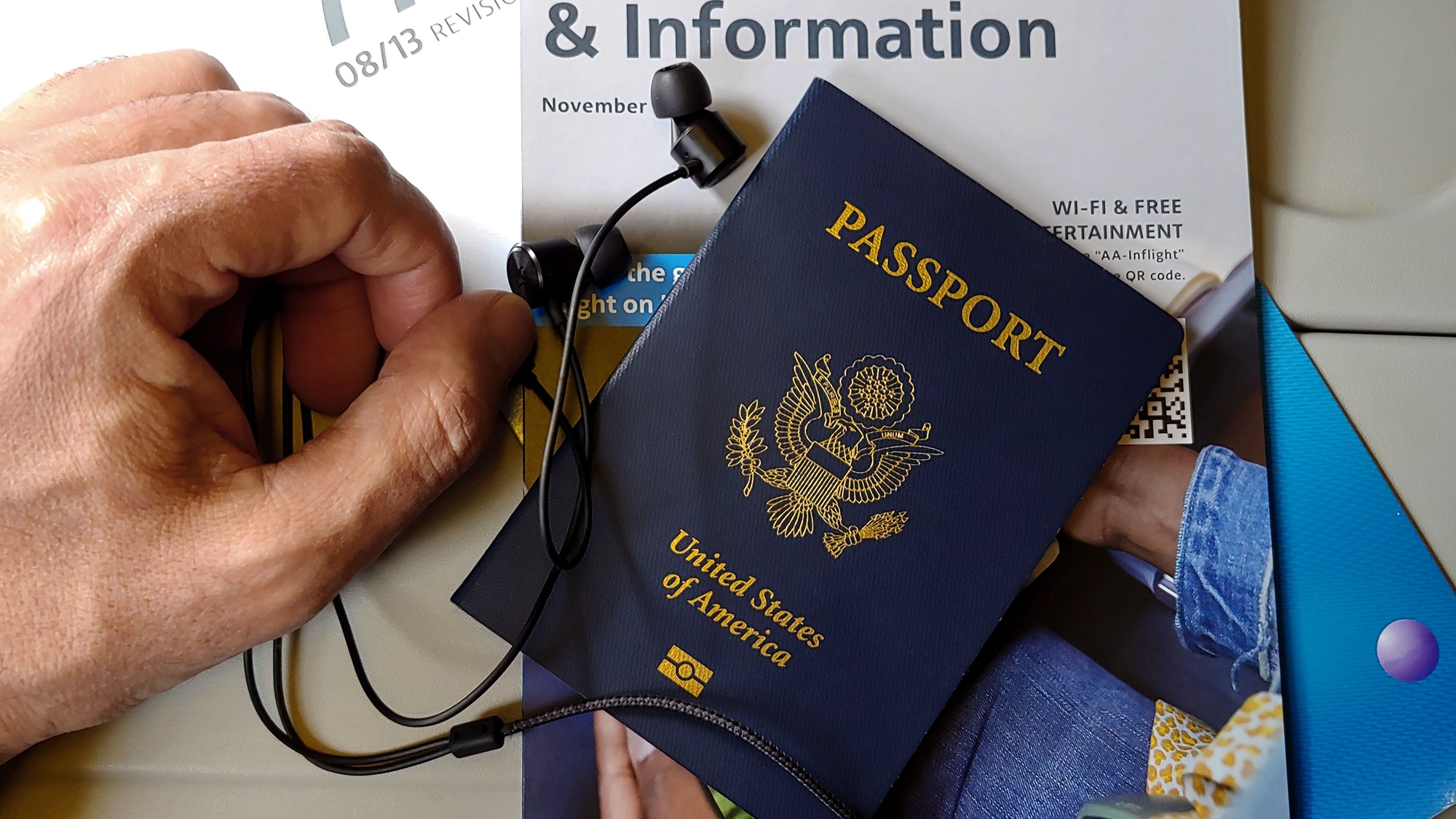
The Federal Trade Commission sued GovAssist LLC, Entry LLC and their owner, Scott Zuckerman, on Oct. 22, accusing them of posing as a State Department service to sell passport applications to travelers. The agency’s complaint says the websites advertised services starting at $89 when the lowest price was $119 plus a $29 shipping fee, or $148 in all. The FTC filed the case in federal court in Puerto Rico, and the court will decide whether the allegations hold up.
How did a private site end up above the real one?
According to the FTC’s announcement, the defendants have run websites including GovAssist.com, Entry.com and IVS.us since at least October 2023, offering passport, visa application and visa renewal services. The agency says they bought paid Google search ads that placed those pages at the top of results for searches such as “passport renewal.”
The complaint says the pages borrowed the government’s wording, with headings like “Renew Your Passport Online,” a line naming the “Issuing Agency” as the U.S. Department of State, and a Statue of Liberty image. It says disclaimers were small, low-contrast or tucked into footers, and that the one on IVS.us sat at the very bottom of the page.
The FTC says the companies have no affiliation with the State Department and are not authorized couriers. It also says travelers often got nothing more than a completed application, the same form the State Department hands out at no charge.
Which charges should a passport renewer compare?
Anyone who clicked the top paid result for “passport renewal” in recent years could have landed on one of these pages. The complaint says the State Department’s fee is paid separately from the service fees these companies charged, so a card statement is the place to compare what was billed against what the government publishes.
Stay ahead of scam news: Miss an enrollment or claim deadline and the money can be gone. Join the Retirement Money Brief and we’ll send you our Scam & Identity-Theft Action Card as a welcome gift.
Get the Brief + the scam action card →
We may earn a commission from links on this page.
The government’s published numbers are easy to find. The State Department’s passport fee page currently lists $130 for an adult passport book renewal, $60 more for expedited service, and processing times of 4 to 6 weeks routine or 2 to 3 weeks expedited, not counting mailing time.
How did $89 become $148?
The complaint says Entry.com told visitors on April 27, 2026, that services started at $89. Listed prices actually ran from $119 to $499, according to the filing, and the lowest offer carried the $29 shipping fee on top, for $148. IVS.us listed service fees of $119, $169, $349 and $499, the complaint says.
The FTC says the State Department’s own fee was omitted or played down, so some people did not realize they would owe a second payment. The complaint puts the average charge at $145 per consumer and says some people paid as much as $499 for an “Urgent Expediting” tier.
Speed was part of the pitch too. The defendants allegedly promised expedited passports in 6 to 10 or 3 to 4 business days, which the FTC says is faster than the fastest expedited service the State Department offers. The complaint puts the government’s quickest option at about 14 days and says it cannot be bought through third parties.
The ad copy went further, according to the complaint, with a line promising a passport “delivered in as little as 3 days.” The checkout page then estimated 31 to 49 days, which it described as including three to six weeks of government processing.
After payment, the complaint says, a screen read “Your passport application has been submitted,” although the FTC alleges nothing was sent to the State Department at that point.
Scale is the largest number in the filing. The complaint says the defendants collected at least $40 million from more than 300,000 consumers in the three years before the suit.
What does the FTC say about the reviews and the owner?
Entry.com displayed an “Excellent” rating “based on 11,000+ reviews” on May 6, 2026, according to the complaint. The FTC says that rating relied on large numbers of fake positive reviews, and the filing says Trustpilot identified hundreds of reviews as fabricated and removed them after warning the defendants in May 2025.
The FTC says Zuckerman owns and is the sole member of both companies, and that he ran the scheme while already bound by an FTC order from an unrelated case against Support King LLC, a stalkerware matter that ended in a final administrative order on data privacy.
The complaint alleges violations of the FTC Act, the Impersonation Rule and the Gramm-Leach-Bliley Act. It asks the court for a permanent injunction and for refunds and other relief for consumers. The Commission voted 2-0 to file.
“Using paid Google search ads and landing pages to impersonate the government and target American travelers is illegal,” Christopher Mufarrige, director of the FTC’s Bureau of Consumer Protection, said in the announcement.
Where do people who paid a look-alike turn?
The FTC takes reports of impersonators at ReportFraud.ftc.gov, the same place it points people to for any scam that borrows a government name. The agency thanked the U.S. Postal Inspection Service, the U.S. Attorney’s Office for the District of Puerto Rico and the State Department for help with the case.
Would you catch the next look-alike ad before paying?
A search ad that looks like the government can collect a card number before anyone notices the name is wrong. Once a card or login is out, the harm shows up later as new charges, new accounts or a locked-out bank profile.
Scam-Proof Your Accounts in a Weekend turns that worry into a plan. It covers how to freeze your credit at all three bureaus, free by federal law, and how to lock your bank logins with two-step login, alerts and a verbal password, all laid out as ten moves in about four hours, with the ones that protect the most money first.
Get the weekend checklist to lock your credit and bank logins →
This article was produced with AI assistance and edited for accuracy against the sources linked above.