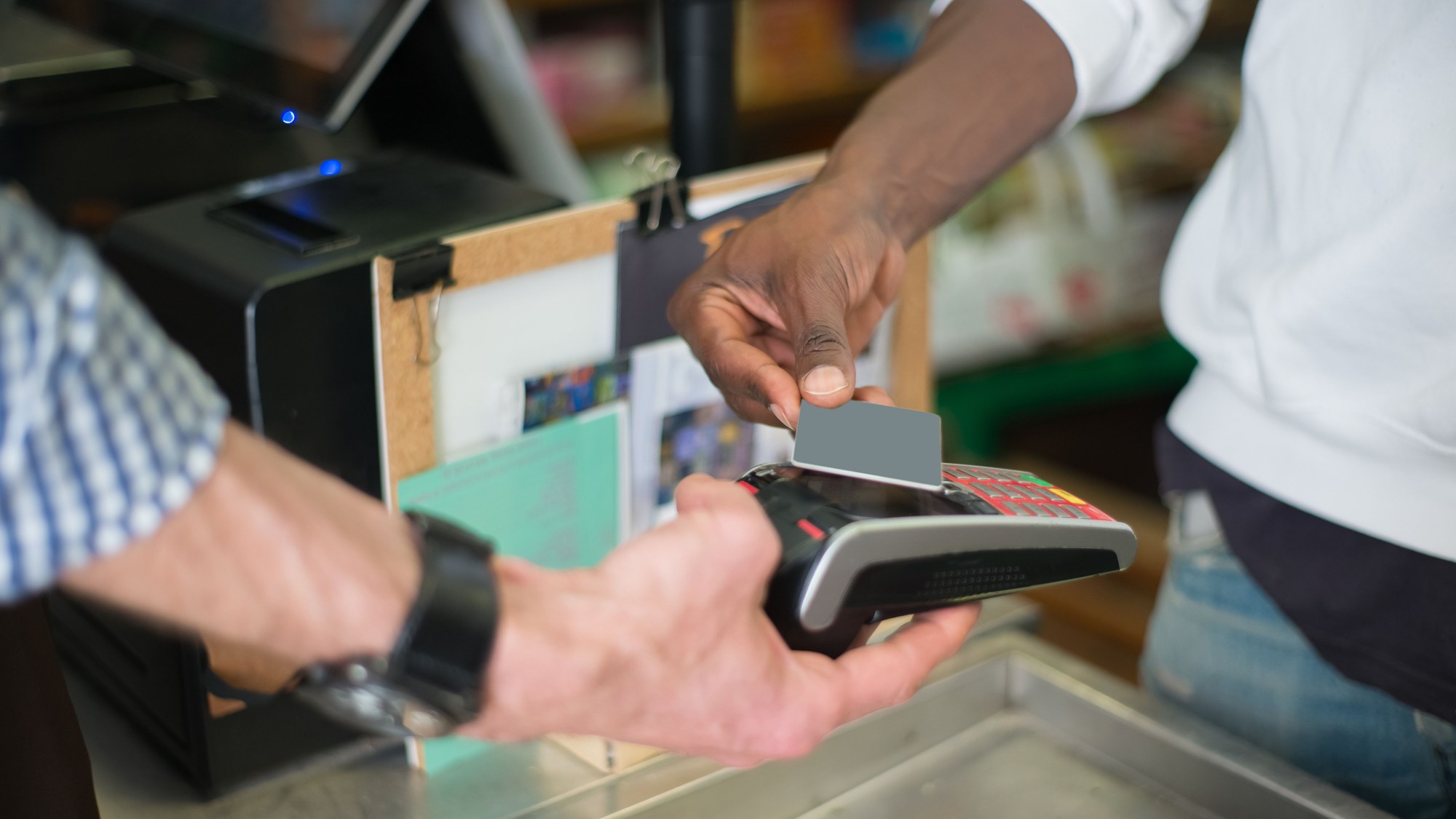
Reported SNAP theft in Lynchburg, Virginia fell from nearly $63,000 in August to just under $20,000 by late October, a drop of more than two-thirds, Cardinal News reports. The decline came as Lynchburg households received new chip-enabled EBT cards. Selina Morgan, a client services supervisor at the city’s Department of Human Services, put it this way: October’s total is a third of August’s.
The numbers matter to anyone who spends benefits on a card, because they show how fast skimming can swing from a rare problem to a monthly loss. Reported theft in Lynchburg averaged about $2,000 a month in the first half of the year, per state Department of Social Services data cited by Cardinal News. The summer spike was a jump of roughly 30 times that baseline.
Retirement deadlines, in your inbox: Miss an enrollment or claim deadline and the money can be gone. Join the Retirement Money Brief and we’ll send you our 2026 Government Check Reality Tracker as a welcome gift.
Get the Brief + the check tracker →
We may earn a commission from links on this page.
How did theft climb so fast in the summer?
July closed at about $3,000, then August hit nearly $63,000, according to Cardinal News’s September report on the city’s fraud spike. The thieves work by planting illegal devices inside card readers that capture a card’s data, then spend the benefits sitting on the account.
Preston Sellers, Lynchburg’s director of human services, described how ordinary the exposure is. People use their EBT cards, he told the paper, at “the grocery store, the farmers market, wherever they go.” A household did not need to do anything wrong to lose a month of food money.
The totals count theft that households reported, not necessarily every loss. In the September report, Cardinal News said Lynchburg residents had reported more than $60,000 stolen in August, and the figure reflects what reached the social services office. A household that did not notice a drained card, or never called, would not appear in it.
What did the numbers do after the cards changed?
Cardinal News’s November report gives three monthly figures. August was nearly $63,000, September came in at about $34,000, and October stood just under $20,000 as of a Thursday in late October. The October number is a partial month, so it could still move before the books close.
Lynchburg was one of the first Virginia localities to get the new cards, which carry an embedded microchip. Most residents had theirs by the end of September, but not everyone had activated them, and Lynchburg did not have its own activation count. About 72,000 of the more than 145,000 cards sent to the 20-locality pilot group were active as of Oct. 9.
Put in dollars, the gap between August’s peak and late October is about $43,000 a month. Put against the pilot, it leaves a lot unfinished: with more than 145,000 cards mailed and about 72,000 active on Oct. 9, roughly 73,000 chip cards in the 20 localities had not yet been switched on. A household that has not activated its chip card is probably still spending on the old stripe.
Is the drop all about chip cards?
The timing points that way, and so does what Morgan said about where the remaining losses come from. The October theft was from old magnetic-stripe cards, she said, and she had received no reports of skimmed chip cards. The decline follows the rollout, but activation was still incomplete when the October figure was tallied.
Even the lower figure sits near ten times the early-year baseline of about $2,000 a month. That is a sign that old cards were still in wallets in October, which is the gap the state’s cutoff is meant to close: the magnetic-stripe cards are expected to expire Nov. 9.
Other states point the same way. Cardinal News noted that California reported an 83% drop in benefit theft after it began issuing chip cards in January 2024.
Gov. Abigail Spanberger said the new cards protect families from bad actors at a time of federal SNAP cuts, Cardinal News reported. The state’s pilot began in Lynchburg and 19 other localities, and statewide mailing runs through December.
What happens to a household that loses benefits?
The federal government ended its program to reimburse stolen SNAP benefits in December 2024, Cardinal News reported, so a stolen month of benefits is not replaced by default. That is the reason local officials describe the rollout in terms of groceries rather than technology. Morgan said the pilot was a response to households unable to buy food after losing benefits.
“We want our families to not have to figure out that additional burden of ‘How am I going to feed my family this month?'” she told the paper.
Virginia says the new cards change nothing about benefit amounts or the monthly schedule. Households that want to confirm their mailing address, activate a card, or ask about a replacement can use the state’s chip card site or contact their local department of social services; the site lists the EBT customer service help desk at 866-281-2448.
For households in the pilot localities, the practical step is the one the state lays out: activate the chip card and set a new PIN, since the old PIN does not carry over. The state says the old card deactivates automatically 60 days after the new one is mailed, so a card that is activated now is a card that keeps working after the cutoff.
One lost month of benefits, and what else is open?
Lynchburg’s August shows how quickly a household’s money can vanish, and the federal replacement program is gone. A thief who drains one account and finds a way into another has a lot more to take, and a tax return filed in someone else’s name can sit unnoticed until a refund is blocked.
Scam-Proof Your Accounts in a Weekend does not cover EBT cards. It does include how to get an IRS Identity Protection PIN so no one can file a return in your name, one of ten moves laid out in weekend order across 13 pages, with a large-print edition.
Get the large-print weekend guide to blocking a stranger from filing taxes in your name →
This article was produced with AI assistance and edited for accuracy against the sources linked above.