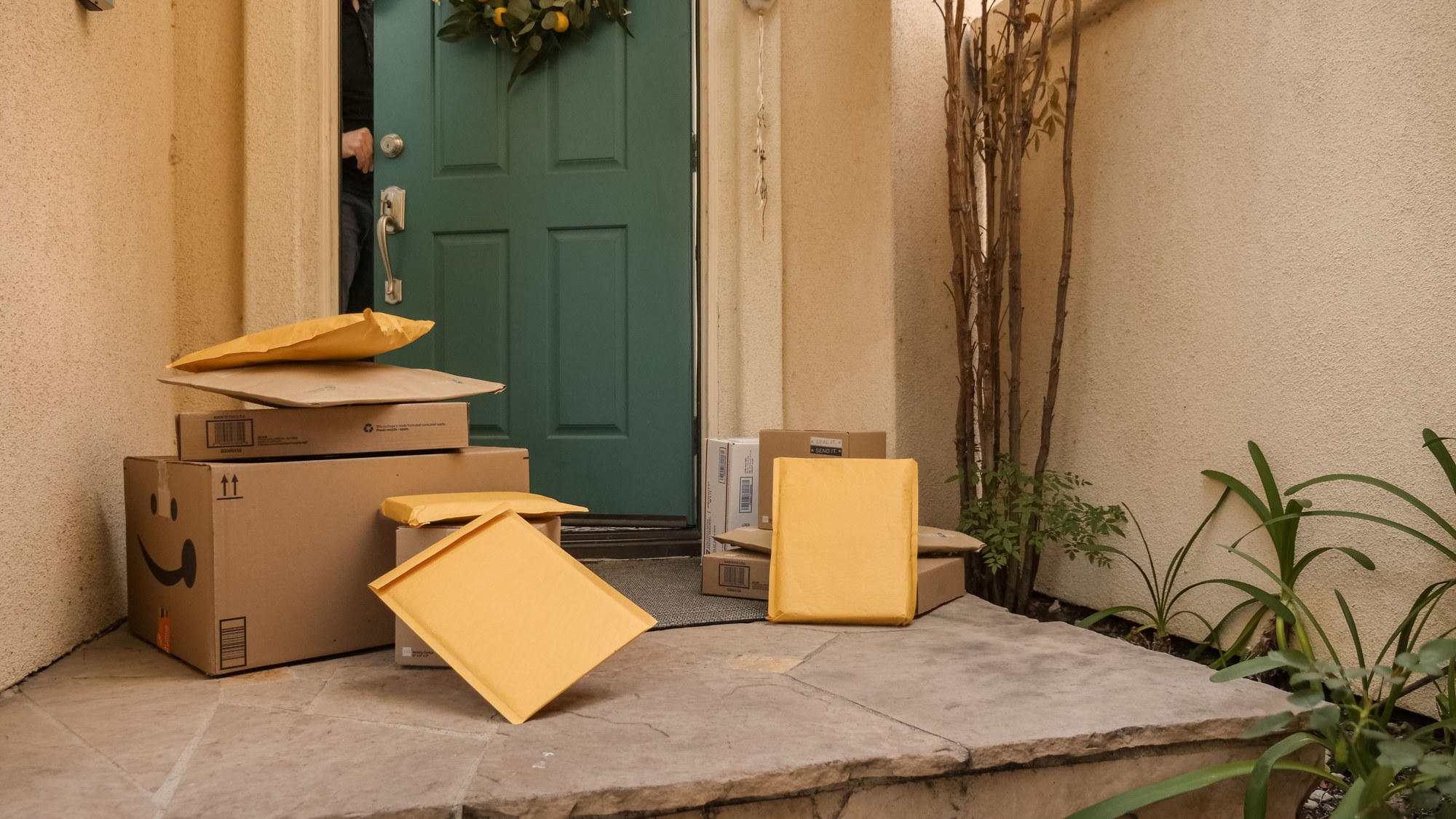
D.C. Attorney General Brian Schwalb says Amazon will pay back $7.25 million in Prime membership fees to people who live in ZIP codes 20019 and 20020, east of the Anacostia River in Wards 7 and 8. About 69,000 Prime members are covered, and each is due back nearly half of the total membership fee paid during the years Amazon kept their neighborhoods out of its own delivery network. The refunds are part of an $8.25 million settlement announced Oct. 1.
Eligible customers will be told whether they qualify and how much they will get “in the coming weeks,” the attorney general’s office says. That is the only timing the office has published. It has not said whether members have to file anything, or whether the money will arrive as a check, a card credit or an account credit.
For anyone with a Prime account tied to a home in either ZIP code, the question now is whether the notice will find them. Because the refund runs through a notification from the District and Amazon, the email address and mailing address on the account matter, and so does knowing roughly when the account was opened. Prime cost $139 a year or $14.99 a month during the period, so the size of each refund depends on how long a person paid.
Retirement deadlines, in your inbox: Miss an enrollment or claim deadline and the money can be gone. Join the Retirement Money Brief and we’ll send you our 2026 Government Check Reality Tracker as a welcome gift.
Get the Brief + the check tracker →
We may earn a commission from links on this page.
Who gets money back, and how much?
The District says the refunds go to Prime members in the two ZIP codes who paid for the service while Amazon excluded their addresses from its in-house delivery system. Each affected resident gets back nearly half of the Prime fees paid during that stretch. Because the District describes the refund as a share of fees paid rather than a flat amount, the figure each person sees will track their own payment history. Of the $8.25 million total, $7.25 million is the refund pool and $1 million is a penalty paid to the District.
Schwalb framed the case around the neighborhoods that were shortchanged. “Amazon deceived thousands of its customers who live East of the River,” he said, adding that “now, we’re putting more than $7 million back in the pockets of people who were taken advantage of.” He also said, “No company is above the law, no matter how big or powerful.”
What did Amazon do in those ZIP codes?
The attorney general’s office says Amazon began the exclusions in June 2022 and stopped in April 2026, about four years in all. During that time, packages bound for the two ZIP codes went through UPS and the U.S. Postal Service rather than Amazon’s own trucks, which made deliveries slower. Amazon cited safety reasons for the exclusions.
The District sued in 2024, alleging that Amazon broke the D.C. Consumer Protection Procedures Act by hiding the exclusions and misleading customers about what was causing slow shipping. When customers complained, the office says, Amazon pointed to other causes. A settlement report from Top Class Actions lists the case as District of Columbia v. Amazon.com Inc., No. 2024-CAB-007611, in D.C. Superior Court, and says the settlement is not an admission of wrongdoing. Amazon denies the District’s claims.
The announcement’s headline puts the allegation bluntly: the office says Amazon was “secretly excluding” Ward 7 and 8 ZIP codes from Prime delivery services. The office alleges the exclusions went unannounced to members, who had no way to know their addresses had been left out of the faster network while they kept paying the Prime fee.
Is a claim form coming?
Nothing the District has published says so. The attorney general’s announcement describes notice to eligible customers of their eligibility and refund amount, and Top Class Actions says claim-filing instructions are not yet available. The settlement is documented in a signed consent judgment, which the attorney general’s page links for anyone who wants the exact terms.
Until the notices go out, the safe course is to treat the attorney general’s office as the place to confirm anything that arrives. Nothing in the District’s announcement asks members to pay a fee, hand over a card number or share a password to receive money, so a message that does should be treated as a scam.
What changes for the next neighborhood Amazon skips?
The settlement also sets rules for the future. If Amazon again excludes a D.C. residential ZIP code from its in-house delivery service for safety reasons, it must notify existing Prime members there. It must also warn prospective members who enter an affected address while signing up.
Those notices have to explain the likely effect on delivery speed and on Prime benefits. Amazon must also tell the attorney general’s office about any such exclusion and confirm that the affected D.C. consumers were informed. The requirement answers what the District says happened in Wards 7 and 8, where members were not told their addresses had been left out.
Waiting on a Prime refund notice from the D.C. attorney general?
A refund that comes by notice is easy to lose track of. The email can sit in a spam folder, a letter can go to an old address, and the District has not yet said whether anything has to be filed. Nearly half of four years of Prime fees is money worth keeping an eye on.
The Settlement & Refund Recovery System includes a claim log and payment tracker, so each pending payment, its notice date and its amount sit in one place. The 50-page guide also comes with a five-tab Excel Money Owed Tracker and a large-print quick-start sheet.
Get the claim log and payment tracker for the D.C. Prime refund →
This article was produced with AI assistance and edited for accuracy against the sources linked above.