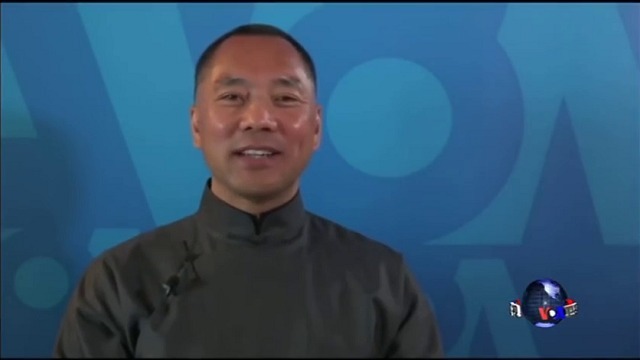
One of the more audacious online-influence fraud cases in recent memory has reached its conclusion with a lengthy prison term and an enormous forfeiture order. The defendant spent years cultivating a devoted internet following, then converted that loyalty into a vehicle for fraud that ultimately cost his supporters more than a billion dollars. Federal prosecutors secured not only a conviction but an order stripping him of a fortune in cash and luxury possessions.
A 30-year sentence and a $889 million forfeiture
The case centered on a financier who used a large and fiercely loyal online audience to raise money for ventures he controlled, then diverted much of it to his own benefit. After a jury trial, a federal court in New York handed down one of the stiffer white-collar sentences seen in years.
According to the U.S. Attorney’s Office for the Southern District of New York, Guo Wengui, also known as Ho Wan Kwok and by the alias “Miles Guo,” was sentenced to 30 years in prison. The court further ordered him to forfeit roughly $889 million, along with a $26.5 million New Jersey mansion, a Bugatti, a Lamborghini, and a Rolls-Royce Phantom. A jury had convicted him of racketeering conspiracy, wire fraud, securities fraud, and money laundering.
The sheer variety of the forfeited property, from cash to a fleet of exotic cars to a lavish estate, illustrates how the proceeds of the scheme were spent. Money that supporters believed was funding a cause or a promising venture instead paid for a lifestyle of extraordinary luxury, and prosecutors pursued those assets as the traceable fruit of the fraud.
Free for readers: Scam calls targeting retirees change every week. The free Retirement Shield newsletter flags the ones going around and the one tell that stops each. Sign up free.
How a loyal following became the weapon
Prosecutors described a scheme that ran on devotion. As set out in the federal case against him, Guo solicited more than $1 billion from thousands of online followers who saw him as a champion of their cause, marketing exclusive investment opportunities, a private club, and other members-only programs. Money that supporters believed was going into promising ventures was instead funneled toward a lavish personal lifestyle and the network of entities he controlled. The audience that made him influential was the same audience he defrauded.
What made the scheme durable was the sense of belonging it sold alongside the investments. Followers were not simply buying a financial product; they were joining a community and backing a leader they admired. That emotional attachment made them slower to question where their money was going and quicker to dismiss warnings from outsiders as attacks on the cause.
The anatomy of trust-based fraud
The mechanics of the case follow a pattern that ensnares older investors again and again. Fraud that travels through trust and a sense of shared identity is far harder to resist than a cold call from a stranger. When a charismatic figure with a built-in audience personally vouches for an opportunity, the ordinary skepticism that might stop a bad investment tends to fall away, and the larger the following, the larger the potential haul.
Schemes built on community and loyalty can run for years before the underlying numbers collapse, precisely because victims are inclined to defend the person taking their money rather than question him. The same template appears in far smaller operations that spread through a congregation, an ethnic or immigrant community, a social club, or an online group bound together by a shared belief. The trusted setting does the work that a hard sell otherwise would.
Why a conviction rarely makes victims whole
A forfeiture order measured in the hundreds of millions of dollars sounds like restitution, but recovery for individual victims is usually partial and slow. Forfeited assets must be located, seized, and liquidated; claims from creditors and victims must be sorted and prioritized; and luxury goods such as exotic cars and mansions rarely resell for anything close to their headline value. Many victims of large frauds ultimately recover only a fraction of what they put in, and often only after years of legal process.
The hard lesson embedded in the case is that prevention protects savings in a way even a successful prosecution cannot. Money handed to a fraud is seldom fully returned, no matter how long the eventual sentence, because the funds are typically spent, hidden, or moved beyond reach long before charges are ever filed. A criminal conviction may deliver justice, but it does not restore a depleted retirement account.
A cautionary case for anyone with a nest egg
The defendant’s supporters were not naive by any obvious measure; they were engaged, motivated, and convinced they were backing something meaningful. That is what makes the case instructive rather than exotic. The same dynamics, a trusted voice, an exclusive-sounding opportunity, and social proof from thousands of other believers, appear in far smaller frauds aimed at retirees every day.
Confirming that any investment and the person promoting it are properly registered, refusing to be rushed into a decision, and treating members-only or guaranteed pitches with heightened caution are the habits that keep a lifetime of savings from becoming someone else’s forfeiture case. The strength of a personal connection or a shared cause is never a substitute for the basic checks that separate a legitimate opportunity from a well-dressed fraud.
The warning signs worth memorizing
Cases of this kind tend to share a recognizable set of signals, and knowing them turns a vague unease into a concrete reason to pause. Promises of outsized or guaranteed returns, a sense of exclusivity or membership, and steady pressure to commit quickly are all common threads. So is discouragement of outside scrutiny, whether the message is that skeptics simply do not understand the cause or that questioning the leader is a betrayal.
Two checks cut through most of the noise. The first is verification: legitimate investments and the people selling them can be confirmed through public registration records, and an opportunity that cannot survive that basic step is a warning in itself. The second is independence, meaning the willingness to run any pitch past someone who has no stake in it. Fraud that spreads through trust relies on victims never seeking a truly outside opinion, and the simple act of asking one is often enough to break the spell before a lifetime of savings is at risk.
Free for readers: For plain-English help keeping more money in retirement, the free Retirement Shield newsletter covers scams, benefits, and money owed, a couple times a week. Subscribe free.
This article was researched and drafted with AI assistance and reviewed against the linked primary sources.