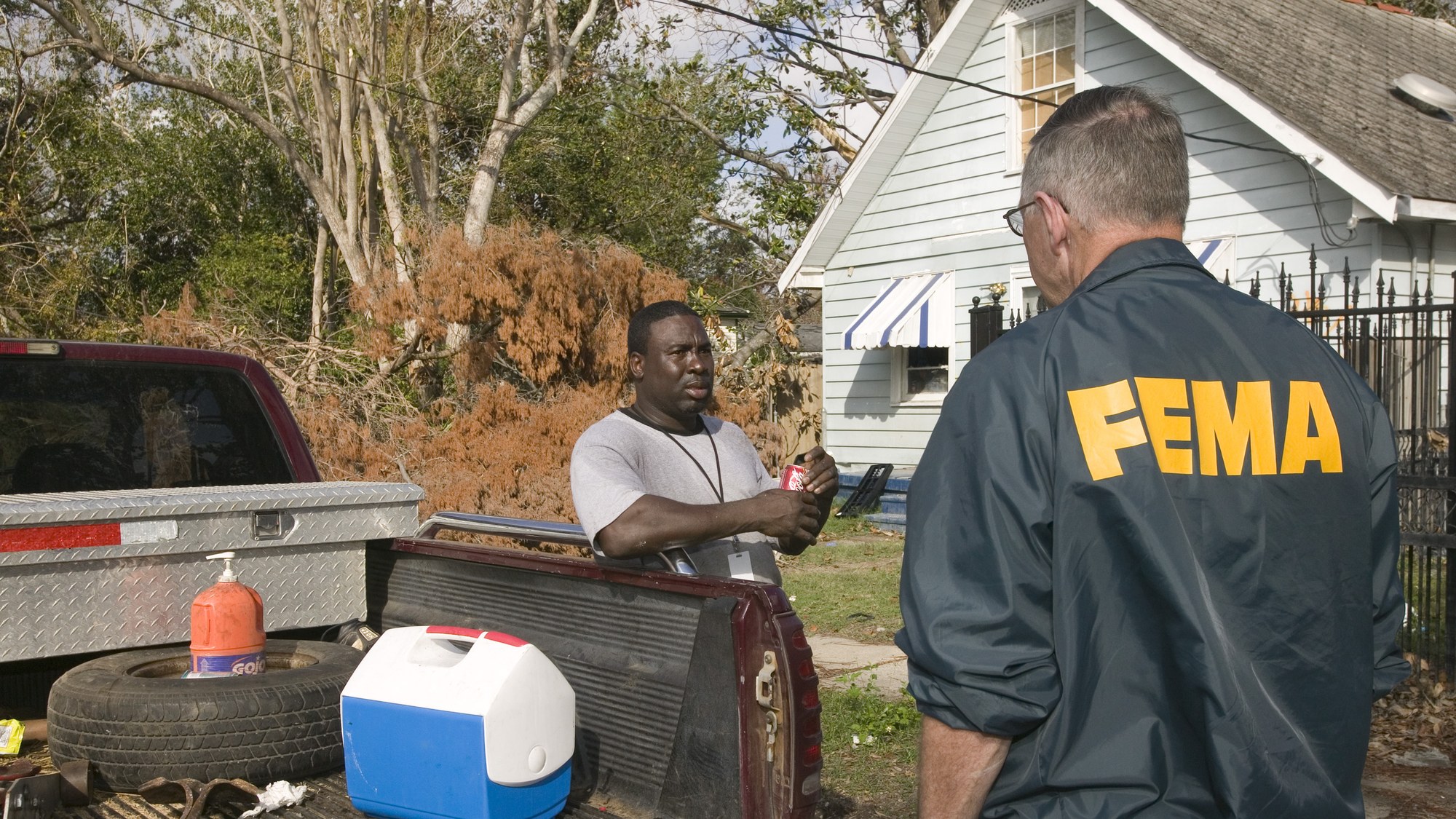
FEMA has set Serious Needs Assistance at a flat $790 per household for a single declared disaster, a one-time payment aimed at food, medicine and other immediate needs in the first days after a household is forced from its home. The amount appeared in a Federal Register notice on September 29, 2026 and covers disasters declared on or after October 1, 2025. It is a rule that applies only inside a declared disaster area, and it sits beside, not inside, the much larger housing caps in FEMA’s Individuals and Households Program.
The notice was signed by FEMA Administrator Cameron Hamilton, and it was published the same day as a companion notice that resets the program’s overall ceilings.
The $790 is a flat amount per household, not a reimbursement
The Serious Needs Assistance notice states that “the award amount for SNA provided to an individual or household under section 408 of the Robert T. Stafford Disaster Relief and Emergency Assistance Act with respect to any single emergency or major disaster is $790.” FEMA indexed the figure to a 2.9 percent rise in the Consumer Price Index for All Urban Consumers over the 12 months ended August 2025, as 44 CFR 206.119(b)(1) requires each year.
FEMA’s own Serious Needs Assistance page describes the payment as an “upfront, flexible payment for essential items like food, water, baby formula, breast feeding supplies, medication and other serious disaster-related needs.” That FEMA page still listed the previous amount, $770, when checked on October 2, so $790 is a roughly $20 step up. The agency’s framing as an upfront payment explains why the first days after displacement are when it matters. The regulation at 44 CFR 206.119 adds that FEMA does not require receipts documenting how the money is spent.
A fiscal-year figure with no newer notice behind it
The $790 is not a new fiscal 2027 amount. The notice states that “this adjustment applies to emergencies and major disasters declared on or after October 1, 2025,” and its inflation reference ends in August 2025, which makes it the figure for the fiscal year that began that October. FEMA published it late, on September 29, 2026, together with other annual adjustments. A review of FEMA’s Federal Register listings from that date shows no later Serious Needs Assistance notice, so $790 is the amount currently on the books for disasters declared since October 1, 2025. The regulation calls for yearly updates, so a later notice can change the figure for future declarations.
The $44,800 housing figure is a separate ceiling
The companion notice sets the Individuals and Households Program maximum at $44,800 for housing assistance and $44,800 for other needs assistance per disaster, for declarations on or after October 1, 2025. Neither notice adds the $790 to those totals. FEMA’s Serious Needs Assistance page says that as an application is reviewed, an applicant “may still receive additional assistance” for temporary housing, personal property and home repair. In other words, the flat payment covers groceries and prescriptions up front, and the $44,800 ceilings govern the slower, documented categories of aid.
It exists only where a declaration has opened the door
Serious Needs Assistance is not a standing benefit. It is tied to a presidentially declared emergency or major disaster, and within one it is available to applicants in the designated area who report being displaced or in need of shelter. The same regulation describes assistance for “applicants who report they are displaced as a result of the disaster.” Someone displaced by a house fire or a flood that never receives a federal declaration has no claim to the payment, and a household outside a declared county does not either. FEMA decides disaster by disaster what it authorizes, and its declarations are published in the Federal Register.
Applying is a phone call or a website, directly with FEMA
FEMA takes applications at DisasterAssistance.gov, in person at a Disaster Recovery Center, and by phone at 1-800-621-3362. Applying is done directly with the agency, and FEMA states that its assistance is not a loan. No paid helper is needed.
The record behind the figure is short and official: two Federal Register notices dated September 29, 2026, one setting $790 per household and one setting $44,800 each for housing and other needs, both for disasters declared on or after October 1, 2025.
Home-cost relief that runs on its own calendar
The Senior Property Tax & Home-Cost Relief Kit is written for older homeowners and renters who carry property-tax bills, heating and cooling costs and repair costs year after year. Those programs rarely apply themselves, and each one has its own filing window and renewal date that are easy to lose track of.
The Senior Property Tax & Home-Cost Relief Kit lays out the 5 kinds of property-tax relief and the circuit-breaker credit that includes renters, along with an application log and renewal calendar for keeping the dates straight.
Open the renewal calendar in The Senior Property Tax & Home-Cost Relief Kit →
This article was produced with AI assistance and checked against the primary sources linked above.