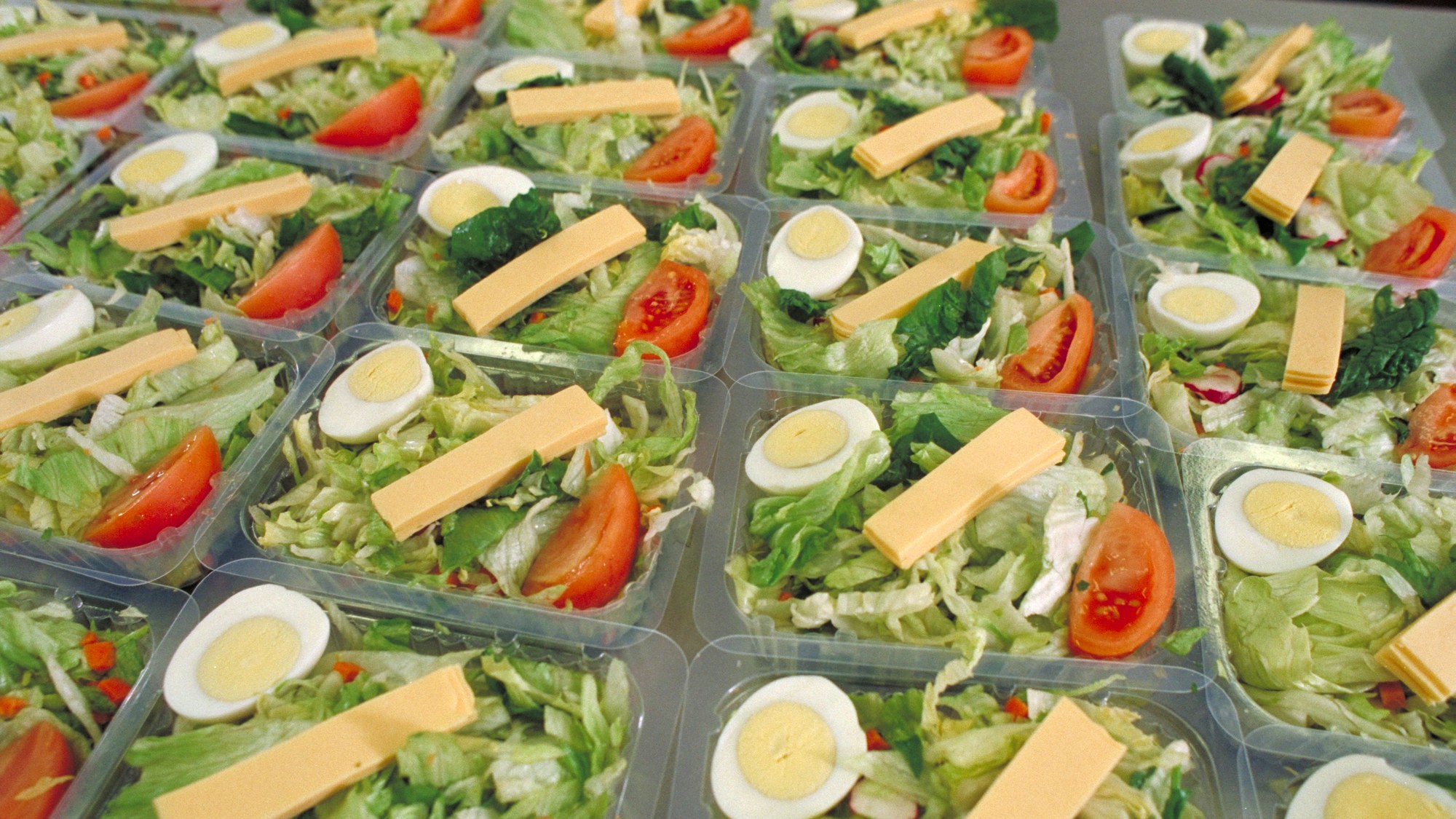
Once or twice a week every summer starting in 2014, cafeteria workers in Plymouth, Massachusetts, sliced deli turkey and ham that were not for students. The meat was bound for the Snack Shack, a seasonal stand on Sandy Neck Beach in Barnstable run by the district’s own food services director. On Oct. 7, Patrick Van Cott, 64, of Sandwich, was sentenced in federal court in Boston to six months in prison, followed by two years of supervised release, and a $2,000 fine, according to the U.S. Attorney’s Office for the District of Massachusetts.
Van Cott directed food services for Plymouth Public Schools from 2003 until June 2025. Prosecutors say that from 2014 until he left, he took food and equipment bought for the schools, paid for with school funds that included money from the U.S. Department of Agriculture, and used it to stock the beach business. For local taxpayers, the open question is how much the kitchens lost, and the court has not answered that in dollars: restitution is to be determined at a later date.
The court will set restitution at a later date, and that dollar figure is the next number due in the case.
Get the next update the morning it lands →
What left the school kitchens
The government lists the equipment first. Items ordered with school funds included two refrigerators at $2,200 each and a two-door freezer at $3,950, along with two 12-inch hot plates, a 24-inch griddle, a chargrill, a fryolator, shelving, a sandwich prep table, a convection oven and chalk boards. The refrigerators and freezer alone total $8,350 at the prices in the release.
Food and supplies went too. The release lists condiments, diced chicken, hot dogs, cooking oil, snacks, paper goods and coffee, among other products, paid for by the schools or supplied by the USDA. Prosecutors say the deli meat came to at least nine pounds of turkey and 4.5 pounds of ham, and that Van Cott bought over $3,000 worth of premium burger patties with school funds.
Where the USDA money comes in
The federal angle is the school meals program. The U.S. Attorney’s Office describes the National School Lunch Program as a federally assisted effort administered by the USDA that provides nutritionally balanced, low-cost or free lunches to public school children. In Massachusetts, meals are free for all students, and schools are reimbursed through a mix of USDA and state funds.
That funding mix is why a district employee faced federal charges. The earlier plea announcement from May 2026 described the money as school funds, “including U.S. Department of Agriculture (USDA) funds,” and noted the Snack Shack by name. The USDA Office of Inspector General, which investigates fraud in the department’s programs, listed the sentencing among its Oct. 7 investigative releases.
Charges, plea and the judge
The Snack Shack was Van Cott’s own business, which the release says he began operating in 2014, the same year the conduct began. It operated on Sandy Neck Beach in Barnstable, in a different town from the Plymouth school kitchens that supplied the stock. The May plea release names the stand and describes the food and equipment as bought with school funds.
Van Cott was charged in April 2026 and pleaded guilty the next month to one count of theft concerning programs receiving federal funds and two counts of wire fraud. U.S. District Court Judge Julia E. Kobick imposed the sentence. Assistant U.S. Attorney Kristina E. Barclay of the Public Corruption and Special Prosecutions Unit handled the case, and U.S. Attorney Leah B. Foley made the announcement.
The FBI’s Boston Division, led by Special Agent in Charge Ted E. Docks, and the USDA inspector general’s Northeast Region, led by Special Agent in Charge Charmeka Parker, investigated, with help from the Plymouth Police Department. The release carries no direct quotations from officials; it lists the announcing officials by name and title.
The conduct the government describes ran from 2014 to June 2025, so the sentence reflects about 11 years of taking from the same kitchens. The $2,000 fine is separate from restitution, which the court will set later.
How the numbers fit together
The itemized figures in the release come to a modest sum next to the span of years: $8,350 in refrigerators and freezer, over $3,000 in patties, plus smaller equipment and food lines that the release does not price. Because the equipment and food were purchased through school accounts, the release offers no bottom-line figure, and restitution is still to be set.
Watching the restitution figure and school food oversight
The restitution amount is the next number in the case. The Massachusetts U.S. Attorney’s sentencing announcement is the source for the six-month term, the two years of supervised release and the $2,000 fine, and any later order setting restitution would appear on the court’s docket in Boston.
Parents and taxpayers who want to follow how a district accounts for meal program money can ask the school committee or the district business office about how food service purchases are approved and reported, and where equipment bought with federal funds is kept. The USDA inspector general takes reports of fraud involving department programs, including school meals, through its investigations office.
The reporting here rests on the Oct. 7 sentencing release and the May plea release from the same U.S. Attorney’s Office.
More Financial Reading
- 24 Ways to Stretch a $2,087 Social Security Check
- 17 Places to Find Your Share of the $4.25 Billion States Give Back
- 18 Ways Out of 22% Credit Card Interest
This article was produced with AI assistance and reviewed by The Financial Wire’s editorial team.