Federal prosecutors in Connecticut say the longtime head of two public housing authorities borrowed $16.2 million in the name of a nonprofit he did not have permission to bind, then sent about $450,000 of it to his own investment account. Robert Cappelletti, 60, of Middlebury, was arrested Sept. 24 and pleaded not guilty to a nine-count indictment, the U.S. Attorney’s Office for the District of Connecticut announced. A federal grand jury in New Haven returned the indictment Sept. 22.
Housing authorities run public housing and rental assistance for low-income families, seniors and people with disabilities, and their boards are supposed to approve borrowing on their behalf. The charges allege that a director got around that control. People who live in Meriden or Groton housing, and local taxpayers, are the ones who would absorb any loss, so the practical question is who is on the hook for a $16.2 million loan that, in the government’s account, the boards never authorized. The release does not say how that is being resolved.
The nine counts and the $500,000 bond are the figures that can change as the case moves through federal court in New Haven.
Get each new number in one short weekday email →
How prosecutors say the loan worked
Cappelletti served as executive director of the Meriden Housing Authority from about 2009 to May 2025. He also ran the Groton Housing Authority from about 2016 to January 2025 under a shared services agreement, and he sat on the board of Maynard Road Corporation, a nonprofit that supports Meriden’s development projects.
In 2022, prosecutors say, he borrowed $16,200,000 from a lender the release does not name, “purportedly on behalf of” Maynard Road. He allegedly signed a promissory note for the nonprofit and a guarantee for the Meriden authority without board authorization, and he allegedly presented fraudulent resolutions from both bodies to show that the boards had approved. In July 2022 the lender wired $13,961,750, the loan amount after costs and fees, to a Maynard Road bank account.
Where the money allegedly went
The indictment alleges that about $450,000 was deposited into Cappelletti’s personal investment account and that $374,752.87 went toward the mortgage on his own home. The release says he directed other transactions meant to enrich himself and to conceal the conduct, but it does not give amounts for those.
The Groton piece is separate. Prosecutors say the Groton Housing Authority and Greater Groton Realty Corporation were not parties to the loan and did not guarantee it. Even so, Cappelletti allegedly used his position at the Groton authority to direct payments from its funds toward the loan. He allegedly told the authority and the realty corporation that the payments related to a forthcoming Groton development bond and would be reimbursed, and he allegedly submitted forged invoices to justify them. The release does not say how large those payments were in total.
Nine counts and what each carries
The indictment contains five counts of wire fraud and four counts of engaging in illegal monetary transactions. Wire fraud carries a maximum of 20 years in prison per count, and illegal monetary transactions carry up to 10 years per count, according to the U.S. Attorney’s Office. The release does not mention fines or restitution.
Cappelletti appeared before U.S. Magistrate Judge Robert M. Spector in New Haven after his arrest, pleaded not guilty and was released on a $500,000 bond while the case proceeds. U.S. Attorney David X. Sullivan stressed that an indictment is not evidence of guilt. The release states that the charges are only allegations and that a defendant is presumed innocent unless and until proven guilty beyond a reasonable doubt.
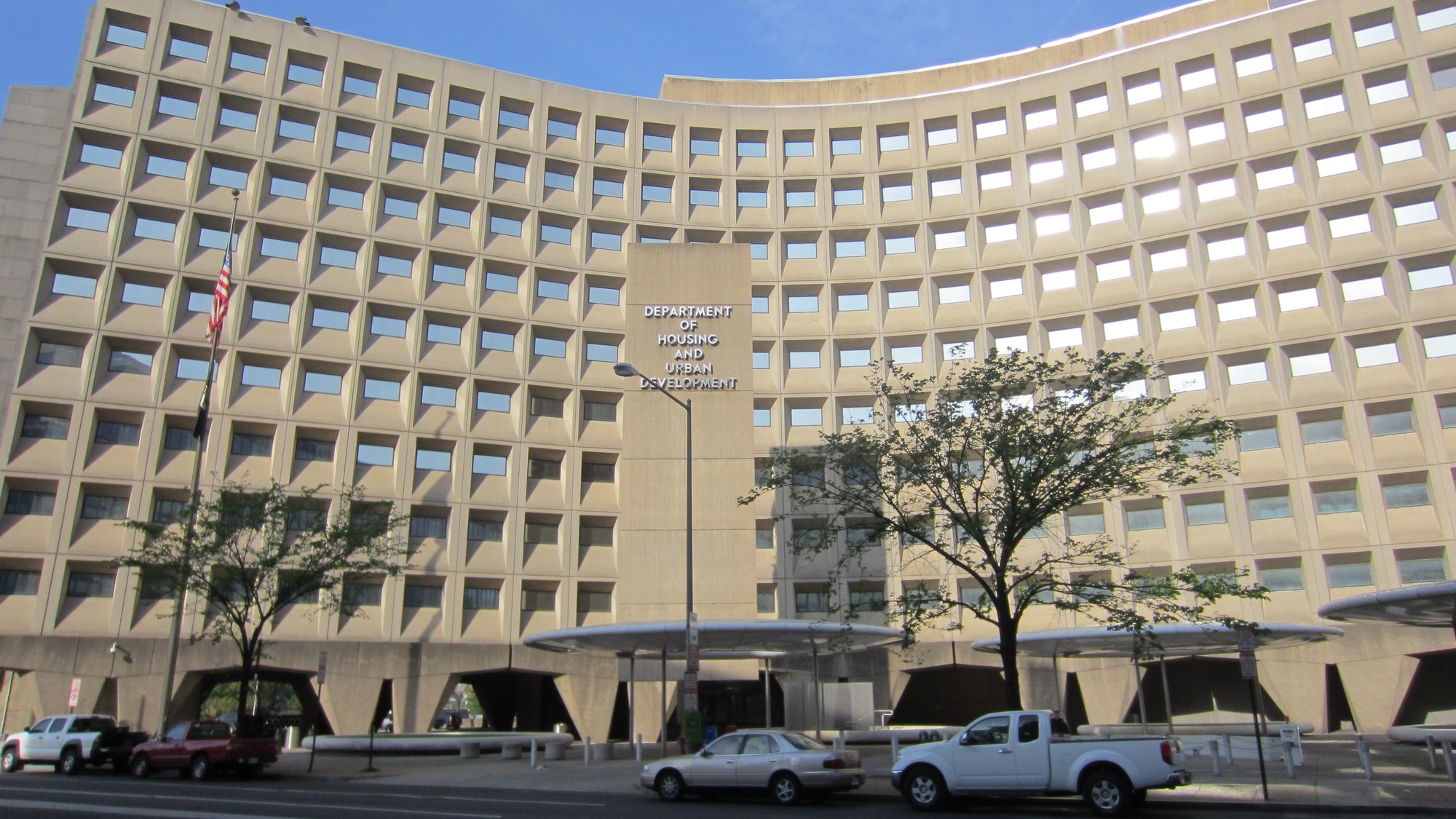
The case was investigated by the FBI and the HUD Office of Inspector General. Announcing it with Sullivan were P.J. O’Brien, the special agent in charge of the FBI’s New Haven Division, and Shawn Rice, the special agent in charge of the HUD inspector general’s Northeast Region. Assistant U.S. Attorneys Nathaniel J. Gentile and Raymond Miller are prosecuting.
What the charges leave open
Several answers are not in the public record yet. The release does not identify the lender, does not explain what the $16.2 million was supposed to pay for beyond its description as a loan for the nonprofit, and does not say whether the lender has been repaid or who bears the obligation now. It accounts for the use of the wired money only in part, through the personal-account and mortgage figures.
The dollar amounts that are in the indictment are the ones the government says it can trace: roughly $450,000 to the personal investment account and $374,752.87 to the mortgage, which together come to less than $825,000, about 6 percent of the money that was wired. The release does not say where the rest went.
Following the Meriden and Groton case through court
The charging announcement from the U.S. Attorney’s Office for the District of Connecticut is the document to return to, because court filings in the New Haven case will carry any changes to the counts or the amounts. Tenants and taxpayers in the two towns can ask their housing authority boards for the minutes at which borrowing was authorized, since the allegation is precisely that the authorizing resolutions were forged.
The HUD inspector general’s Northeast Region is one of the two agencies that investigated, which signals how federal housing money is policed: through audits and criminal referrals rather than through the authorities themselves. Anyone with information about misuse of housing funds can report it to the HUD Office of Inspector General.
The figures in this story come from the Sept. 24 release, and each of them is an allegation: $16.2 million borrowed, $13,961,750 wired, about $450,000 to a personal account and $374,752.87 toward a mortgage.
More Financial Reading
- 24 Ways to Stretch a $2,087 Social Security Check
- 17 Places to Find Your Share of the $4.25 Billion States Give Back
- The New $6,000 Senior Deduction and 15 More Tax Moves for Retirees
This article was produced with AI assistance and reviewed by The Financial Wire’s editorial team.