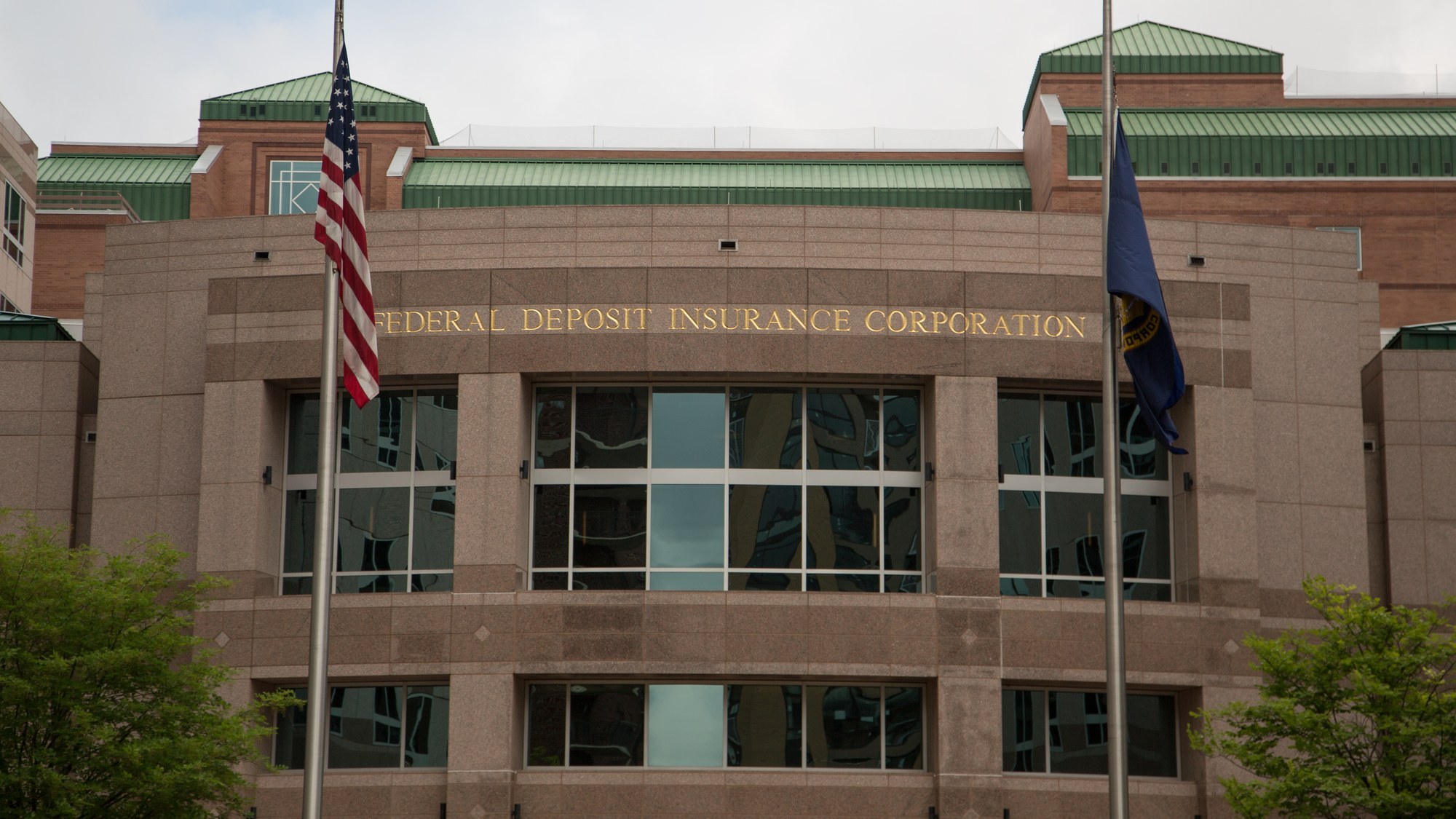
Bank failures are rare, but they have arrived at an unusually steady pace this year. Four federally insured banks have now closed and been placed under Federal Deposit Insurance Corporation receivership in 2026, already double the number recorded in all of 2025. For anyone who keeps a large balance parked in a single institution, each closure is a reminder that federal insurance protects deposits only up to a fixed ceiling.
The Fourth 2026 Failure: Small Business Bank of Lenexa, Kansas
The most recent closure came on July 17, 2026, when the Kansas Office of the State Bank Commissioner shut Small Business Bank in Lenexa and named the FDIC as receiver. The Farmers State Bank of Oakley, Kansas, agreed to assume substantially all of the failed bank’s deposits and purchase certain assets, so the lone branch reopened under new ownership. Small Business Bank held roughly $73 million in total assets as of March 31, 2026, after years of operating losses that left it critically undercapitalized.
It was the fourth insured-bank failure of the year and the second inside a single week in July, a sequence the agency laid out in its account of the Small Business Bank resolution and tracks on its official failed-bank list. The three earlier collapses were Metropolitan Capital Bank & Trust of Chicago, closed January 30; Community Bank and Trust – West Georgia in LaGrange, closed May 1; and Kentland Federal Savings and Loan Association in Indiana, closed July 10.
Free retirement updates: Miss an enrollment or claim deadline and it may be gone. Our free Retirement Shield newsletter keeps readers ahead of the ones that matter. Get the free newsletter.
Where the $250,000 Insurance Line Falls
Federal deposit insurance covers $250,000 per depositor, per insured bank, for each account ownership category. Money held above that ceiling within a single ownership category at one bank is not insured. If that bank fails, the uninsured portion becomes a claim against the receivership rather than a guaranteed payout, and recovery depends on how much the FDIC can collect from selling the failed bank’s assets.
The distinction matters most for older savers who hold concentrated balances: proceeds from a home sale, a lump-sum pension payout, an inheritance, or a maturing certificate of deposit can push a single account well past $250,000 without the owner realizing the excess sits outside the safety net. A retiree with $400,000 in one ownership category at a failed bank would see $250,000 insured and the remaining $150,000 exposed to whatever the receivership ultimately recovers.
How Depositors Kept Access in the 2026 Closures
In each of this year’s failures, the FDIC arranged a purchase-and-assumption deal in which a healthy bank absorbed the deposits, frequently reopening the branches within days. When Community Bank and Trust – West Georgia went down in May, for example, Anchor Bank of Florida stepped in to take over the accounts and continue operations. Under that structure, insured depositors typically keep uninterrupted access to their money and simply become customers of the acquiring institution.
That outcome, however, is a matter of how the resolution is negotiated, not a promise written into the insurance rules. The dependable guarantee is the $250,000 limit itself. Spreading balances across separate ownership categories, or across more than one insured bank, keeps a larger total under full protection regardless of how any single failure is resolved. The agency’s Electronic Deposit Insurance Estimator lets a saver check exactly how much of a specific set of accounts is covered.
What an Uninsured Depositor Actually Recovers
The gap between insured and uninsured money becomes concrete the moment a bank closes. Insured balances are made available almost immediately, typically the next business day, either through an acquiring bank or a direct payment from the FDIC. Money above the limit follows a slower and less certain path. The excess turns into a claim against the receivership, and the depositor receives a receivership certificate rather than cash. Payment then arrives in installments as the FDIC liquidates the failed bank’s loans and property, so the final recovery depends on how much those assets fetch and can amount to only a fraction of the uninsured balance, paid out over months or years.
The 2026 closures show why the outcome swings so widely. When an acquirer agrees to assume all deposits, as Farmers State Bank did with Small Business Bank, even uninsured balances can pass through intact because the healthy bank takes them on. That generosity is a feature of a particular deal, not a right. In a straight payout where no buyer absorbs the excess, the same balance would be left waiting on the receivership. The only version of protection a depositor controls in advance is staying under the insured line in the first place.
Simple Ways to Keep a Large Balance Fully Covered
Concentration above the ceiling is a fixable problem rather than an unavoidable risk. The most direct fix is spreading funds across separate ownership categories at one bank or across more than one insured institution, so that no single category at any single bank holds more than $250,000. Naming beneficiaries on a payable-on-death or revocable-trust account raises coverage further, because each eligible beneficiary generally adds another layer of protection within that category.
Savers who want the convenience of one relationship can use deposit-network services that quietly spread a single large deposit across many member banks, keeping the amount at each below the limit while the customer deals with one institution. Whatever route a household chooses, the FDIC’s Electronic Deposit Insurance Estimator settles the question by calculating coverage for a specific set of accounts and flagging any dollars sitting above the protected line before a closure ever forces the issue.
Four failures in seven months does not signal a systemic banking crisis; each 2026 collapse traced to problems at an individual institution rather than a broad shock. Still, the pattern underscores a durable point about deposit safety: insurance is automatic and reliable, but only up to the line the FDIC draws, and the agency’s failed-bank record remains the clearest place to see how that line has held in each closure this year.
This article was produced with the assistance of artificial intelligence and reviewed by The Financial Wire editorial team.
More Financial Reading
- How many CDs can you park at 1 bank? FDIC rules you must know
- What really happens to your joint savings account when you die?