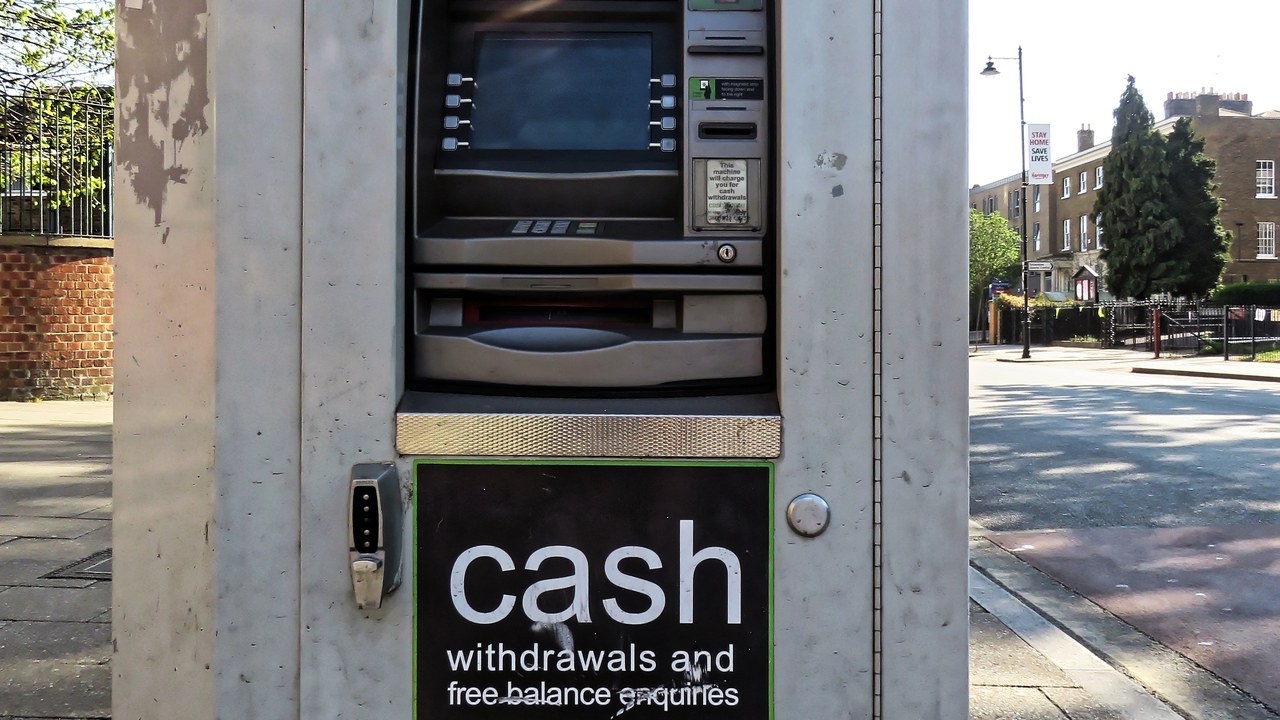
Hilltop National Bank, a $1.14 billion-asset lender based in Casper, Wyoming, averaging roughly $142.5 million in assets across its eight branches, spent a full week locked out of its own online and mobile banking systems after a cyber incident that began Sept. 8, 2026. Customers of the eight-branch bank could not check balances or pay bills online, and debit withdrawals were capped at $1,000 a day across every location and ATM while the bank worked to restore its systems. The episode is a case study in what happens to an ordinary depositor’s access to their own money when a community bank’s technology, rather than the bank’s solvency, is the thing that fails.
A Week Offline After A Cyber Incident
Hilltop National Bank confirmed a cybersecurity incident overnight into Sept. 9, 2026, after systems began showing problems the day before, and the bank’s online banking, mobile banking and website remained down for roughly a week, according to American Banker’s reporting on the outage. Phone service was restored by Sept. 10, but scheduled bill payments were halted, and seven of the bank’s eight branch offices reopened only for a limited set of in-person transactions (deposits, withdrawals and bank-issued checks) while one branch stayed closed entirely, per the same report. The bank holds $1.14 billion in assets and $987.6 million in deposits across its eight offices, according to American Banker, making the outage a full-institution event rather than a single-branch problem. Of those eight branches, seven reopened during the outage for a limited set of teller transactions while the eighth stayed closed for the full stretch American Banker’s report covered, an uneven recovery that left the pace of restored in-person service depending on which branch a customer happened to use.
What a week offline doesn’t explain: Hilltop’s outage capped debit withdrawals well below what many customers would need for a single large payment, but a cyber incident notice from any bank rarely spells out which of a customer’s protections against a frozen or restricted account actually apply. See the 2-month bank protection rule in The Bank Account & Debt Protection Kit.
A $1,000 Daily Cap On Debit Withdrawals
The bank imposed a $1,000-a-day limit on debit card withdrawals at every location and ATM while its systems were down, according to American Banker’s account of the incident. That cap applied uniformly, meaning a customer who needed more than $1,000 in a single day, for a rent payment, a medical bill or a large purchase, had no debit-card workaround regardless of how much sat in the account. Held for the roughly week-long stretch American Banker’s report covers, a $1,000-a-day ceiling would limit total debit access to about $7,000 over that period for a customer with no other way to reach the bank, a hard limit unrelated to how large the underlying account balance actually was. Scheduled bill payments set up through online banking were also halted during the outage, per the report, so a customer relying on automatic payments for a mortgage, utility or insurance bill had to find another way to make sure that bill was paid on time.
What The Bank And Regulators Said
Hilltop National Bank CEO Darren Cantlay described the restoration work as “specific and detailed work that takes time,” and the bank told American Banker it was “unable to provide that level of detail” about the cause while the investigation continued. The bank notified the Office of the Comptroller of the Currency and the Federal Reserve Bank of Kansas City, its federal regulators, but an OCC spokesperson declined to comment, saying the agency “does not comment on specific banks,” according to the same report. Because Hilltop National Bank is privately held, it faces no public-disclosure requirement of the kind that would force a securities filing, which is part of why the fullest account of the incident available came from the bank’s own statements to reporters rather than a regulatory filing. American Banker’s reporting also noted what remained unconfirmed a week in: the bank had not disclosed the cause of the incident, had not said whether customer data was compromised, and no ransom demand or hacking group claiming responsibility had surfaced publicly, leaving open exactly what kind of cyber incident triggered the shutdown in the first place.
What The Outage Meant For A Retiree’s Cash Flow
For a customer living on a fixed Social Security or pension deposit, a week without online banking is not an abstraction: it means no way to check whether a deposit posted, no way to pay a bill online, and a hard ceiling on how much cash could be pulled from an ATM or debit card in a single day. Branches stayed open for basic in-person transactions throughout most of the outage, which kept cash access available for customers willing and able to visit in person, but that is a different standard than the always-on digital access most account holders now expect. By Sept. 23, 2026, Hilltop National Bank had restored personal and business banking services, according to Oil City News, a timeline that shows the outage as a resolved, discrete event rather than an ongoing one, even though the underlying cause has not been publicly disclosed. The full arc runs 15 days from the first signs of trouble on Sept. 8 to that Sept. 23 restoration: a week of the most severe restrictions, including the debit cap and the online-banking blackout, followed by a second week of gradually restored branch and account functions before personal and business banking fully returned.
The Gap A Cyber Incident Leaves Open
Hilltop National Bank’s customers spent a week with debit withdrawals capped well below what a single large payment would need and no online access to their own accounts, a reminder that a bank’s technology failing can restrict access to money just as effectively as a dispute or a collector’s claim can. Knowing which federal protections apply to money in a bank account, and how to document a dispute when access is cut off, is a separate skill from simply waiting for a bank’s systems to come back online.
The Bank Account & Debt Protection Kit covers the 2-month bank protection rule for federal benefit deposits and the debt-validation steps for disputing a restriction on an account.
Read how the protection rule applies to a restricted account in The Bank Account & Debt Protection Kit.
This article was produced with AI assistance and checked against the primary sources linked above.