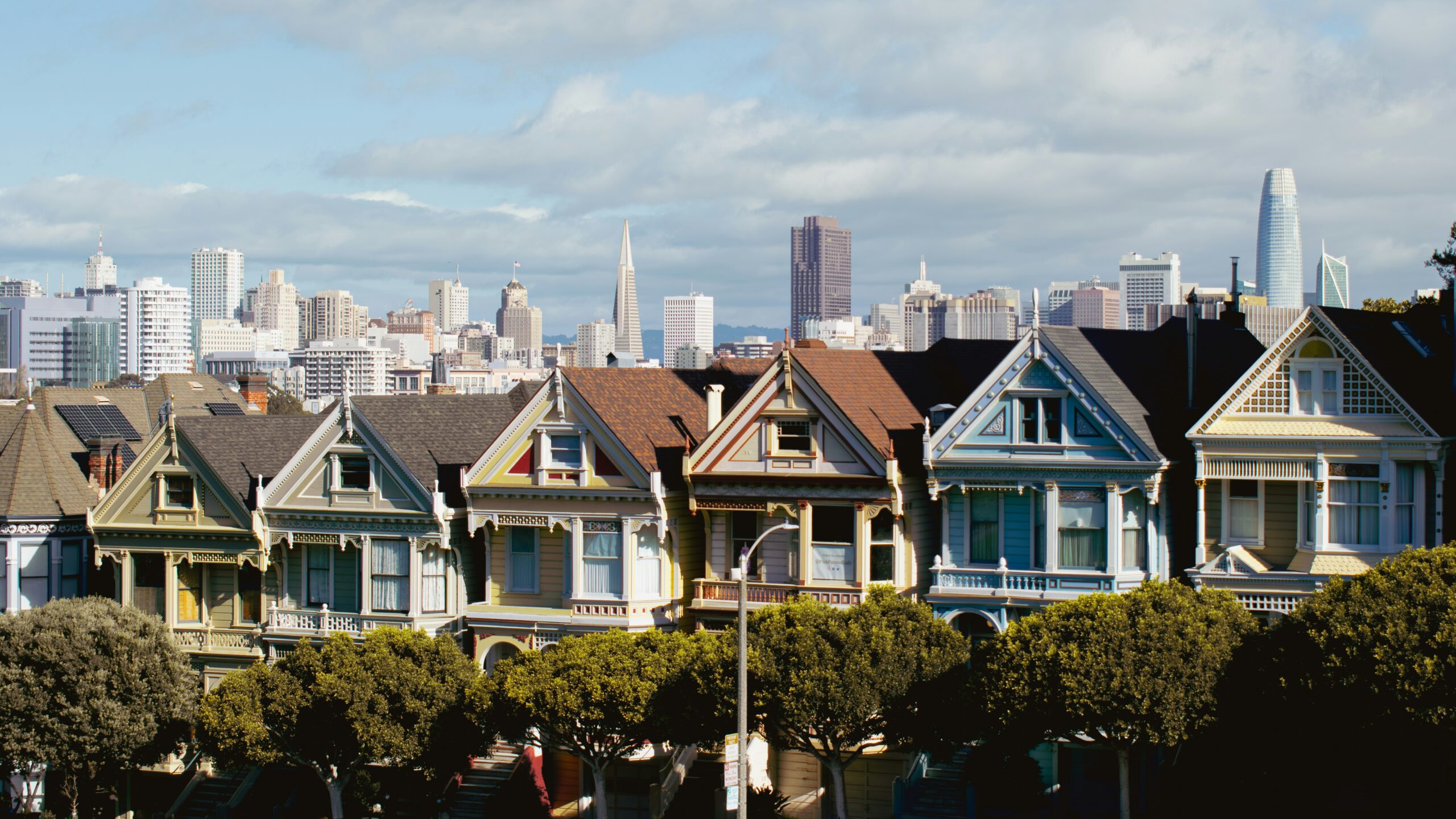
Patrick Barber has sold homes in San Francisco for more than two decades. He weathered the dot-com crash, the 2008 collapse, and the pandemic freeze. But nothing prepared him for what happened last month in Noe Valley, when a three-bedroom house drew 14 competing offers.
“Almost every winning bid came from someone at an AI company,” said Barber, an agent with Compass. “They waive contingencies, they pay all cash or put 50% down, and they close in two weeks. I have never seen this level of purchasing power concentrated in one industry.”
The anecdote matches the data. The median price for a single-family home in San Francisco hit $2.15 million in March 2026, a record that surpasses every previous peak, including the heights of the late-2010s tech rally. Compass, one of the city’s largest residential brokerages, tracked the closings and reported the figure to Bloomberg. Condos surged in tandem: the median jumped 27% year over year, climbing from roughly $1.07 million to $1.36 million.
Behind the numbers is a hiring wave unlike anything the city has absorbed before. OpenAI, which expanded into larger San Francisco headquarters in 2025, has continued to grow its workforce. Google DeepMind and Anthropic have added engineering and research staff in the same neighborhoods where bidding wars are now routine. Total compensation packages at these firms regularly top $400,000 for mid-level engineers, according to self-reported data on sites like levels.fyi, combining base salary, bonuses, and equity grants that convert into serious purchasing power when stock prices rise.
A familiar cycle, but steeper
San Francisco has watched this pattern before. The dot-com boom of the late 1990s and the mobile and cloud expansions of the 2010s both sent home prices sharply higher. What sets the AI cycle apart is its starting altitude. The previous single-family median peak hovered near $1.8 million. Reaching $2.15 million means the market has added roughly $350,000 in median value during a period when 30-year fixed mortgage rates sit in the mid-6% range, far from the sub-3% levels that fueled pandemic-era buying nationwide.
Return-to-office mandates have amplified the pressure. OpenAI, Anthropic, and several other AI firms require employees to work on-site multiple days per week, concentrating demand in San Francisco proper rather than spreading it across the Bay Area suburbs that absorbed remote workers during 2020 and 2021.
The 27% condo gain tells its own story. When single-family homes become unreachable, buyers shift to condos, compressing the price gap between the two segments. That spillover pushes ownership further from households earning closer to the city’s median income, which the U.S. Census Bureau’s American Community Survey estimated at roughly $136,000 in its most recent release. At $2.15 million, a conventional mortgage with 20% down would require a household income well above $350,000 to qualify under standard debt-to-income guidelines. The math is only slightly less punishing at the $1.36 million condo level.
For context, Manhattan’s median sale price for all residential properties hovered around $1.1 million in early 2026, according to data from Miller Samuel. San Francisco’s single-family median now nearly doubles that figure, though the comparison is imperfect given Manhattan’s condo-heavy inventory.
The human cost of the gap
Maria Torres, a pediatric nurse who has rented in the Inner Richmond for nine years, described the shift in stark terms. “My landlord told me in April he is selling the building. He said he could get $1.6 million for a two-unit property that he bought for $800,000. I make $125,000 a year, which used to feel like a good salary here. Now I am looking at places in Daly City and wondering if I can even afford those.”
Torres is not alone. Tenant advocacy groups in San Francisco report a rise in buyout offers and steep rent increases as landlords reposition properties for higher-income tenants. The San Francisco Rent Board tracks eviction notices, and those filings will be worth watching in coming quarters for any measurable uptick. Systematic data on displacement tied specifically to AI-era hiring has not yet been assembled by researchers or public agencies, which makes it difficult for policymakers to design targeted interventions like expanded rental assistance or right-to-purchase programs.
What the data shows and what it does not
Compass covers a significant share of San Francisco transactions, and its median figures carry real weight. But they remain a single brokerage’s tally. Official recorded-sale data from the San Francisco Assessor-Recorder’s Office for March 2026 has not yet been published. When it arrives, it will either confirm or adjust the Compass numbers. March is also typically one of the year’s strongest months for Bay Area home sales, which means seasonal patterns may be inflating the headline figure.
The causal link to AI hiring is well supported but not proven by a formal economic study. Bloomberg’s analysis connects the price record to observable conditions: major AI firms are headquartered in or expanding within the city, those firms pay at the top of the tech salary scale, and the timing of the surge aligns with aggressive AI investment and rising tech equity valuations. Other forces are also in play. San Francisco’s post-pandemic recovery has drawn international buyers back, and a broader stock rally has fattened brokerage accounts across the tech sector, not just at AI companies.
Neighborhood-level breakdowns for March have not been released. Whether the gains are concentrated in traditionally expensive enclaves like Pacific Heights and Noe Valley or have spread to the Outer Sunset, Excelsior, and other historically more affordable areas remains an open question. Broad-based appreciation would signal a fundamentally different market dynamic than localized spikes near AI company offices.
The supply side of the equation
San Francisco’s chronic housing shortage amplifies every demand shock. The city permitted approximately 4,600 new housing units in 2024, according to data from the San Francisco Planning Department, a pace that falls well short of regional targets set by the state under its Regional Housing Needs Allocation process. When a wave of six-figure earners enters a market with that kind of supply constraint, prices respond fast.
City officials face renewed pressure to accelerate approvals for multifamily construction, but zoning reform and permitting timelines move slowly relative to hiring cycles. Governor Gavin Newsom’s administration has pushed statewide legislation to streamline housing production, yet local implementation in San Francisco has lagged. Without a meaningful increase in new units, the supply side offers little near-term relief.
Where the market goes from here
No institutional forecast from the Federal Reserve, the California Department of Housing and Community Development, or major academic research centers has modeled what sustained AI hiring at current levels would do to San Francisco prices over the next several years. The city’s own planning department has not published updated demand projections that account for the AI employment wave.
That gap matters. If AI investment continues to accelerate and headcount keeps growing, the $2.15 million median could prove to be a waypoint rather than a ceiling. If interest rates rise, if AI company valuations correct, or if new housing supply finally arrives at scale, the trajectory could flatten or reverse. Housing markets have surprised in both directions before.
For now, the most reliable takeaway is narrow but consequential: San Francisco’s home prices have reached new highs, those highs coincide with an unprecedented concentration of AI wealth in one city, and the gap between what AI workers can pay and what everyone else can afford is growing wider with each monthly sales report. The policy response, and the data needed to guide it, have not caught up.