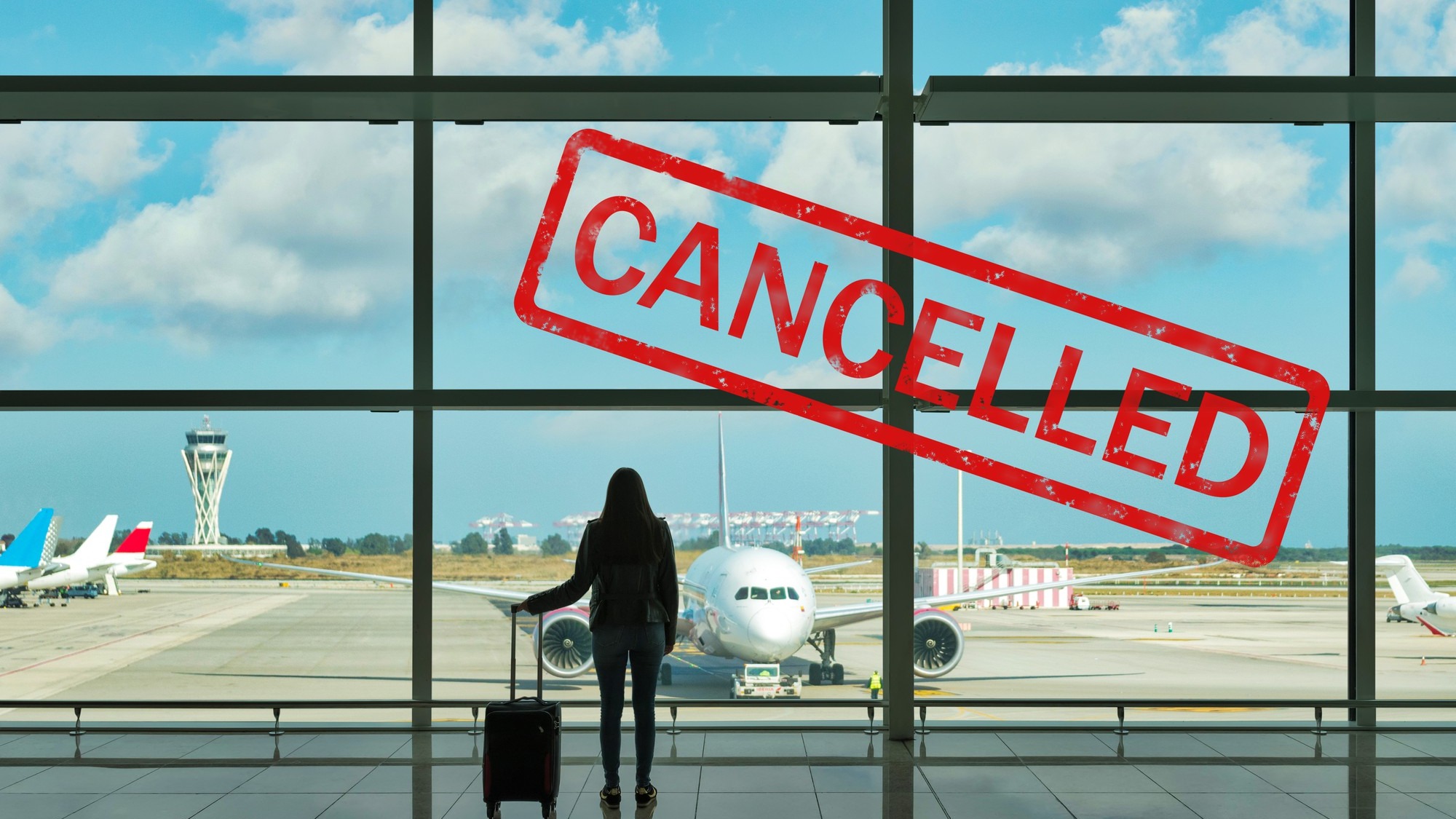
Air travelers who get stuck with a canceled flight can now demand their money back in cash, not airline credits or vouchers, under a federal rule that shifts the burden of refunds from passengers to carriers. The Department of Transportation finalized a regulation requiring airlines to issue automatic refunds, including for ancillary fees like checked bags and seat upgrades, when a flight is canceled or significantly changed and the traveler declines alternatives. The rule, backed by a statutory mandate Congress created through the FAA Reauthorization Act of 2024, represents the most direct federal intervention into airline refund practices in years.
Why the DOT automatic refund rule changes the game for passengers
For years, airlines treated cancellations as an opportunity to retain passenger funds. Carriers routinely offered non-transferable credits instead of cash, forcing travelers to rebook on the airline’s terms or lose the value of their tickets. The DOT’s final refund regulation eliminates that default. When an airline cancels a flight, regardless of the reason, and the passenger chooses not to travel or accept rebooking, the carrier must return the full purchase price automatically.
The refund must arrive in the original form of payment. If a traveler paid by credit card, the airline sends the money back to that card. If they paid in cash, they get cash. This requirement extends to government-imposed taxes and fees as well as airline-imposed charges for services like baggage and seat selection, according to the DOT’s official announcement of the rule. Passengers no longer need to navigate fine print or chase customer service agents to convert a credit into a refund; the money is supposed to flow back automatically when the triggering event occurs.
The practical effect is significant. Airlines that previously absorbed canceled-flight revenue through unredeemed vouchers now face a direct cash outflow every time they fail to operate a scheduled service. That financial pressure could reshape how carriers manage scheduling, overbooking, and operational reliability, because every cancellation now triggers an immediate balance-sheet hit rather than a deferred credit liability. It also changes the negotiating dynamic between passengers and airlines: travelers can simply decline an unsatisfactory alternative itinerary and receive their money back, rather than feeling compelled to accept whatever is offered to avoid losing value.
Statutory backing and the scope of refund protections
The DOT rule does not stand alone. Congress codified a parallel refund framework in 49 U.S.C. Section 42305, enacted through the FAA Reauthorization Act of 2024. That statute requires a full refund, including taxes and ancillary fees, for certain canceled or significantly delayed flights when a passenger requests one. The DOT rule and the statute overlap but differ in one key respect: the DOT regulation mandates automatic refunds without requiring the passenger to ask, while the statutory text conditions the refund on a passenger request. Both frameworks apply, meaning airlines must meet whichever standard is more protective of the consumer in a given situation.
In practice, that means airlines can no longer rely on inertia or confusion to keep customer money when flights do not operate as promised. The statutory right to a refund upon request is now reinforced by a regulatory obligation to send the refund without being asked, at least in the circumstances covered by the DOT rule. Together, the two layers of protection are designed to close loopholes that previously allowed carriers to steer customers toward credits and to argue over what counted as a qualifying disruption.
What counts as a “significant change” to your flight
A central question for travelers is when a schedule shift becomes big enough to trigger an automatic refund. The DOT’s consumer guidance on airline passenger rights under the new rule explains how the agency defines a “significant change.” While airlines have long adjusted departure times, routings, and aircraft types, the rule draws a clearer line between routine tweaks and material disruptions.
Under the DOT framework, a significant change can include a substantial departure or arrival delay, a change in the number of connections, a switch to a different airport in the same metropolitan area, or a downgrade in the class of service. When one of these changes crosses the agency’s defined thresholds, the passenger may reject the revised itinerary and receive a refund instead. The rule is intended to prevent airlines from avoiding refunds by operating a technically “similar” flight that is, in reality, far less useful to the traveler-for example, an overnight arrival instead of a daytime one, or an extra connection that adds hours to the journey.
Importantly, the protections apply regardless of the cause of the disruption. Whether a cancellation stems from weather, mechanical problems, crew shortages, or broader operational issues, the refund obligation is the same once the rule’s criteria are met. That uniform standard aims to simplify the experience for passengers, who no longer need to parse whether a particular reason falls inside or outside a carrier’s contract-of-carriage promises.
What travelers should do when flights are canceled or changed
Although the rule requires automatic refunds, travelers still benefit from documenting disruptions and monitoring their accounts. When a cancellation or significant change occurs and a passenger declines alternatives, the airline should initiate the refund without further action. If the money does not appear within the time frames specified by DOT regulations, passengers can contact the airline, escalate through its complaint channels, and, if necessary, file a complaint with the Department of Transportation.
Passengers should also pay attention to how they originally paid for the ticket, since refunds must return to that same method. Keeping records of confirmation numbers, receipts, and any communications about schedule changes can streamline follow-up if the automatic process fails. The new rule is designed to make refunds routine rather than exceptional, but its effectiveness will depend on consistent enforcement and on travelers knowing when they are entitled to say no to an altered itinerary and get their money back.