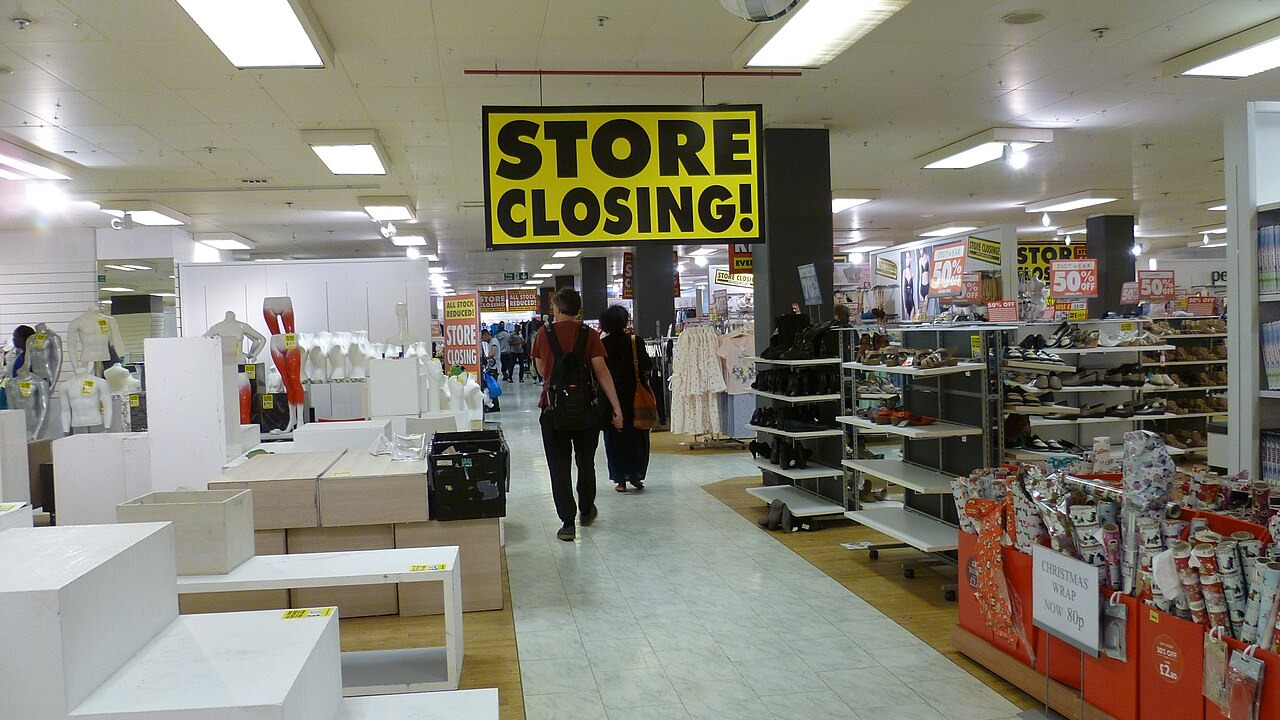
At Home, the home decor superstore chain, is shutting down 32 locations across the country as its Chapter 11 bankruptcy case accelerates. The closures are split into two waves: an initial round of 26 stores followed by six more, with liquidation firm Hilco Consumer-Retail managing the wind-down sales at each site. The staggered approach raises pointed questions about which stores the company views as expendable and how quickly it can shed lease obligations to stabilize its finances under court protection.
Why the staggered 26-plus-6 closure pattern signals urgency
The two-wave structure of these closures is not random. By launching store-closing sales at 26 locations first, At Home and its advisors created a controlled test: which leases could be rejected fastest, which inventories could be liquidated most efficiently, and which markets would absorb discounted merchandise without cannibalizing nearby stores that remain open. The six additional locations that entered closing-sale mode shortly after suggest the company identified a second tier of underperformers once the initial wave was underway.
For shoppers, the practical effect is immediate. Closing-sale terms at these stores include structured discount schedules, hard cutoff dates for returns and exchanges, and deadlines for redeeming gift cards. Once a location enters liquidation, its inventory shrinks fast, and customer protections narrow. Anyone holding store credit or planning a return at one of the 32 affected stores faces a compressed window to act. That time pressure is by design: the faster inventory converts to cash, the more flexibility At Home has to support its remaining operations during the bankruptcy process.
The sequencing also sends a signal to landlords and vendors. By moving quickly on a first batch of stores, At Home shows the court and creditors that it is willing to make difficult cuts to reduce ongoing rent and operating expenses. The follow-on group of six stores illustrates that the footprint review is iterative, not static. As performance data from the first closures comes in, management can recalibrate which additional locations no longer fit the go-forward plan.
Hilco’s role and the documented store list
Hilco Consumer-Retail, a firm that specializes in managing retail liquidations, was retained to oversee the closing sales across all 32 locations. The company’s involvement is standard in large-scale retail bankruptcies, but the scope here is significant. Hilco’s assignment covers standardized discount structures, coordinated marketing of the sales events, and enforcement of modified return and gift-card policies at each closing store. That centralized approach reduces the risk of inconsistent customer experiences that could invite complaints or legal disputes.
The six additional stores were announced with a detailed table listing specific addresses, cities, and states. That level of specificity gives affected communities a clear record of which locations are disappearing from their local retail mix. The earlier 26-store announcement followed the same format, providing addresses and operational terms so customers could identify their nearest closing store without ambiguity. Together, the two releases form a transparent, public inventory of the 32 locations that are now in wind-down mode.
The decision to publish granular store-level data through press releases, rather than burying it in court filings, reflects a practical reality of retail bankruptcy: closing sales generate cash that the debtor needs to fund ongoing operations and satisfy creditors. Publicity drives foot traffic, and foot traffic drives liquidation revenue. Every dollar recovered from inventory at a closing store is a dollar that does not have to come from other sources during the restructuring. Using a broad distribution platform like PR Newswire ensures that both local media and consumers see the details quickly.
What the 32-store count does not reveal
The press releases that document these closures are precise about addresses and sale terms but silent on several questions that will shape At Home’s path forward. No public announcement has disclosed the company’s total remaining store count after these 32 locations shut down. Without that figure, it is difficult to gauge whether the current cuts represent a modest trimming of marginal stores or a more substantial retreat from certain regions.
There is also no guidance on whether additional closure rounds are likely. In many retail bankruptcies, an initial list of stores is followed by further reductions as the company negotiates with landlords and tests the performance of the surviving fleet. The absence of explicit language about future rounds does not rule out more closures; it simply means those decisions have not been publicly committed to, leaving employees and shoppers in other markets uncertain about the long-term status of their local store.
Another missing piece is detail on how At Home is segmenting its portfolio. The announcements do not explain whether the 32 shuttered locations share common traits such as higher rents, weaker sales per square foot, or overlapping trade areas with stronger stores. That information would help outside observers understand whether the company is primarily pruning obvious underperformers or fundamentally reshaping its geographic footprint.
For now, what is clear is limited but important. Thirty-two stores are in active liquidation, run by a professional firm under court supervision. Customers in those markets face a narrowing window to use gift cards, complete returns, and take advantage of discounts before the doors close for good. Landlords lose tenants, local retail corridors lose anchors, and At Home gains short-term liquidity at the cost of a smaller national presence. The unanswered questions about how many stores will remain, and where, will determine whether this is a temporary belt-tightening or the early phase of a much deeper contraction.