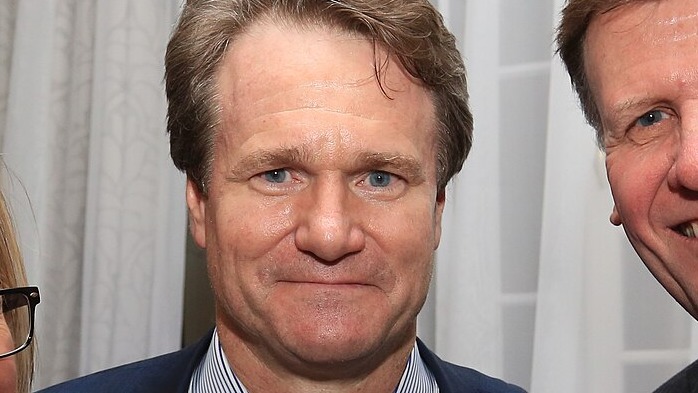
Bank of America CEO Brian Moynihan has described the U.S. economy as “pretty solid” while flagging a consumer pullback as the single biggest threat to growth in 2026. His assessment lands at a moment when federal data tells a split story: hiring remains steady, but household spending has already lost momentum, and price pressures have not fully eased. The tension between those signals shapes what comes next for the roughly two-thirds of GDP that depends on what American consumers decide to buy.
Why Moynihan’s Warning Arrives at a Fragile Moment
The first-quarter 2026 GDP advance estimate from the Bureau of Economic Analysis confirmed that consumer spending decelerated relative to the prior quarter. That slowdown appeared even as overall output held up, meaning other components of GDP, such as government outlays and business investment, partially offset softer household demand. When the largest single driver of economic activity loses speed, the margin for error shrinks quickly.
At the same time, the labor market report for April 2026 put the unemployment rate at 4.3%. That figure suggests employers are still holding on to workers, and wage income continues to flow into household budgets. Moynihan’s characterization of the economy as “pretty solid” rests heavily on that employment cushion. Yet 4.3% sits close enough to levels where further deterioration could tip sentiment. If the next two monthly releases push unemployment past 4.5% while inflation measured by the Personal Consumption Expenditures price index stays above 2.4%, consumer spending would likely decelerate at a faster quarterly pace than the already-weakened rate the BEA recorded for early 2026.
Government Data Behind the Consumer Spending Slowdown
Two primary federal datasets anchor the debate. The BEA’s advance GDP report for the first quarter documented the spending deceleration and included official PCE price indexes, which remain the government’s preferred gauge of inflation. Those indexes showed that affordability pressures have not disappeared, even if headline inflation has moderated from its peaks. When prices stay elevated and wage growth merely keeps pace, real purchasing power stagnates, and discretionary spending is the first category households cut.
Beyond the quarterly GDP snapshot, the BEA’s dedicated PCE data series offers a clearer view of underlying inflation trends. Core categories that exclude volatile food and energy costs have proven sticky, limiting how far real consumption can stretch. For middle-income households, that stickiness shows up in higher monthly outlays for essentials such as rent, insurance, and services, leaving less room for travel, dining out, and durable goods.
The April employment report added a second data layer. An unemployment rate of 4.3% is historically moderate, but the direction matters more than the level. A labor market that is cooling, rather than collapsing, can still erode consumer confidence if job seekers face longer searches or if hours and overtime decline before outright layoffs appear. Moynihan’s caution reflects that distinction: the economy does not need a recession-scale shock for spending to weaken enough to drag growth below trend.
For households, the practical consequence is straightforward. Anyone carrying variable-rate debt or planning a large purchase in the second half of 2026 should watch two numbers closely: the monthly jobs report and the PCE index updates published alongside the BEA’s Personal Income and Outlays releases. A rising unemployment rate paired with sticky inflation would squeeze budgets from both sides, making it harder to service existing obligations and less attractive to take on new ones.
Unanswered Questions About the Rest of 2026
Several gaps in the available evidence limit how far anyone, including a major bank CEO, can see into the rest of the year. One uncertainty is how much pent-up demand remains after several years of elevated prices. If households have already pulled forward big-ticket purchases-cars, appliances, home renovations-the appetite for additional spending may be weaker than headline income data implies. Conversely, if some consumers delayed those decisions, a modest improvement in confidence could unleash a short burst of catch-up buying.
Another open question involves the distribution of financial stress. Aggregate figures on consumption and unemployment can obscure widening gaps between higher-income households, who may still have excess savings and stable jobs, and lower-income workers, who often face thinner cushions and more volatile hours. If strain is concentrated at the bottom, certain sectors-discount retailers, entry-level housing, subprime credit-will feel the pressure first, even while luxury and high-end services appear resilient.
Policy responses also remain in flux. While the Federal Reserve’s decisions will hinge on the same inflation and employment indicators that Moynihan is watching, the central bank faces a delicate trade-off. Easing too soon risks reigniting price pressures; holding rates high for too long could deepen the slowdown in consumer-sensitive categories such as housing, autos, and credit card borrowing. Fiscal policy, from targeted tax relief to expanded benefits, could cushion specific groups but is unlikely to fully offset a broad-based pullback in spending if confidence erodes.
For now, Moynihan’s “pretty solid” description and his warning about consumer retrenchment can both be true. The economy enters the second half of 2026 with a still-functioning jobs engine and slowing, but not collapsing, household demand. Whether that balance holds will depend on how quickly inflation converges toward the Fed’s target, how employers react to softer sales, and how much financial resilience households have left after years of navigating higher costs. The answer to those questions will determine if this period becomes a brief mid-cycle cooling-or the start of a more persistent drag led by the very consumers who have carried the expansion so far.