Checking account holders at the largest U.S. banks face renewed exposure to higher overdraft charges after the president signed a joint resolution on May 12, 2025, killing a federal rule that would have capped most fees at $5. Many of those banks had already dropped their overdraft charges from roughly $35 per transaction to $5 or $10 in recent years, but without a binding federal limit, nothing prevents them from raising those fees again.
How the May 2025 repeal reopens the door to higher charges
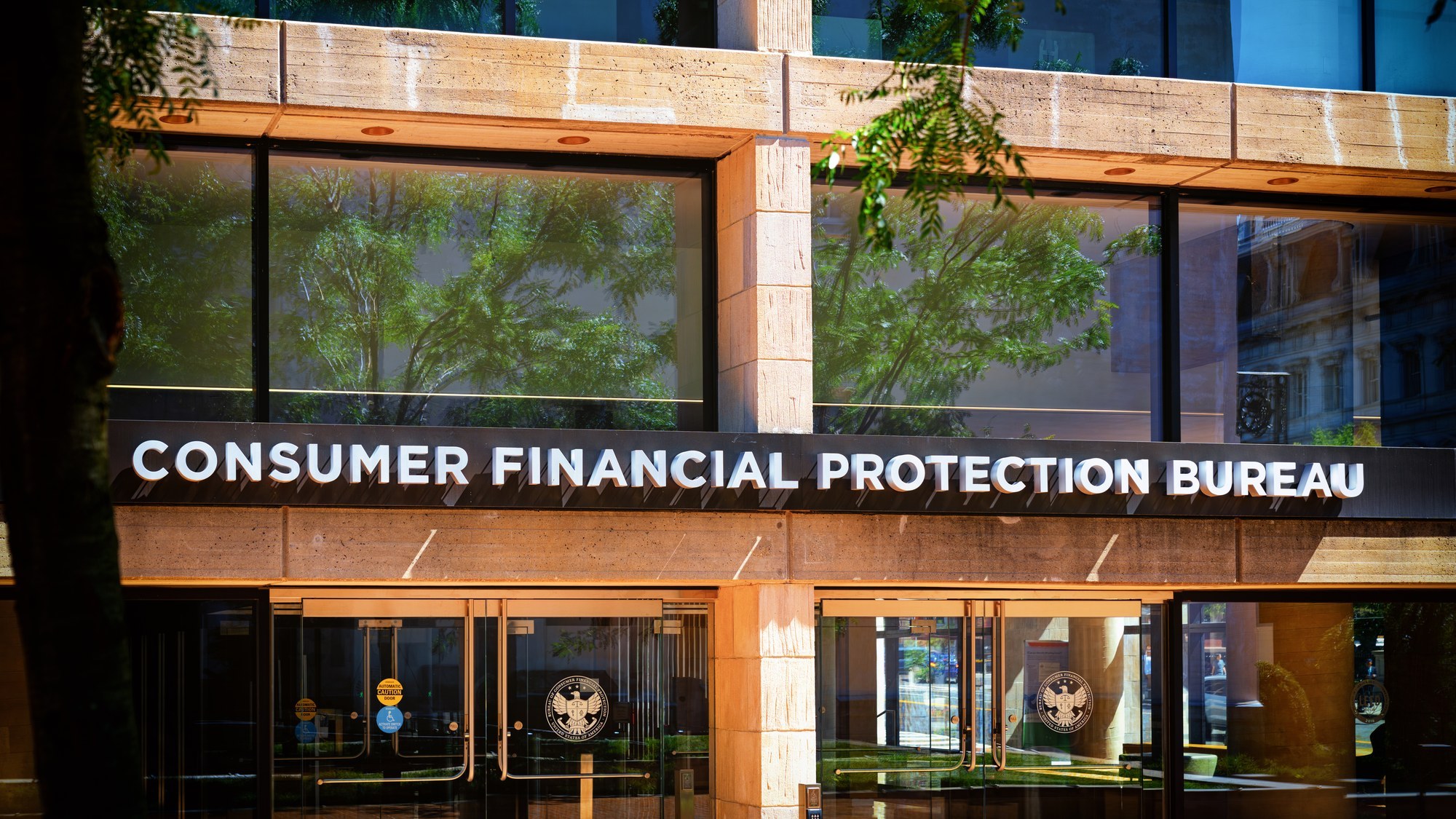
The Consumer Financial Protection Bureau finalized its overdraft rule in December 2024, targeting financial institutions with more than $10 billion in assets. Under that rule, banks choosing to charge overdraft fees had three options: treat the overdraft as a line of credit subject to full Truth in Lending Act disclosures, charge only enough to cover their costs, or use a $5 benchmark. Congress used the Congressional Review Act to pass S.J.Res. 18, and the president signed it into law, wiping the rule off the books entirely and barring the CFPB from issuing a substantially similar rule in the future without new statutory authority.
The repeal carries a practical sting for the millions of consumers who overdraw their accounts each year. Before banks began voluntarily cutting fees, the FDIC noted that overdraft charges could run around $35 per transaction. A single grocery run or gas fill-up that pushed an account negative could trigger that penalty, sometimes multiple times in a day. The question now is whether banks that dropped to $5 or $10 will hold those lower prices without regulatory pressure to do so, or whether competitive dynamics and shareholder expectations will nudge them back toward higher charges.
The mechanics of the repeal matter. Under the Congressional Review Act, lawmakers can overturn recent agency rules with a simple majority vote and limited debate. A Congressional analysis of the CRA process notes that once a rule is disapproved, the agency may not reissue it in substantially the same form. For overdraft policy, that means the CFPB lost its most direct tool for capping fees at very large banks, at least in the near term.
Call Report data and the $6.1 billion question
The hypothesis that overdraft and nonsufficient-funds fee income will climb measurably at very large banks within two quarters is testable. Banks with more than $1 billion in assets report fee income through quarterly Call Reports filed with federal regulators. Those filings showed that overdraft and NSF revenue fell more than 50% from 2019 to 2023, according to CFPB research based on Call Report data, saving consumers about $6.1 billion annually. If fee schedules start creeping upward, the same data pipeline will capture the reversal, likely within the first or second quarterly filing after banks adjust their pricing.
The CFPB’s own analysis quantified the scale of voluntary fee reductions. Using Call Report line items from banks above $1 billion in assets, the agency documented a revenue drop of more than 50% between 2019 and 2023, translating to roughly $6.1 billion in annual savings for consumers. The agency attributed much of the shift to public pressure, regulatory scrutiny, and competitive moves by large banks eager to retain depositors in an era of easy account switching and rising interest rates on savings elsewhere.
Those same forces could, in theory, restrain a return to the old fee levels. Banks that advertise “low-fee” or “no-overdraft” checking may hesitate to raise prices for fear of reputational damage. Yet the legal landscape has changed. With the rule nullified, overdraft pricing is once again governed primarily by existing disclosure requirements and general consumer protection laws, rather than a specific cap or safe harbor.
Very large banks back under a lighter touch
The original rule was narrowly focused on the biggest players. The CFPB’s overdraft guidance for very large institutions laid out expectations for banks with more than $10 billion in assets, emphasizing clear disclosures, responsible underwriting for overdraft lines of credit, and limits on repeated fees. By tying the $5 benchmark to this group, the bureau aimed at the segment that generates the majority of overdraft revenue while leaving community banks and credit unions largely untouched.
With the rule gone, those very large institutions retain broad discretion to set overdraft terms, so long as they follow general consumer law and existing opt-in requirements for one-time debit and ATM transactions. Some may keep current fee levels but tighten other conditions, such as grace periods, de minimis thresholds, or daily caps on the number of fees. Others could experiment with tiered pricing or subscription-style overdraft coverage that effectively raises the cost for heavy users.
What consumers can do now
For consumers, the policy reversal underscores the importance of monitoring account terms. Banks must disclose their overdraft and nonsufficient-funds fees, but changes can arrive in dense notices that are easy to overlook. Customers who have grown accustomed to $5 or $10 charges could be caught off guard if those fees climb back toward pre-2020 levels.
Practical defenses include enabling low-balance alerts, linking checking to a backup savings account or line of credit where available, and comparing fee schedules across institutions. Many online banks and credit unions continue to market accounts with no overdraft fees or more forgiving policies. If Call Report data eventually show overdraft revenue rising again, it will likely reflect a mix of higher prices, more frequent fees, and shifts in consumer behavior in response to a landscape where one of the strongest federal checks on overdraft pricing has just been removed.