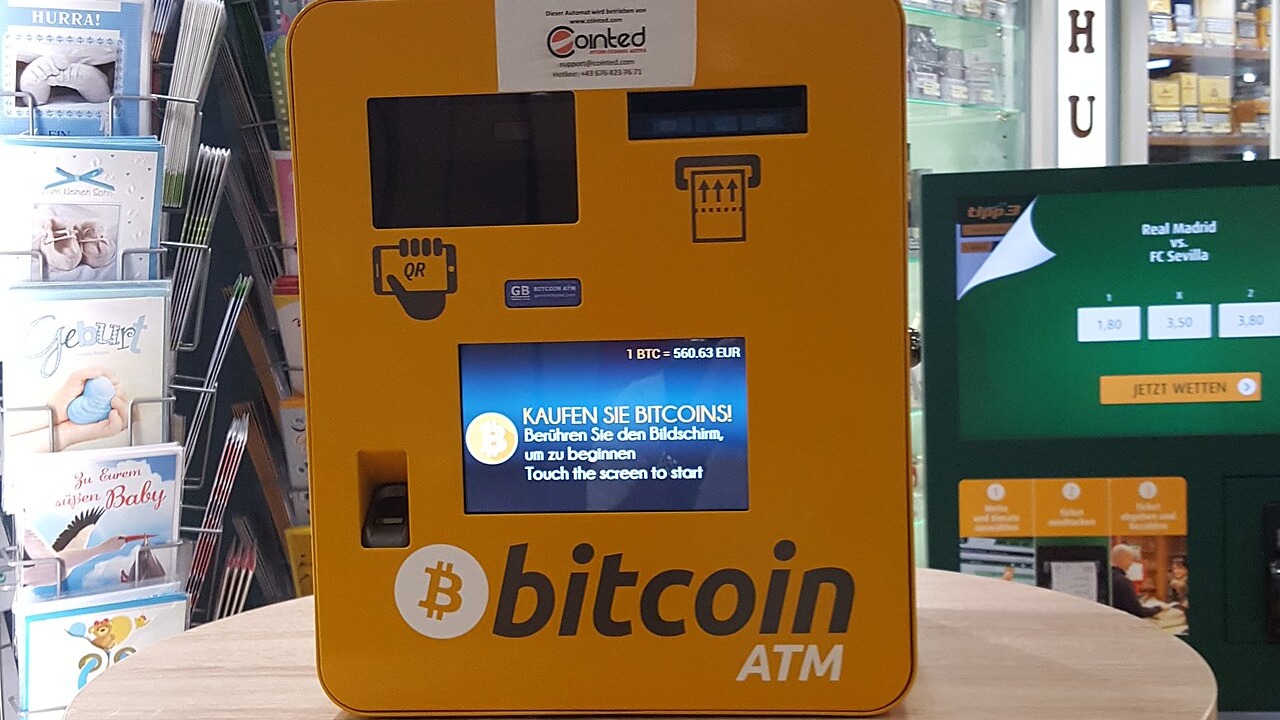
Texans lost roughly $56 million through cryptocurrency kiosk scams in a single year, according to FBI complaint data, and the Texas Legislature has responded with a bill that would cap transactions at $3,000 per customer every 24 hours. S.B. 1705, filed during the 89th legislative session, targets a payment channel that state and federal officials say exists primarily to move money beyond the reach of traditional fraud protections.
How a $3,000 cap targets the bulk of kiosk fraud losses
The core tension behind S.B. 1705 is straightforward: cryptocurrency kiosks process large, fast, and largely irreversible payments, and scammers exploit that speed. The bill would prohibit transactions over $3,000 per customer in any 24-hour window, while also requiring clearer receipts and mandatory registration of kiosk operators with state regulators. That dollar threshold matters because imposter schemes typically pressure victims into sending thousands of dollars in a single visit, often directing them to scan a QR code at a nearby kiosk.
The Federal Trade Commission has documented this pattern in consumer alerts, warning that anyone directed to a Bitcoin ATM by a caller claiming to be from a government agency, law enforcement, or a utility company is almost certainly being scammed. Victims are told their bank accounts are compromised, that they face arrest over unpaid taxes, or that a loved one is in immediate danger. The caller then guides them step by step to a kiosk where they convert cash into cryptocurrency that flows immediately to the scammer’s wallet.
Because these transfers are effectively irreversible, a single high-pressure interaction can drain a victim’s savings. A transaction cap would not eliminate every loss, but it would shrink the maximum amount a victim could send before having time to reconsider, contact a family member, or speak with law enforcement. It would also make it harder for scammers to walk first-time victims through very large payments in one uninterrupted session.
FBI data and state testimony behind the $56 million figure
The FBI’s Internet Crime Complaint Center compiled state-by-state complaint data showing that Texas residents reported $56 million in losses tied specifically to cryptocurrency kiosks. That figure reflects only the incidents reported to IC3 and does not capture victims who never file a complaint, meaning the true total is likely higher. Even with that limitation, Texas ranked among the hardest-hit states in the dataset.
During a Texas House committee hearing, Adam Colby, the executive director of the Texas Financial Crimes Intelligence Center, told lawmakers that crypto kiosks serve “no useful purpose” beyond hiding illicit funds. Colby argued that the machines are disproportionately used in fraud, money laundering, and other financial crimes, and that legitimate users have alternative ways to buy digital assets through regulated exchanges. His blunt assessment gave legislators a direct rationale for imposing strict limits rather than relying on voluntary industry compliance or consumer education alone.
The FTC has separately tracked rising losses tied to Bitcoin ATMs through its Consumer Sentinel Network. In a recent alert, the agency warned that if someone directs you to a kiosk, scans a code for you, and tells you to feed in cash, “it’s a scam,” emphasizing that legitimate organizations will not demand cryptocurrency as payment. That red flag applies regardless of how convincing the caller sounds or how urgent the supposed crisis may seem.
What S.B. 1705 leaves unanswered about kiosk fraud
Several questions remain open even if S.B. 1705 becomes law. Neither the IC3 data nor the legislative analysis breaks down how many of the reported Texas losses came from single transactions above $3,000 versus smaller, repeated deposits. Without that distribution, it is difficult to measure exactly how much fraud volume the cap is likely to block.
Scammers could also adapt by instructing victims to make multiple visits under the limit, or by recruiting several people to send smaller amounts on their behalf. The bill’s focus on a 24-hour window helps, but it does not directly address schemes stretched over several days or involving multiple accomplices. Law enforcement officials have acknowledged that any cap is a partial solution, not a complete fix.
Another unresolved issue is how the new rules will affect Texans who use kiosks for legitimate purposes, such as small, occasional purchases of cryptocurrency. For these users, the $3,000 ceiling may never come into play, but additional registration and receipt requirements could change which operators remain in the market and where machines are located. Critics in the industry have warned that overly restrictive rules could push some activity into less transparent channels, although lawmakers have prioritized consumer protection over kiosk availability.
Finally, enforcement will determine how much difference the statute makes. Regulators will need accurate reporting from kiosk operators, clear mechanisms to monitor compliance with daily limits, and the authority to penalize companies that ignore the cap. Consumer advocates say that outreach is just as important: Texans need to understand why a machine might refuse a large transaction and recognize that denial as a warning sign rather than an inconvenience.
For now, the $56 million in reported losses provides a stark benchmark for evaluating S.B. 1705. If the cap and related safeguards drive that number down in future FBI complaint data, lawmakers will point to the bill as proof that tighter controls on cryptocurrency kiosks can blunt some of the most damaging imposter scams. If losses stay high, the next debate in Austin may be whether to go beyond transaction limits and consider even stronger measures against a payment channel that has become a favored tool for fraud.


