Credit score concept Person use smartphone with virtual credit score icon for chart with credit

Keeping your card balances under about 30% of the limit helps your credit score, even if you pay in full

Consumers who pay their credit card bills in full every month can still see their scores dip if the balance reported to credit bureaus climbs too high relative to their limit. The Consumer Financial Protection Bureau advises keeping usage below 30 percent of available credit, and federal research confirms that utilization-style variables rank among the…
Read More
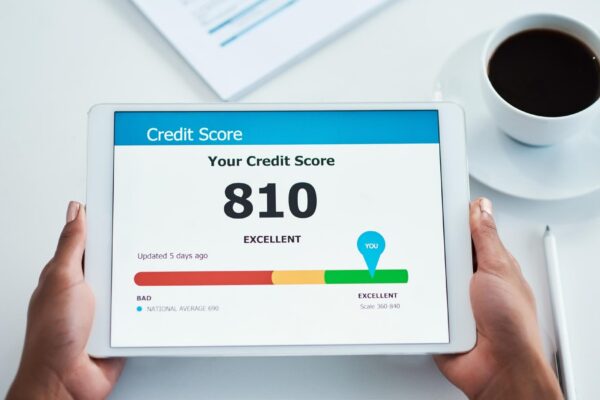
Good and positive credit score on the screen of a tablet from above Applying for finance a loan or a home mortgage bond online Closeup of hands holding a wireless device while banking on the web

Payment history and credit utilization drive most of your credit score

Two factors alone account for roughly 65 percent of what determines a consumer’s credit score, and millions of borrowers are making decisions about which one to fix first without clear evidence on sequencing. Fair Isaac has reported that payment history characteristics carry about 35 percent of predictive accuracy, while consumer indebtedness accounts for about 30…

Read More
person using black laptop computer

Trading on margin means borrowing to invest, which can wipe you out faster than a cash account in a downturn

Investors who buy stocks with borrowed money face a brutal math problem when prices drop: their losses compound against them while their broker’s patience runs out. The U.S. Securities and Exchange Commission has warned that losses in a margin account can exceed the cash an investor originally deposited, and that brokers can sell holdings without…

Read More
a dollar bill sitting on top of a laptop keyboard

Investing the same amount on a schedule, called dollar-cost averaging, removes the guesswork

Investors who set up automatic, fixed-dollar contributions into index funds face a straightforward tradeoff: they give up the chance to time a perfect entry point in exchange for a mechanical discipline that keeps them buying through both rallies and selloffs. The U.S. Securities and Exchange Commission defines dollar-cost averaging as investing equal portions at regular…

Read More
a man and a woman sitting on a couch

Reviewing the beneficiary on every account after a divorce or death keeps your money from going to the wrong person

An ex-spouse who was removed from a will can still collect a six-figure payout from a retirement account or life insurance policy if the account holder never updated the beneficiary form. Two Supreme Court decisions, Egelhoff v. Egelhoff in 2001 and Sveen v. Melin in 2018, define where state divorce laws end and federal rules…

Read More
Confident modern senior man wearing yellow hoodie using laptop and credit card entering data typing on keyboard doing internet paying for purchases using internet bank

Closing your oldest credit card can shorten your credit history and lower your score, even if you never use it

Consumers who cancel a long-held credit card to simplify their finances risk a score drop that hits harder than many expect, even if the card has been sitting unused in a drawer for years. The Consumer Financial Protection Bureau warns that closing a credit card can decrease a credit score by reducing total available credit…

Read More
Dollars and a magnifying glass on a laptop keyboard

California alone is holding about $15 billion in unclaimed cash, and a free search at MissingMoney.com shows whether any is yours

Millions of Californians have money sitting in state vaults that they have never tried to collect. The California Legislature designated February 2026 as Unclaimed Property Month through HR 79, a resolution that explicitly encourages residents to search for forgotten assets using the State Controller’s free claim tool. The state holds roughly $15 billion in unclaimed…

Read More