
Midsection of woman using mobile phone

Attacking your highest-rate debt first saves the most money over time

Borrowers carrying balances on multiple credit cards face a straightforward math problem: every dollar of extra payment directed at the wrong account costs them real money in avoidable interest. Federal regulators, university researchers, and public extension services all point to the same answer. Paying down the card with the highest annual percentage rate first, before…
Read More
AquilaVeritas - CC BY 4.0/Wiki Commons

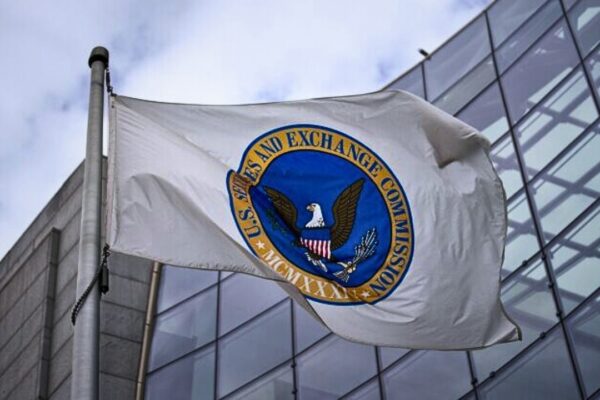
Before you invest, confirm the company registered its offering with the SEC, for free

Investors scrolling through social-media feeds or email inboxes encounter pitches for private deals, crowdfunding rounds, and startup shares on a near-daily basis. Many of these promotions skip a basic step that costs nothing and takes minutes: checking whether the company actually filed its offering documents with the Securities and Exchange Commission. The SEC’s Office of…

Read More
A person sitting in a chair with a laptop and a credit card

Pay your full statement balance by the due date and a credit card charges you zero interest

Credit-card holders who pay every dollar on their statement before the due date owe nothing in interest, a protection written directly into federal law. That zero-interest window, known as the grace period, hinges on a single condition: the cardholder cannot already be carrying a revolving balance from a prior cycle. The rule sounds simple, but…

Read More
Young woman counting money while sitting on sofa with receipts and calculator on tablet at home

Three to six months of expenses in cash is the buffer that keeps a job loss off your credit card

A worker who loses a paycheck without cash reserves faces a fast, painful choice: fall behind on bills or start charging essentials to a credit card at double-digit interest rates. Federal agencies and independent analysts agree that holding three to six months of living expenses in liquid savings is the single most effective barrier between…

Read More
Businessman working on stock trading with tablet and mobile internet of things period

You can check any broker or adviser’s record for free before investing

Any investor in the United States can look up a broker or financial adviser’s registration status, disciplinary history, and fee disclosures at no cost before committing a single dollar. The SEC and the North American Securities Administrators Association jointly built the electronic system that makes this possible, and the public-facing search tool has been live…

Read More
High angle view of laptop on table

A “guaranteed” investment return is one of the surest signs of a scam

Three separate federal agencies, the SEC, the FTC, and the CFTC, have each published explicit warnings that any investment pitch promising “guaranteed” returns is a reliable marker of fraud. The SEC recently obtained a final judgment against John Fernandez and his firms, Avail Progression, LLC and Elite Generators, LLC, after alleging he promised guaranteed forex…

Read More
Focused businessmen sitting and having conversation about project while collaborating in office

Your brokerage holdings are protected up to $500,000 if the firm fails

Investors who hold stocks, bonds, or cash at a brokerage firm stand to recover up to $500,000 per customer if that firm collapses and cannot return their assets. The protection comes from the Securities Investor Protection Corporation, a nonprofit created by federal law, which advances funds during a court-supervised liquidation to cover shortfalls in customer…

Read More
Concept for Internet shopping hands with laptop and credit card

Carry a $5,000 card balance at today’s rates and minimum payments can stretch it past a decade

Cardholders who let a $5,000 revolving balance sit while paying only the monthly minimum can watch that debt linger for more than a decade, according to the repayment math built into federal disclosure rules and the interest rate data the Federal Reserve tracks each month. The dynamic is not hypothetical: federal law requires every credit…

Read More
a row of cars parked in a parking lot

Americans now owe a record $1.68 trillion on their cars, about as much as all federal student debt

The total amount Americans owe on car, truck, and SUV loans has hit $1.68 trillion, according to the Federal Reserve’s G.19 Consumer Credit release, a record that now nearly matches the entire federal student loan portfolio. That education debt stands at roughly $1.7 trillion spread across 42.8 million borrowers, according to the Department of Education’s…

Read More