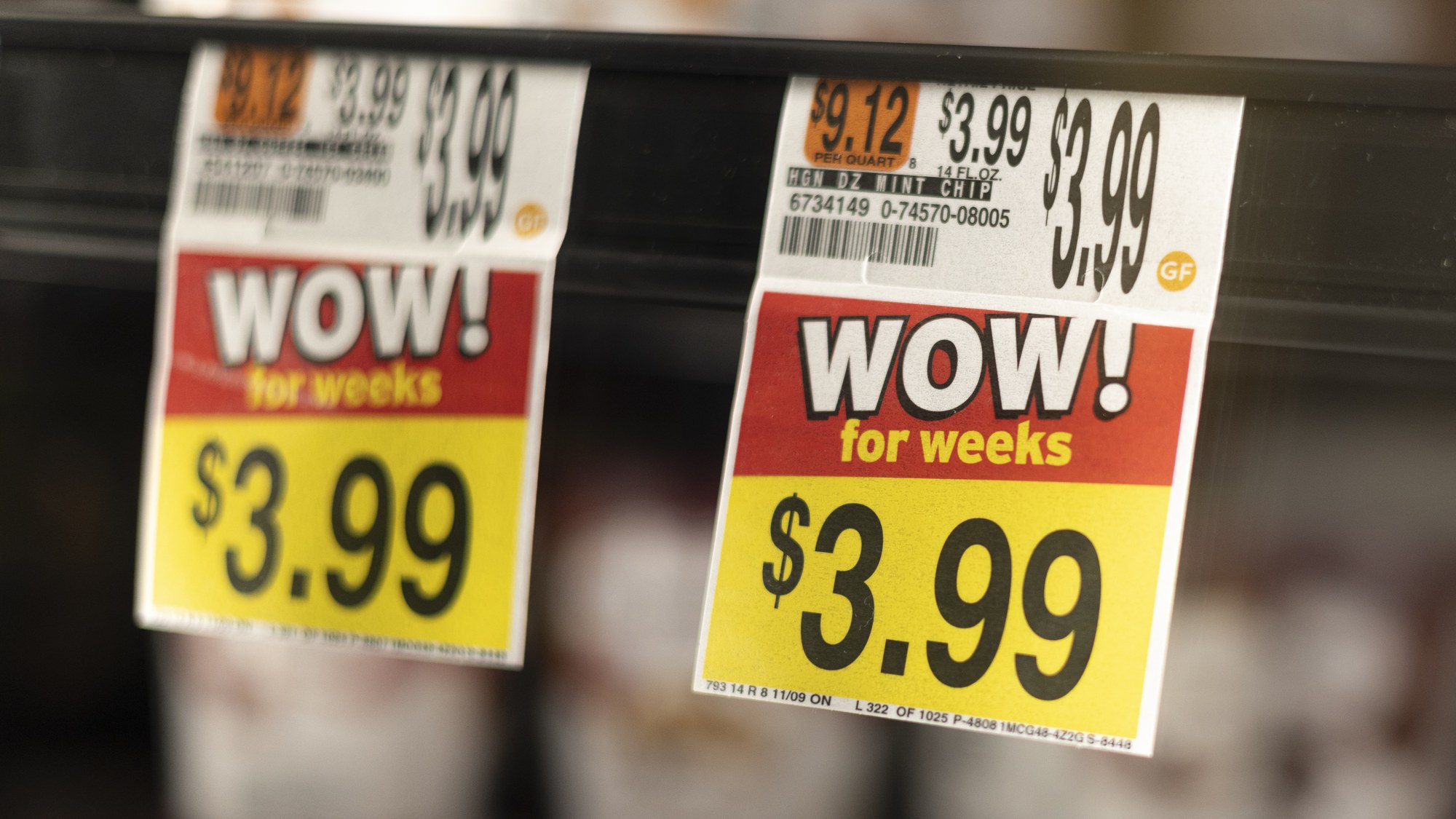
Costco Wholesale said tariff refunds tied to a Supreme Court ruling against President Trump’s import tariffs added 15 cents a share to its fiscal fourth-quarter profit, the company reported in its September 24 earnings release. The refunds followed the Supreme Court’s February 20 ruling that the International Emergency Economic Powers Act does not authorize a president to impose tariffs. Costco’s fourth-quarter diluted earnings reached $6.75 a share, and the company called the tariff-refund benefit non-recurring.
What the refund does not touch: Costco’s tariff-refund benefit shows up on the company’s own books, not a shopper’s receipt, while The Senior Property Tax & Home-Cost Relief Kit covers a cost that has stayed high. See the five kinds of property-tax relief →
How A Supreme Court Ruling Reached Costco’s Earnings
The Trump administration used the International Emergency Economic Powers Act to impose a wide set of import tariffs, and importers paid those duties for more than a year before the Supreme Court intervened. On February 20, 2026, the Court ruled in Learning Resources, Inc. v. Trump that IEEPA “does not authorize the President to impose tariffs,” reasoning that the law’s power to “regulate importation” does not stretch to setting duty rates, according to the Court’s opinion. That ruling did not just stop future IEEPA tariffs; it opened the door for companies to recover duties already paid. A Congressional Budget Office report tracked the resulting refund program, finding that the administration had issued about $110 billion in IEEPA tariff refunds by August 2026. Costco Wholesale Corporation’s September 24 earnings release discloses its own share of that money: a non-recurring benefit of 15 cents a diluted share landing in its fiscal fourth quarter. For more than a year, that tariff regime had raised the landed cost of many imported goods sold at large retailers, including Costco, a cost that in some cases reached shoppers directly through higher shelf prices.
Fifteen Cents Of An Eighty-Eight-Cent Gain
Costco’s fourth-quarter diluted earnings per share came to $6.75, up from $5.87 in the same quarter last year, an increase of 88 cents, according to the company’s September 24 earnings release. The 15-cent tariff-refund credit that Costco separately disclosed accounts for roughly a sixth of that entire year-over-year gain, meaning the remaining 73 cents reflects the warehouse business’s ordinary operating improvement rather than a legal ruling working its way through the books. Costco did not publish a refund-adjusted earnings figure alongside the reported number, so the release leaves the reader to separate the one-time item from the recurring one using the two figures it does provide. For the full fiscal year, diluted earnings per share reached $20.76, up from $18.21, a twelve-month period in which only the fourth quarter carried the refund credit.
Why Shoppers Are Not Getting A Matching Refund
The 15 cents lands on Costco’s own income statement, not on a member’s receipt. Nothing in the company’s release describes a price rollback, a one-time membership credit, or any pass-through of the tariff refund to customers who paid higher prices on tariffed goods during the period the duties were collected. Costco Wholesale Corporation has announced no customer-facing refund tied to the Supreme Court’s ruling, and its earnings statement addresses only its own quarterly and annual results. That is the ordinary mechanics of a corporate tariff refund: the money returns to whichever entity paid the duty at the border, which in most retail supply chains is the importer or the retailer itself, not the shopper who bought the finished item off the shelf months later at whatever price was already set.
The Practical Difference Between A Refund And A Discount
A tariff refund and a price discount move money in opposite directions through a supply chain. A discount lowers what a customer pays at checkout today; a refund returns money to whichever company already paid a duty to the government, often months after the transaction that generated it. Costco’s 15-cent benefit is squarely the second kind: it reflects duties the company itself paid on imported merchandise before the Supreme Court’s ruling, refunded after the fact, with no requirement that the money be shared with the customers who bought that merchandise at whatever markup was in place while the tariffs were still being collected. The distinction matters for anyone reading “tariff refund” in a headline and assuming it describes money moving toward consumers rather than toward the company that imported the goods in the first place.
Costco Is Not The Only Retailer Booking This Credit
Costco is one of several large retailers crediting the same Supreme Court ruling this earnings season, though the size and presentation of the benefit varies by company. AutoZone told investors the refunds added 145 basis points to its own fourth-quarter results, a boost the auto-parts chain reported separately in its September 22 results. The pattern traces back to the scale of the underlying program: the $110 billion the CBO tracked through August 2026 was distributed across many importers rather than concentrated in one company’s ledger, which is part of why the credit shows up in company reports as a named, quantified, non-recurring line rather than folded silently into broader sales or margin growth.
What The One-Time Credit Means For Costco Shareholders
Costco shares sit inside a large share of retirement accounts, whether through direct ownership, an S&P 500 index fund or a target-date fund, which makes the distinction between a durable earnings improvement and a one-time legal credit more than an accounting footnote. An investor evaluating Costco’s quarter-over-quarter earnings trend has reason to set the 15-cent refund aside before judging whether the underlying warehouse business is accelerating, since Costco itself labeled the item non-recurring and gave no indication that a similar credit will repeat in its fiscal 2027 first quarter. Nothing about the fourth-quarter results changes Costco’s membership-fee-driven business model, but a shareholder relying on year-over-year EPS growth as a proxy for operating momentum has one fewer data point to trust this quarter than the headline number suggests. Costco Wholesale Corporation’s own release remains the only source that quantifies the benefit, and it does so in a single sentence inside a fourth-quarter report that otherwise covers sales, membership and store-count results the company reports every quarter.
The Cost Line Item Tariff Refunds Never Touch
Costco’s tariff-refund benefit lands on the company’s income statement, not on a shopper’s monthly budget, and the underlying cost pressure many older homeowners carried through more than a year of tariff-driven price increases has not been refunded to them. Property-tax bills and utility costs make up a comparable and often larger year-round expense for homeowners on fixed incomes, and relief on that side typically requires filing rather than arriving automatically.
The Senior Property Tax & Home-Cost Relief Kit covers the circuit-breaker credit that includes renters and help with heating, cooling and home-repair costs.
See the application log and renewal calendar in The Senior Property Tax & Home-Cost Relief Kit.
This article was produced with AI assistance and checked against the primary sources linked above.