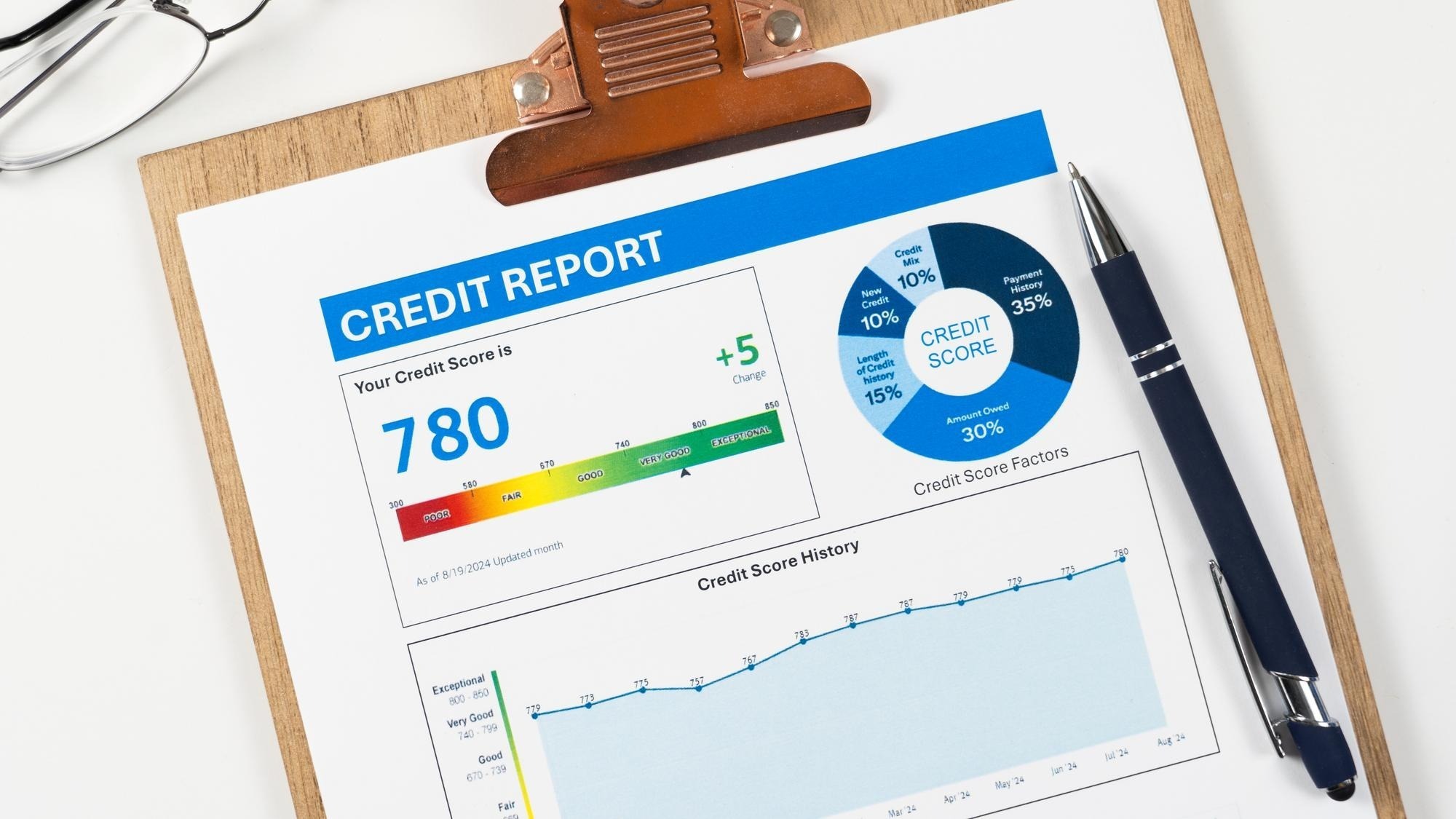
Equifax lowered the midpoint of its 2026 revenue outlook to $6.661 billion on October 20, blaming weaker mortgage revenue. The credit bureau still reported third-quarter revenue of $1,692.5 million, up 10%, and paid a quarterly dividend of 56 cents a share. Shareholders now have a strong quarter and a trimmed forecast to weigh against each other.
Why a weaker mortgage market cut Equifax’s forecast
Equifax now expects 2026 revenue between $6.646 billion and $6.676 billion, which puts the midpoint at $6.661 billion, according to its third-quarter earnings release. The company lowered that midpoint because U.S. Mortgage revenue is running weaker than it planned.
Management said the U.S. mortgage market turned much weaker in the second half of the third quarter and that mortgage interest rates increased substantially. Equifax expects the weakness to persist through the end of the year. The cut is a forecast about the final months, not a loss already booked.
Rates explain much of the pullback. Freddie Mac’s weekly survey put the average 30-year fixed mortgage at 7.40% on October 15, against 6.27% a year earlier. Fewer mortgage applications mean less mortgage-related revenue for a credit bureau, which is the reason Equifax gave for lowering its outlook.
Anyone with a mortgage decision ahead, whether a purchase or a refinance, is living with the rate environment Equifax described. Homeowners who already hold a fixed-rate loan see no change in that payment. They still carry the costs a lender does not set, such as property taxes, utilities and repairs, and those are where a household can still act.
What changed this year: Social Security and Medicare change every year, and nobody sends you a memo. The Retirement Money Brief breaks down what changed and what to do. Bonus when you subscribe: our Property Tax & Utility Relief Finder.
Get the Brief and the relief finder →
We may earn a commission from links on this page.
The weakness had not yet reached the quarter’s mortgage numbers. U.S. Mortgage revenue rose 15% in the third quarter, with revenue at Equifax’s USIS unit up 28% and Workforce Solutions mortgage revenue roughly flat. The reduced outlook reflects what Equifax expects from the last three months of the year, not what it earned from July through September.
The release headline credits 8% revenue growth in Diversified Markets, and Equifax kept its high-single-digit growth guidance for that group even as the mortgage outlook fell. The company is telling shareholders that the rest of the business is on plan. The reduction is aimed at mortgage revenue alone, and the release gives no mortgage inquiry counts to size the slowdown.
A strong quarter behind a lower forecast
Third-quarter revenue of $1,692.5 million was up 10% as reported and 9% in local currency. Net income attributable to Equifax was $211.7 million, up 32%. Diluted earnings per share came to $1.79, compared with $1.29 a year earlier.
Adjusted diluted earnings per share, which strips out items Equifax excludes from its preferred measure, were $2.26, up 11% from $2.04. For the full year, Equifax guides to adjusted earnings of $8.45 to $8.55 a share, with a midpoint of $8.50. It described that as a reduction of only 4 cents per share at the midpoint.
The fourth quarter is where growth slows. Equifax guides to revenue of $1.605 billion to $1.635 billion, which is growth of 3.5% to 5.4% on a reported basis, compared with the 10% it just posted. Adjusted earnings for the quarter are guided to $2.07 to $2.17 a share.
Chief executive Mark Begor said in the release, “We are confident in the future of the New Equifax.” The release frames the lower outlook as a mortgage-market problem rather than a company-specific one. Equifax says it sells credit reports and scores to businesses and consumers, along with identity protection that includes daily monitoring and alerts.
The 56-cent dividend and $158 million returned to shareholders
Dividends per common share were 56 cents in the third quarter, up from 50 cents a year earlier. Equifax paid about $66 million in dividends during the quarter. That is the payout shareholders who hold the stock for income can count on in the release’s figures.
Total cash returned in the quarter was $158 million. About $92 million went to repurchasing 0.5 million shares, and the $66 million in dividends made up the rest. In the first nine months of the year, the cash-flow statement shows $652.0 million spent on treasury stock purchases and $199.4 million paid in dividends.
The payout is higher but modest in dollar terms, at six cents more per share each quarter than a year ago. Equifax did not tie the 56 cents to its guidance change, and nothing in the release links the lower outlook to the dividend. Shareholders now hold two sets of numbers: a quarter that grew revenue 10% and a fourth-quarter forecast of 3.5% to 5.4% growth.
Buybacks therefore outweighed dividends in the quarter and by a wider margin over nine months. A shareholder looking for steady income gets the 56 cents, while the larger share of cash goes toward shrinking the share count. The release does not state a declaration date or a payment date for the dividend.
Is the house costing more to keep than the mortgage rate suggests?
The slowdown Equifax described is about buying and refinancing, while staying put runs on a different set of bills.
Mortgage rates that climbed from 6.27% to 7.40% in a year keep many owners in the homes they already have. Staying put has its own bills, and heating, cooling, repairs and the property tax bill arrive no matter what the mortgage market does.
Equifax’s results are about the mortgage market, but The Senior Property Tax & Home-Cost Relief Kit finishes a related job: the cost of the house itself. It maps the 5 kinds of property-tax relief and the heating, cooling and home-repair help for older homeowners, and it includes an application log and renewal calendar so each program’s date stays in view.
Get the home-cost relief kit with its application log and renewal calendar →
More Financial Reading
- 21 Ways to Stretch a $2,087 Social Security Check
- 15 Places to Find Your Share of the $4.25 Billion States Give Back
- 21 Ways Retirees Can Raise $1,000 Fast Without a Job
This article was produced with AI assistance and edited for accuracy against the sources linked above.