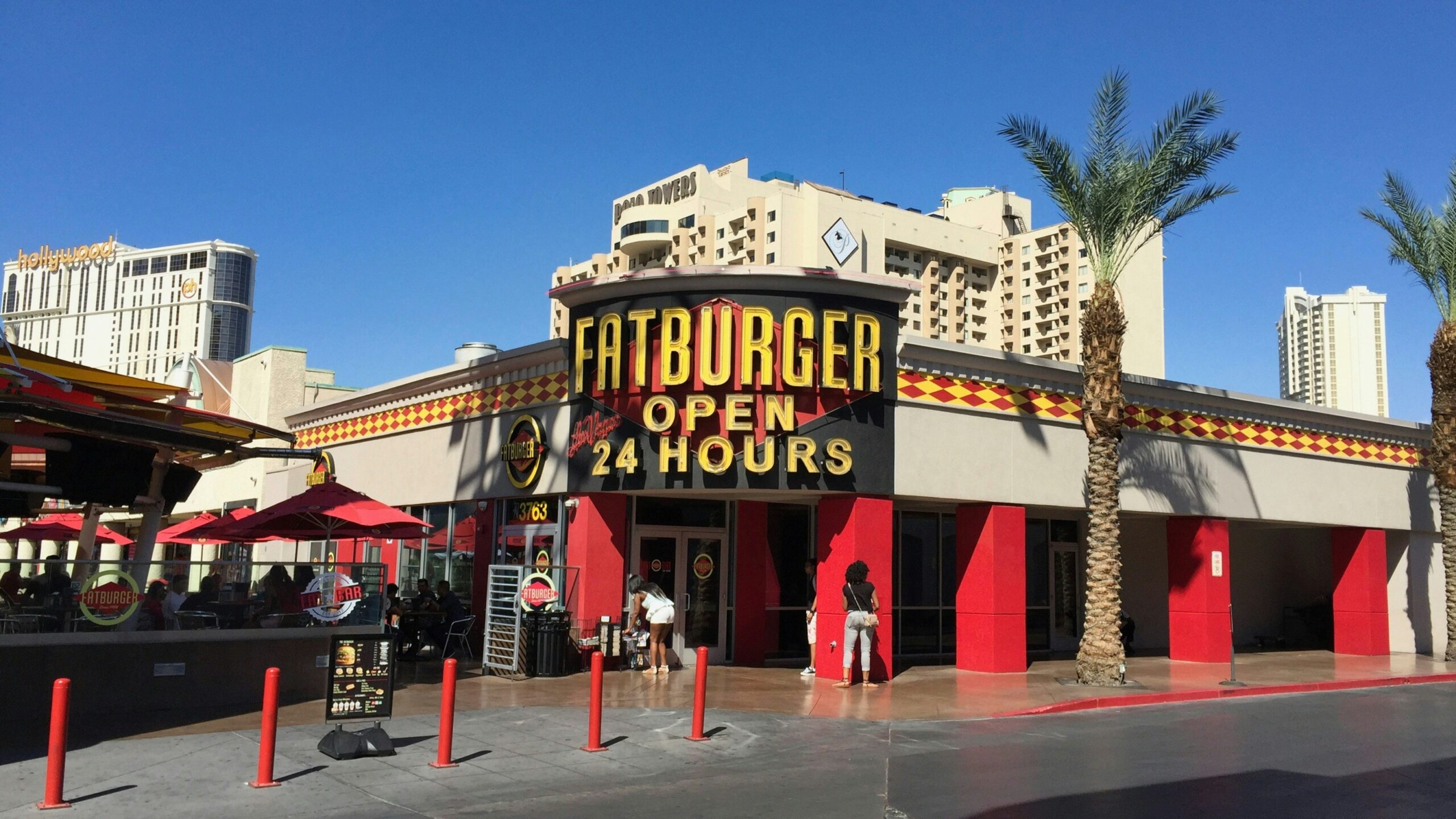
FAT Brands Inc., the parent company behind Fatburger, Johnny Rockets, and more than a dozen other restaurant chains, has effectively been broken apart through a court-supervised asset sale after filing voluntary Chapter 11 petitions. A buyer called FBG Bid Co. purchased substantially all assets of certain FAT Brands subsidiaries for $595 million, a figure that covers less than half of the company’s roughly $1.3 billion in total debt. The gap between that sale price and the debt load means creditors face a sharp fight over who gets paid and how much they lose.
How a Trustee’s Acceleration Forced FAT Brands Into Liquidation
The chain of events that led to the sale started when UMB Bank, acting as trustee for FAT Brands’ securitized notes, issued acceleration notices declaring large portions of that debt immediately due and payable. Securitized-note structures are common in franchise restaurant financing: a company bundles royalty streams and other cash flows into notes sold to investors, with a trustee empowered to call the debt if covenants are breached. Once UMB Bank pulled that trigger, FAT Brands lost the ability to service the debt on its original timeline and faced an immediate liquidity crisis.
FAT Brands responded by filing voluntary Chapter 11 petitions, framing the move as an effort to address its capital structure. But the trajectory quickly shifted from reorganization to liquidation. Rather than emerging as a restructured company, FAT Brands moved to sell its operating brands. In a court-approved transaction, FBG Bid Co. acquired substantially all assets of certain FAT Brands subsidiaries for $595 million. The acquired portfolio includes the Fatburger and Johnny Rockets brands, two of the company’s most recognizable names, along with related intellectual property and franchise agreements.
A $595 Million Sale Against $1.3 Billion in Debt
The math tells a blunt story. With $595 million in sale proceeds set against roughly $1.3 billion in total debt, the recovery pool covers less than 46 cents on every dollar owed. Secured noteholders, whose claims sit at the top of the capital structure, are positioned to absorb the largest share of those proceeds. Unsecured creditors, including franchisees with contractual claims and landlords holding lease obligations, face the prospect of steep write-downs or near-total losses depending on where they sit in the priority waterfall.
This outcome illustrates a specific risk embedded in securitized restaurant financing. When a trustee accelerates the notes, the company loses its breathing room almost overnight. Traditional Chapter 11 reorganizations allow a debtor to propose a plan, negotiate with creditors, and potentially emerge as a going concern. FAT Brands’ path instead resembled a rapid asset disposition, with the court process serving primarily to authorize the sale and establish creditor priorities rather than to rebuild the business.
Unresolved Claims and the Creditor Recovery Timeline
Several questions remain open. The exact breakdown of the $1.3 billion debt by tranche and maturity has not been fully detailed in public disclosures, leaving individual creditor groups to infer their likely recoveries from partial information. Securitized noteholders will look to the collateral package and cash flows transferred in the sale, while other lenders and trade creditors must wait for the bankruptcy court to reconcile claims against the remaining estate.
The Chapter 11 process now shifts from marketing assets to sorting out who gets paid. Claims reconciliation, objection deadlines, and potential litigation over prepetition transactions will all influence how quickly money flows out of the estate. Creditors at the bottom of the capital stack may see only modest distributions, if any, and the timing of those payments could stretch well beyond the closing of the asset sale.
Complicating matters further, some stakeholders are likely to scrutinize whether the acceleration of the securitized notes and the subsequent sale maximized value. If any creditor groups argue that the process was rushed or that alternative financing options were not fully explored, they could seek to challenge aspects of the transaction in court. Such disputes would not necessarily unwind the sale, but they could affect how proceeds are allocated and whether additional recoveries are available from litigation claims.
What Comes Next for the Brands and Their Franchisees
For the restaurants themselves, the sale to FBG Bid Co. is designed to provide continuity. The buyer has indicated an intent to keep core brands operating and to support franchisees as they transition to a new ownership structure. Franchise agreements, royalty payments, and supply-chain arrangements are expected to remain largely intact, though some terms could be renegotiated as the new owner refines its strategy.
Franchise operators, however, must navigate a period of uncertainty. While day-to-day restaurant operations may continue without major disruption, the shift from a publicly traded parent to a new ownership group can affect marketing priorities, development plans, and investment in technology or remodeling. Operators will watch closely to see whether the new owner focuses on stabilizing existing locations, pursuing aggressive growth, or pruning weaker units from the system.
From a broader industry perspective, the FAT Brands case underscores the fragility of highly leveraged, securitization-driven capital structures in a volatile operating environment. Rising costs, shifting consumer behavior, and uneven post-pandemic traffic trends have all pressured restaurant margins. When those pressures collide with tight covenants and a trustee empowered to accelerate debt, the result can be a swift move from going concern to asset sale.
Investors and lenders in franchise-heavy restaurant systems may respond by demanding more conservative leverage, tighter underwriting of royalty streams, or enhanced oversight of covenant compliance. At the same time, prospective buyers like FBG Bid Co. may see opportunity in acquiring established brands at distressed prices, betting that a cleaner balance sheet and more patient capital can restore long-term value. As the dust settles, the FAT Brands saga will likely serve as a case study in how securitized financing can both fuel growth and, when conditions turn, hasten a company’s unraveling.
Market observers tracking deal activity through transaction alerts will be watching whether similar securitized restaurant platforms come under stress, and whether buyers emerge with the appetite and capital to repeat the playbook that reshaped FAT Brands.