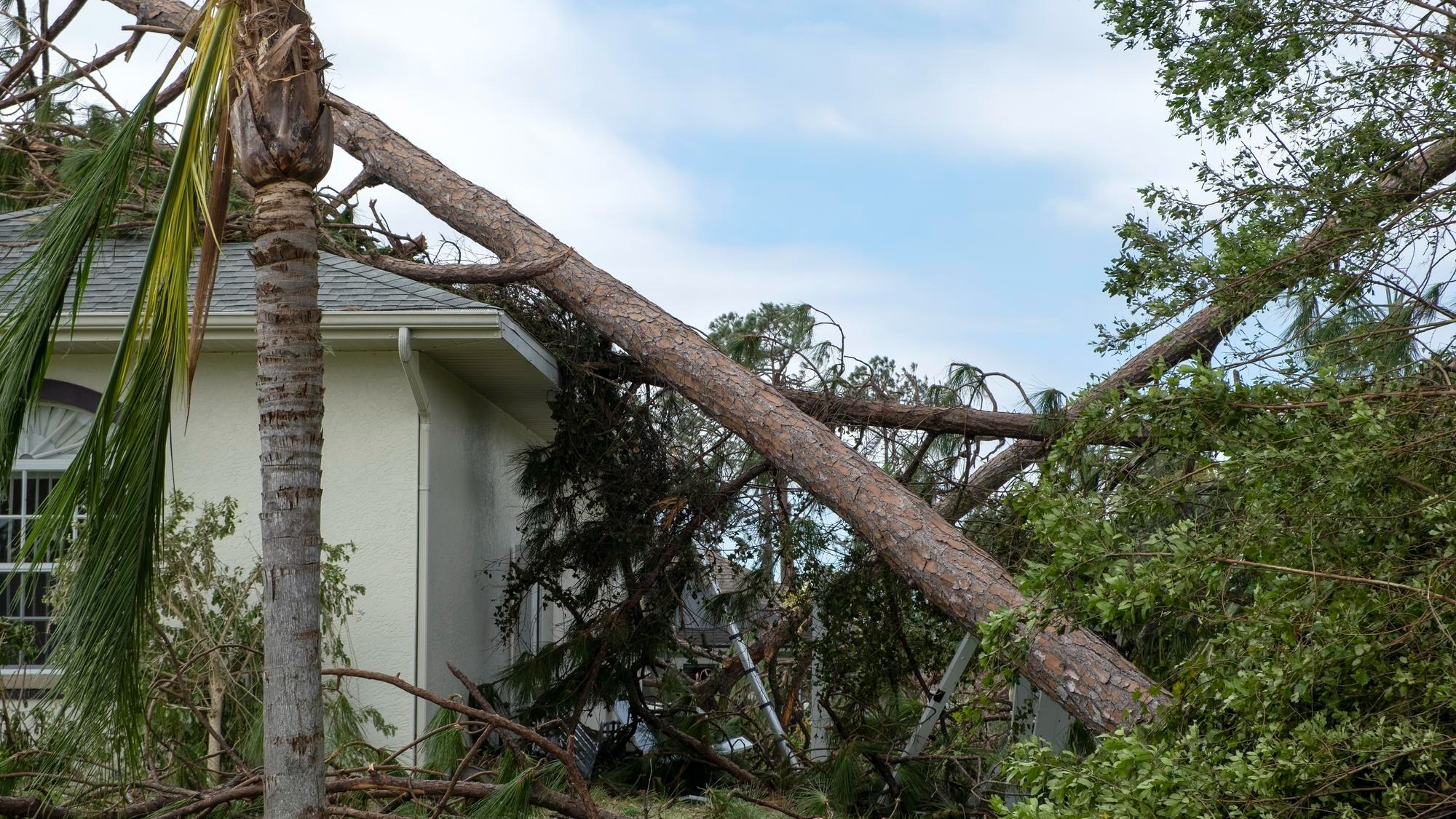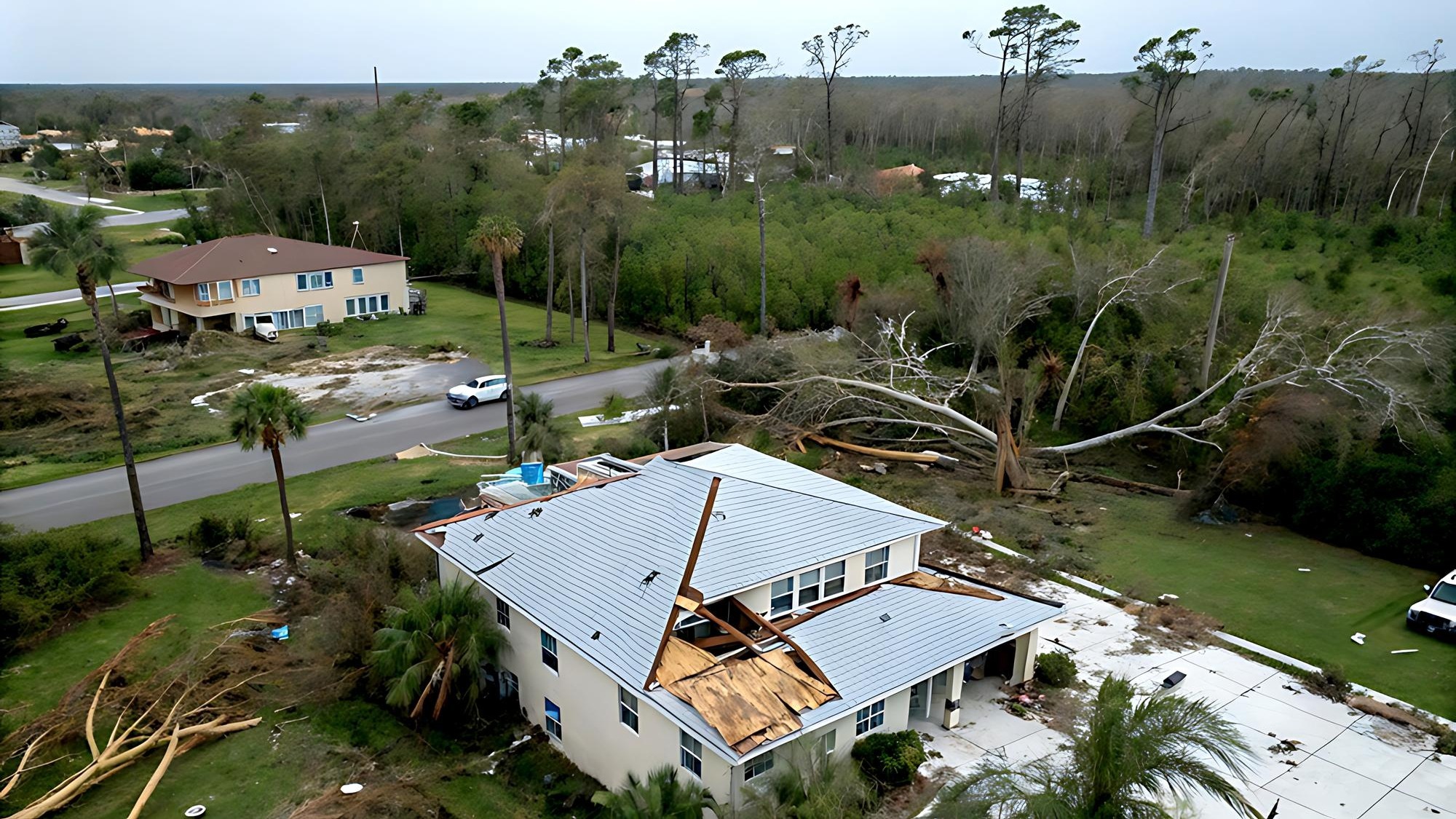
Florida insurers had logged 54,797 Hurricane Isaias claims by October 20, with estimated insured losses of $581,980,952, the state’s insurance regulator says. The storm came ashore in the Panhandle on October 9, so those figures cover barely eleven days of filing. Most of the work is still ahead: about four of every five claims remain open.
Four in five Isaias claims are still open
The Florida Office of Insurance Regulation (OIR) reports that 42,829 of the 54,797 claims were open on October 20. Of those, 41,375 had no payment recorded yet and 1,454 had a payment recorded. Another 11,968 claims, or 21.8 percent, had been closed.
Closing a claim does not mean it was paid. Only 3,555 claims were closed with a payment, about 6.5 percent of everything filed, while 8,413 were closed without one. For every Isaias claim that has been paid and closed so far, insurers have closed more than two without paying.
The pace of closures is rising fast. Insurance Journal reported that about 12 percent of claims had been closed by October 15, almost all of them without payment. OIR’s October 20 data puts the closed share at 21.8 percent, so the closed share climbed almost ten percentage points in five days, and most of those closures carried no check.
That leaves a very large group of Florida households waiting on a first check. Anyone whose claim is open with no payment can start with the insurer, and if the claim stalls, report the problem through the state’s Consumer Assistance Portal. Insurers and agents have 14 days to answer the Department of Financial Services once a concern is filed.
What changed this year: Social Security and Medicare change every year, and nobody sends you a memo. The Retirement Money Brief breaks down what changed and what to do.
Get the Retirement Money Brief →
We may earn a commission from links on this page.
The department says to contact the insurer first and keep detailed records of every call and letter, because most issues can be resolved within 30 days. It can require a company to explain its actions and check whether the response followed Florida law. It cannot act as an adjuster, set the value of a claim or force a payment where no law or policy term was broken.
Anyone who files a concern with the department should have the insurer’s exact name, the adjuster involved, the policy number, the claim number and the loss date at hand, along with the declarations page and a detailed description of the problem. Supporting documents go with it.
A $582 million storm in eleven days
Hurricane Sally hit nearly the same stretch of coast in 2020 and produced 72,000 claims and $577 million in losses within six weeks, Insurance Journal reported on October 19. Isaias has already passed that dollar mark with more than 17,000 fewer claims. Spread across all claims, the estimate works out to about $10,600 each, against roughly $8,000 for Sally.
The $581,980,952 headline figure is an estimate built from insurers’ reports to OIR. The same page also totals $650,912,344 in losses incurred across its line-by-line table, and OIR does not say why the two numbers differ. Insurance Journal’s October 19 report cited about 47,000 claims from an earlier update, so the count has kept climbing.
Outside analysts see a costly but contained storm. Karen Clark & Co. projected about $3 billion in insured losses across the Southeast. Gallagher Re said the storm was small enough that it is unlikely to disturb most carriers’ reinsurance renewals, and AM Best called it an earnings event with little effect on insurers’ surplus. For insurers that is a quarterly matter; for a household with a damaged roof it is a cash-flow problem.
Homes carry most of the loss
Residential property claims make up 47,315 of the 54,797, about 86 percent, with $619,685,308 in losses incurred. Homeowners policies account for 40,774 of those claims and $537,316,945, or roughly $13,200 per claim. About 24.3 percent of homeowners claims had been closed, a little above the 21.8 percent statewide rate.
Dwelling policies drew 4,895 claims and $63,320,115, with only 11.6 percent closed. Mobile homeowners filed 1,395 claims totaling $15,912,632, and 12.8 percent have closed. Holders of those two kinds of policy are waiting longer, on average, than the typical homeowner.
Private passenger auto is the other big personal line: 4,695 claims and $8,677,208, or about $1,850 a claim, with 600 closed with payment. Commercial property filed 1,471 claims worth $13,827,631, yet only 6.5 percent have closed. Private flood policies account for just 100 claims and $105,301.
Smaller commercial lines show how uneven the recovery is. Commercial residential policies filed 251 claims worth $3,135,616, and only 1.6 percent have closed. Business interruption drew 21 claims and $472,449, and commercial auto 110 claims and $521,726.
The emergency zone is 25 counties, but five hold the claims
Governor Ron DeSantis declared a state of emergency for 25 counties under Executive Order 26-202, OIR notes. Five of them dominate the count: Santa Rosa, Escambia, Okaloosa, Walton and Bay together account for 52,196 of the 54,797 claims, about 95 percent.
OIR’s page also lists federal and state help. FEMA individual assistance applications go through DisasterAssistance.gov or 1-800-621-3362, and the state’s assistance information line is 1-800-342-3557. Disputes over the cause of damage or the amount an insurer offers can go to the state’s residential property mediation program, which requires at least $500 in dispute after the deductible and is paid for by the insurer.
The page also shows what is missing. OIR does not publish losses by county or say how long open claims have been waiting, so the statewide totals say little about any one household’s timeline. With 41,375 claims unpaid and the first large checks still to come, the open question is how many of them become payments and how many close the way 8,413 already have.
Still waiting on an Isaias payment?
For the 41,375 policyholders with no payment recorded, every week of waiting is a week of repairs and ordinary bills paid from savings. The insurer’s timeline is outside a household’s control, but the rest of the monthly budget is not.
The Benefits Checklist does not touch an insurance claim. It finishes a related job: it scans 11 benefit programs, including heating help, SNAP and property-tax breaks, with the 2026 income limits and a 50-state phone directory, plus a printable tracker for each application that comes with the download.
Get the 50-state phone directory for storm-hit budgets in the Benefits Checklist →
More Financial Reading
- 21 Ways to Stretch a $2,087 Social Security Check
- 15 Places to Find Your Share of the $4.25 Billion States Give Back
- 15 Ways Retirees Are Tapping a Record $14.9 Trillion in Home Equity
This article was produced with AI assistance and edited for accuracy against the sources linked above.