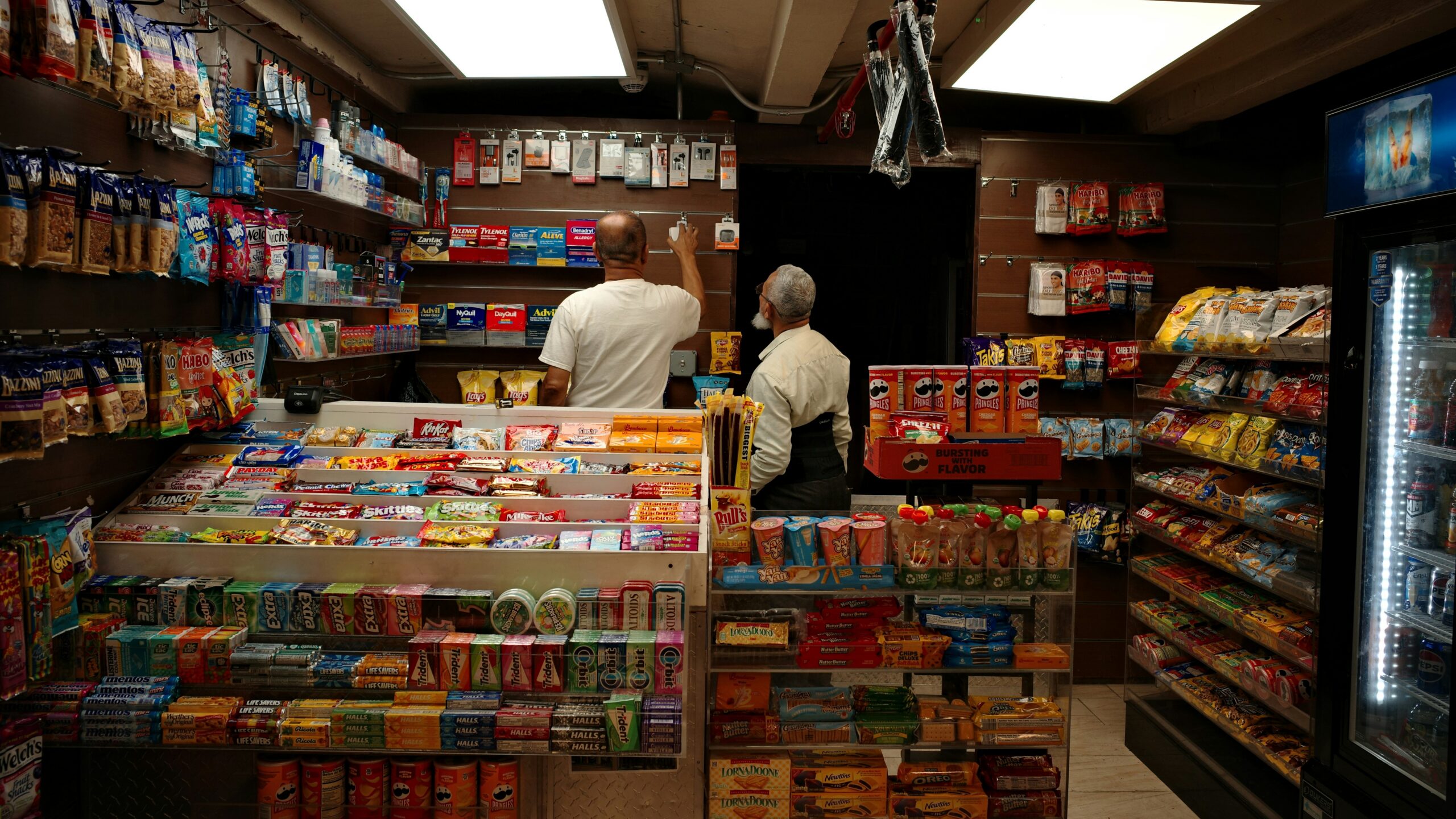
Federal prosecutors in western Michigan say a Lansing convenience store owner paid customers about 50 cents in cash for every $1 of food stamp benefits. The Justice Department puts the intended loss from the scheme at $1,089,949. Mohinder Singh was charged with theft of public money and nine counts of SNAP fraud in a case the department announced on October 21.
What the charges say happened at the Lansing store
Singh, who owns the store, was charged by a grand jury in the Western District of Michigan. The case is United States v. Singh, No. 1:26-cr-00094-JMB. The counts are theft or conversion of public money and nine counts of SNAP fraud, the program formally called the Supplemental Nutrition Assistance Program.
The indictment alleges that Singh exchanged cash and other ineligible items for SNAP benefits, typically at $0.50 in cash per $1 of benefits. At that rate a household that handed over $200 in benefits walked out with $100. People who live near the store, or who were approached with the same offer anywhere, are the readers most affected.
Retirement deadlines, in your inbox: Miss an enrollment or claim deadline and the money can be gone. The Retirement Money Brief keeps you ahead of the ones that matter, every weekday.
Get the Retirement Money Brief →
We may earn a commission from links on this page.
The indictment adds a second piece. It alleges Singh let some customers use SNAP to pay debts they owed him, and that he charged a fee, payable in SNAP benefits, on credit he extended. In that account the store acted as both lender and cashier, and the repayment came out of the same monthly benefit meant for food.
The department calls $1,089,949 the intended loss. The release does not say how long the alleged scheme ran or how many households were involved. Singh is presumed innocent, and an indictment is an allegation that prosecutors still have to prove at trial.
Where the Lansing case fits in the national surge
The Lansing case is one of the cases in a nationwide surge. The department says it took action against more than 40 defendants between September 1 and October 21, with nearly $45 million in intended losses, and that nearly $42 million of that involved SNAP. At a little over $1 million, Lansing is a modest share of the SNAP total.
Several other cases in the announcement involve stores. A co-owner of Sahara Market in Taylorsville, Utah, is charged over an intended loss of $5,994.89, six people tied to a gas station in Euclid, Ohio, are charged by complaint with swapping EBT cards for cash, marijuana and other items, and two Chicago store owners face an indictment tied to $29.7 million.
Michigan appears twice in the release, and the second case shows a different crime. In the Eastern District, Kirk Woodley and Chantel Peavy used the identities of more than 650 victims to file hundreds of fraudulent SNAP applications, with an intended loss of $1.1 million. In Lansing the benefits changed hands across a counter; in the identity cases the people named on the applications did not know.
Christopher O’Connor prosecuted the Lansing case for the Western District of Michigan. Agriculture Secretary Brooke Rollins said in the announcement, “Every instance of SNAP fraud has two victims: families in dire need and taxpayers.” USDA Inspector General John Walk said “SNAP fraud despicably robs from low-income Americans.”
What trading benefits for cash costs a household
SNAP benefits arrive on an Electronic Benefit Transfer card, and the rules bar recipients from selling them. The U.S. attorney’s office in Atlanta put it plainly in a separate release the same day: beneficiaries get EBT cards and may not sell or trade benefits. A 50-cent trade gives up half the food purchasing power of every dollar, and the household still has to make it through the month.
The release names only Singh. It does not say whether any customers are under review, and it describes no consequences for them. Recipients may not sell their benefits, according to the Atlanta release, so a household that took such an offer can ask its state office what to do.
Michigan accounts for two of the 13 U.S. attorney’s offices in the surge, the Eastern and Western Districts. The Western District case is the store case, with a theft count and nine SNAP fraud counts. Singh’s intended loss of $1,089,949 sits close to the $1.1 million alleged in the Eastern District identity case, and the release does not say whether Singh has entered a plea.
A household that has dealt with a store like this, or that sees one making the offer, can report it. A store that makes a cash-for-benefits offer can be reported without giving a name, through the USDA inspector general’s online hotline. The state SNAP office, reachable through the USDA state directory, handles questions about a single account or a lost card.
Inspector General Walk said the surge “is only the beginning,” and prosecutors in Michigan have not said whether more charges are coming in Lansing. That leaves a plain question for anyone short of cash near the end of a month: what to do when a store offers half of a benefit in bills.
Offered cash for SNAP benefits at a store counter?
The Lansing indictment says customers got 50 cents on the dollar, and the benefits they handed over were theirs. Anyone who trades away part of a month’s food money still has to cover the whole month, and a state office has no way to know it happened.
The SNAP & Medicaid Renewal Organizer does not investigate stores and is not a government product. Part 7 covers reporting changes and EBT problems, the 51 state packs give each state’s SNAP rules, and the renewal and reporting calendar keeps recertification dates in one place so a hard month does not cost a household the benefit itself.
Get the EBT problem guide and SNAP renewal calendar for every state →
More Financial Reading
- 21 Ways to Stretch a $2,087 Social Security Check
- 15 Places to Find Your Share of the $4.25 Billion States Give Back
- The New $6,000 Senior Deduction and 14 More Tax Moves for Retirees
This article was produced with AI assistance and edited for accuracy against the sources linked above.