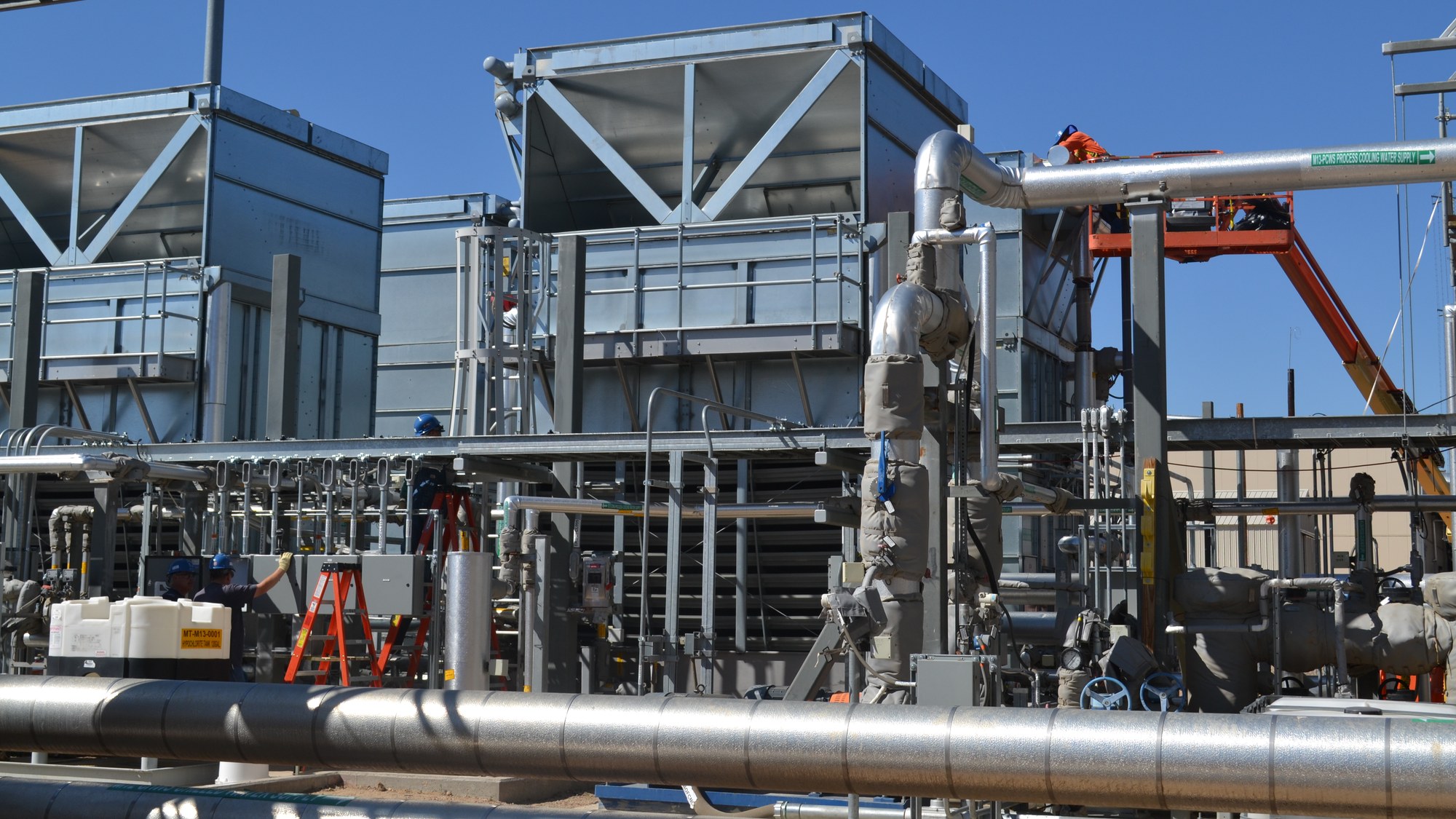
Goodyear Tire & Rubber Co. will close its chemical plants in Niagara Falls, New York, and Bayport, Texas, eliminating approximately 85 jobs and taking pre-tax charges of $55 million to $75 million. The tiremaker disclosed the plan in a filing with the Securities and Exchange Commission covering a decision it made on September 29.
Goodyear said it expects to substantially complete the plan by the end of 2027. The company also projects benefits of $15 million to $20 million a year starting in 2027 once the plants are closed.
The two plants and the 85 jobs
The filing names the sites as chemical manufacturing facilities in Niagara Falls, New York, and Bayport, Texas. The roughly 85 job reductions are a combined figure, and public radio station WAMC, in its report on the Niagara Falls closure, put it at approximately 85 positions across both plants.
The timing is spread out. The end-of-2027 date is when the company expects the whole rationalization plan to be substantially complete. It is a completion target for the plan, not a date by which every job ends.
Why Goodyear is leaving the chemical business
The closures follow a sale. In its second-quarter results, Goodyear said it had completed the sale of its Dunlop brand and its chemical business in May 2025 and October 2025.
WAMC reported the company’s explanation for the closures this way: following the sale of the majority of its chemical business in 2025, Goodyear decided to fully exit the business. The plants in Niagara Falls and Bayport are the part of that exit that falls on workers and communities.
For households the question is local and financial. A plant closing removes dozens of paychecks from a town, and it also changes what holders of Goodyear stock, including those who own it through a retirement fund, can expect from the company’s cost structure.
Goodyear’s plan runs through the end of 2027, and The Retirement Money Brief will cover the next step for the Niagara Falls and Bayport workers in plain English when it happens.
Get the next update free → Free from RetireShield. Unsubscribe anytime.
The $55 million to $75 million in charges
Goodyear put the pre-tax charges for the plan at $55 million to $75 million, and said about $30 million of that will be paid out in cash.
The expected annual benefit of $15 million to $20 million from 2027 is a company estimate. It is a projection of savings, not a result that has been reported, and it depends on the plan being carried out on the schedule the company describes.
A charge of this kind is booked when a company commits to a plan, so a large share of the total can appear in reported earnings well before the plants have stopped operating. Investors who see the figure in a quarterly report should know it reflects a decision already made, not a sign of new trouble.
Set side by side, the figures show how the company is weighing the move. It will book up to $75 million in charges and spend about $30 million in cash to remove a cost it expects to be worth $15 million to $20 million each year.
The cash portion is the smaller piece. About $30 million is 40 percent of the top of the charge range and 55 percent of the bottom, and against the expected annual benefit of $15 million to $20 million it would be recovered in between 18 months and two years once the savings begin. The filing was posted on October 1, two days after the September 29 decision. Goodyear’s second-quarter results also said a broader manufacturing footprint optimization was underway, with about $270 million in savings expected by 2028.
What workers and nearby households face
Severance terms, transfer offers and retraining for the roughly 85 workers would come to employees through the company. Workers who lose a job generally can apply for state unemployment benefits, which are run by each state’s labor agency, and the rules and timelines differ between New York and Texas.
Local governments feel a closure through property and payroll taxes, and small suppliers feel it through lost orders.
Preparing for a plant closure in a family’s budget
Households with a worker at either plant can start with the state unemployment agency, where a claim can usually be opened online. Having the last pay stubs, the separation date and the employer’s address on hand speeds the application. Families can also list monthly bills in order of priority and note how many months savings would cover, which shows how long a gap can be bridged.
Workers with a 401(k) from the employer can leave it where it is, roll it into an IRA or move it to a new employer’s plan. A direct rollover between accounts avoids the tax withholding that applies when a check is made out to the worker. Health coverage is the other deadline to watch, since continuation coverage and marketplace plans each have their own enrollment windows.
The firmest numbers come from Goodyear’s own filing: closures in Niagara Falls and Bayport, approximately 85 job reductions, $55 million to $75 million in pre-tax charges, and a plan substantially complete by the end of 2027.
More Financial Reading
- How many CDs can you park at 1 bank? FDIC rules you must know
- Adding someone to your bank account: tax traps and smart moves
- Bank statements: how long to keep them and when to toss them
This article was produced with AI assistance and reviewed by The Financial Wire’s editorial team.