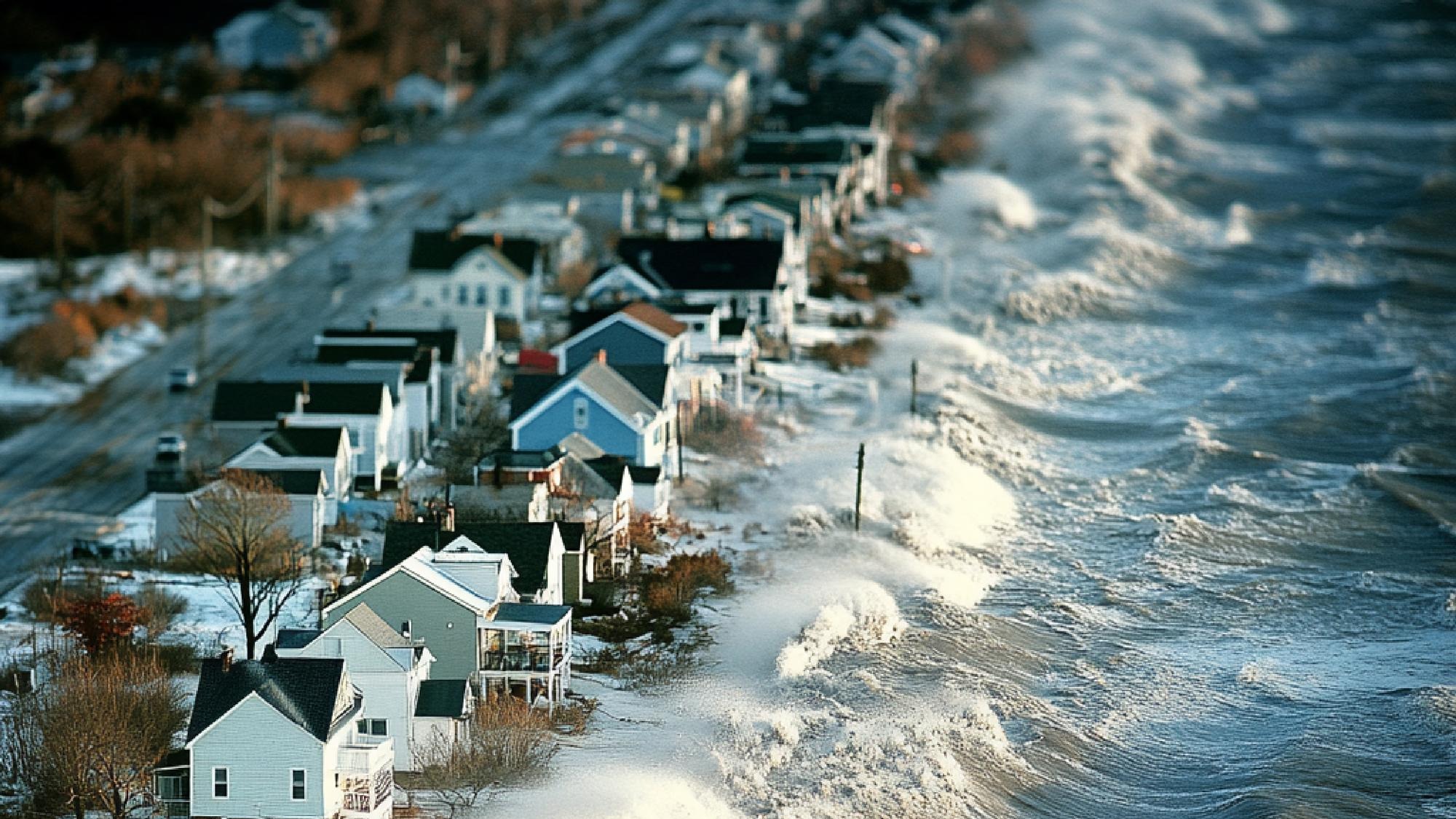
Atlantic hurricane season opens June 1. A coastal homeowner who picks up the phone today and buys a National Flood Insurance Program policy will not have a single dollar of coverage until early July. That is not a glitch or a processing delay. It is federal law: the NFIP imposes a flat 30-day waiting period between the date you pay your premium and the date your policy activates. Anyone who waits until late May or early June to act will spend the first weeks of storm season completely exposed.
The gap matters more than most people realize. According to FEMA’s own claims data, the average NFIP flood claim pays out roughly $52,000. A standard homeowners insurance policy covers zero of that, because flood damage is explicitly excluded. And roughly 30 percent of all NFIP claims come from properties outside designated high-risk flood zones, meaning the risk extends well beyond the neighborhoods most people picture when they hear the word “floodplain.”
Why the 30-day waiting period exists
The rule is codified in 44 CFR Section 61.11: NFIP coverage takes effect at 12:01 a.m. on the 30th calendar day after the application date and premium payment. FEMA’s consumer site, FloodSmart.gov, states it plainly: “Your flood insurance coverage will go into effect 30 days after your date of purchase.” The agency’s waiting-period FAQ confirms the same timeline.
The logic is straightforward: without a waiting period, homeowners could watch a hurricane form in the Atlantic, buy a policy the day before landfall, and file a claim the day after. The program would collapse under the weight of adverse selection. But the trade-off falls squarely on homeowners who delay out of procrastination, sticker shock, or the common assumption that their regular homeowners policy already covers flooding. It does not.
Narrow exceptions that probably don’t apply to you
The regulation carves out a few situations where the 30-day clock does not run. If flood insurance is required as a condition of a federally backed mortgage closing, coverage can take effect immediately at settlement. A shorter one-day waiting period applies when a property has been newly remapped into a Special Flood Hazard Area within the prior 13 months. The FDIC’s compliance guidance for lenders confirms these exceptions and notes that bank examiners verify whether borrowers in flood zones carry active policies.
Outside those narrow windows, every new NFIP policyholder faces the full 30-day wait. If you already own your home, are not refinancing, and your flood map has not changed recently, the standard rule applies.
Early-season storms do not wait for your policy to activate
Hurricane season runs June 1 through November 30, but early-season storms are not rare. In June 2024, Tropical Storm Alberto made landfall along the Texas-Mexico border, bringing heavy flooding to South Texas coastal communities. In 2022, Potential Tropical Cyclone One dumped more than 10 inches of rain on parts of South Florida before the calendar even turned to June. Hurricane Arthur in 2014 formed off the Carolina coast on July 1.
None of these storms were catastrophic on the scale of a Harvey or an Ian, but each one produced the kind of localized flooding that destroys drywall, ruins HVAC systems, and leaves homeowners facing five-figure repair bills. For a household without active flood coverage, even a moderate flood event can be financially devastating.
Private flood insurance may offer a faster path
Homeowners who need coverage before the NFIP’s 30-day clock runs out have another option: private flood insurance. A growing number of private carriers now write standalone flood policies, and many impose shorter waiting periods, sometimes as few as 10 to 15 days, or in some cases none at all. Private policies can also exceed the NFIP’s coverage caps of $250,000 for building structure and $100,000 for contents on residential properties.
The trade-offs are real. Private flood premiums vary widely by insurer, location, and property elevation. Not every carrier writes policies in every state, and some exclude the highest-risk coastal zones entirely. Homeowners considering a private policy should confirm it satisfies their mortgage lender’s requirements and review the terms carefully. Unlike NFIP contracts, which are standardized by federal regulation, private policies differ from one insurer to the next in what they cover, what they exclude, and how they handle claims.
An independent insurance agent who handles both NFIP and private flood products can run a side-by-side comparison. For homeowners buying in late May 2026, the shorter activation window alone may tip the decision.
What to do before June 1
For anyone in a flood-prone area without active flood coverage, every day of delay pushes the coverage start date deeper into hurricane season. Here is what to prioritize:
- Look up your flood zone. FEMA’s Flood Map Service Center lets you search by address. But do not assume you are safe just because you fall outside a high-risk zone. Nearly one in three NFIP claims comes from moderate- or low-risk areas.
- Get an NFIP quote through a licensed agent. NFIP policies are sold through insurance agents, not directly by FEMA. Under the program’s Risk Rating 2.0 pricing methodology, which took full effect for all policyholders in 2023, premiums are calculated based on a property’s specific flood risk rather than just its zone designation. Quotes can vary significantly from one house to the next, even on the same street.
- Ask about private flood options. If the 30-day NFIP waiting period is a dealbreaker, a private policy with a shorter activation window may be the only way to have coverage in place by early June.
- Read your homeowners policy. If you are unsure whether your existing coverage includes flooding, pull up the declarations page. It almost certainly does not. Standard homeowners, renters, and condo policies exclude flood damage. If your home floods and you lack a separate flood policy, your insurer will deny the claim.
- Document everything now. Photograph or video every room, major appliance, and valuable item in your home. Store the files in cloud storage. If you do file a flood claim later, pre-loss documentation speeds up the adjustment process and strengthens your payout.
Late May is the real deadline, and it is already here
A homeowner who buys an NFIP policy on May 29, 2026, will not have coverage until June 28. Buy on June 1, and coverage starts July 1. Buy on June 15, and coverage starts July 15. The math does not bend.
The federal rule will not change before this season begins. Congress has periodically discussed reforming the waiting period, but no legislation is pending. The only variable a homeowner controls is when they call an agent and submit an application. For the roughly 4.7 million NFIP policyholders already covered, the season is just another renewal cycle. For everyone else along the coast, the 30-day clock is ticking whether they have started it or not.