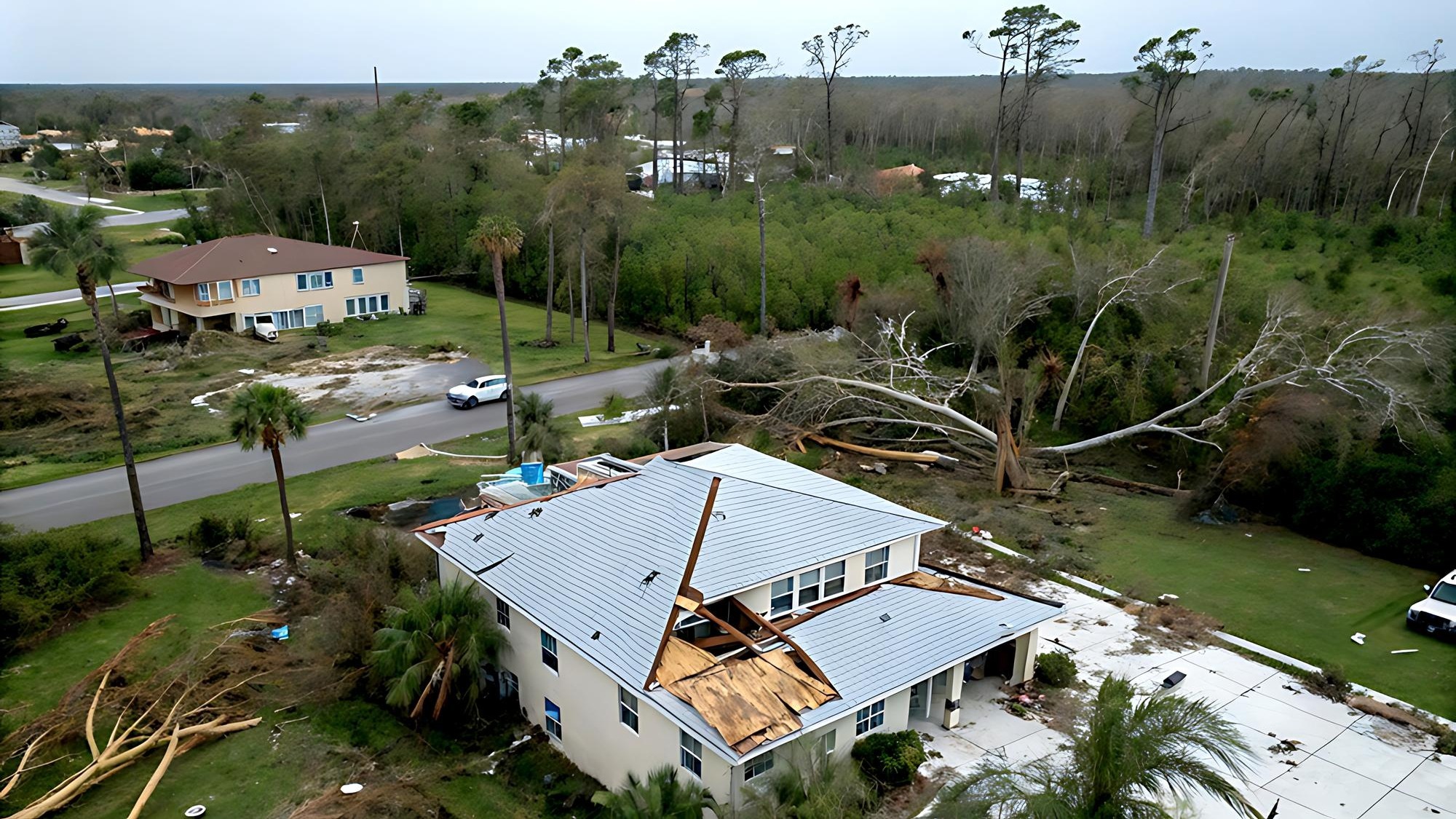
Hurricane season opens June 1, 2026, and an unknown number of Florida homeowners with properties valued at $400,000 or more will enter it without wind coverage from the state’s insurer of last resort. The reason: they have not purchased a flood insurance policy, which Citizens Property Insurance Corporation now requires as a condition of providing wind protection on higher-value homes.
The mandate, written into Section 627.351 of Florida’s insurance code, took effect January 1, 2026. Any Citizens personal-lines residential policyholder whose dwelling replacement cost hits $400,000 or above must show proof of flood insurance to keep wind coverage. Those who failed to comply lost that coverage five months ago. Now they face the six-month stretch when Florida is most vulnerable to tropical cyclones, and they are carrying the financial risk of wind damage on their own.
How the mandate works
The statute sets up a two-phase rollout:
- Phase 1 (January 1, 2026): Policyholders with dwelling replacement costs of $400,000 or more must carry flood insurance to maintain wind coverage through Citizens.
- Phase 2 (January 1, 2027): The requirement expands to all remaining Citizens personal-lines residential policyholders, regardless of home value.
The law does not limit compliance to the National Flood Insurance Program. Private flood coverage counts, too. That matters because Florida’s private flood market has expanded significantly. The Florida Office of Insurance Regulation has authorized more than 30 private flood insurers to write standalone policies in the state, many of which offer higher coverage limits, more flexible terms, and in some cases shorter waiting periods than the NFIP.
The NFIP remains the most widely used program, but its pricing has shifted since FEMA introduced Risk Rating 2.0 in 2021. Premiums are now tied to a property’s individual flood risk rather than broad zone maps, which has driven costs up sharply for some homeowners and down for others.
Why the calendar makes this urgent
NOAA’s National Hurricane Center defines the Atlantic hurricane season as June 1 through November 30. That is when the vast majority of named storms form, strengthen, and threaten the U.S. coastline. A homeowner who lost wind coverage on January 1 has already been exposed for five months. Starting June 1, the exposure becomes far more dangerous.
“People think of flood and wind as the same thing during a hurricane, but legally they are completely separate perils,” said Amy Koch, a property insurance agent in Tampa who works with Citizens policyholders. “I have clients who did not realize their wind coverage was gone until I called them in March. Some of them still have not bought a flood policy.”
Colorado State University’s April 2026 seasonal forecast projected 20 named storms for the Atlantic basin, well above the 30-year average of roughly 14. The forecast cited persistently warm sea-surface temperatures in the tropical Atlantic and the absence of a strong El Nino, both of which favor storm development. No seasonal outlook can predict where individual storms will make landfall, but the signal is clear: this is not a year to carry coverage gaps.
Wind damage is typically the largest driver of insured losses during a hurricane. Roof failures, shattered windows, structural collapse from sustained winds or tornadoes embedded in a storm’s outer bands: these are the claims wind coverage exists to pay. On a home valued above $400,000, repair costs from a direct hit can easily reach six figures.
That risk is not confined to the coast. Hurricanes Irma (2017), Michael (2018), and Ian (2022) all caused catastrophic wind damage well inland. Citizens covers properties across the entire state.
The financial bind
Complying with the mandate is not free. Under Risk Rating 2.0, annual NFIP premiums vary widely based on a property’s elevation, construction type, and proximity to water. FEMA’s rate tables, updated under the Risk Rating 2.0 methodology, show that higher-value properties in flood-prone parts of Florida can face annual premiums ranging from roughly $1,500 to more than $5,000. For homeowners already paying steep Citizens premiums for wind coverage, a flood policy adds a significant new line item to annual housing costs.
“I had one couple in Fort Lauderdale whose NFIP quote came back at $4,200 a year,” Koch said. “They were already paying over $8,000 for their Citizens wind policy. That is $12,000-plus just for wind and flood before you even get to their homeowners coverage for everything else.”
Some policyholders may have chosen to drop Citizens rather than buy flood insurance, gambling that they can self-insure or find wind coverage on the private market. But Florida’s private property insurance market has been battered by years of insolvencies and carrier withdrawals. Citizens’ policy count, which peaked above 1.2 million in late 2023, has declined as the state has pushed depopulation efforts. Even so, Citizens remains the only realistic option for many homeowners in high-risk areas.
Homeowners who want to restore their Citizens wind coverage by purchasing flood insurance face a timing problem. NFIP policies typically carry a 30-day waiting period before coverage kicks in. A policy purchased in late May 2026 would not be active until late June, leaving a gap during the first weeks of hurricane season. Some private flood insurers offer policies with shorter or no waiting periods, which may provide a faster path to compliance.
Key questions that remain unanswered
Citizens has not publicly disclosed how many policyholders above the $400,000 threshold failed to obtain flood insurance by the January 1 deadline. Without that number, it is impossible to know whether the coverage gap affects a few thousand households or tens of thousands. The Florida Office of Insurance Regulation has also not published detailed enforcement guidance explaining whether noncompliant policyholders received cancellation notices, endorsement removals, or conditional non-renewals.
The second phase raises even larger questions. When the January 1, 2027, deadline arrives, every remaining Citizens residential policyholder will need flood insurance to keep wind coverage. That population includes a much larger share of lower-value homes, where the added cost of a flood premium may be harder to absorb.
What affected homeowners should do now
For anyone holding a Citizens policy on a home with a replacement cost at or above $400,000, the steps are straightforward but time-sensitive:
- Check your coverage status. Contact your insurance agent or Citizens directly to confirm whether your wind coverage is active and whether proof of flood insurance is on file.
- Buy flood insurance immediately if you lack it. The 30-day NFIP waiting period means every day of delay pushes your effective coverage date deeper into hurricane season. Ask your agent about private flood options with shorter or no waiting periods.
- Know what wind coverage pays for. Wind and flood are separate perils under Florida law. Even with a flood policy, losing wind coverage leaves you exposed to the damage category that historically generates the largest hurricane claims.
- Plan for the combined cost. Carrying both wind and flood coverage is now a legal condition of being insured through Citizens at the $400,000-plus level. Build both premiums into your annual housing budget.
Homeowners below the $400,000 threshold have until January 1, 2027, but the same 30-day waiting period and the same cost pressures apply. Waiting until December to act will create the same scramble playing out right now for higher-value properties.
How the mandate reshapes Florida’s hurricane-season risk calculus
For years, Florida homeowners could carry wind coverage through Citizens without giving a thought to flood insurance. That era ended on January 1, and the consequences become tangible when the season opens June 1. Koch said she expects a wave of last-minute flood policy purchases in the coming days, but warned that the 30-day NFIP waiting period will leave many of those homeowners uncovered through the end of June. “The mandate is not going away,” she said. “And neither are the storms.”