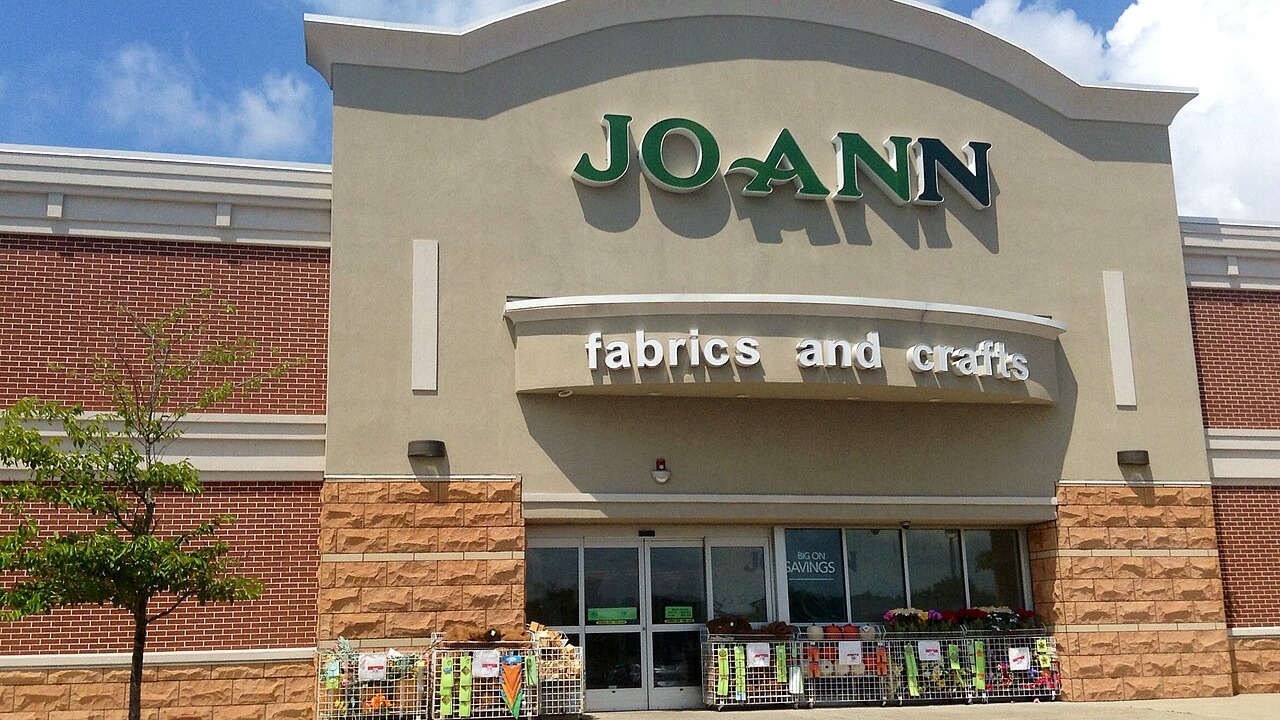
Joann, the largest dedicated sewing and crafts retailer in the United States, is shutting down every remaining store after filing for Chapter 11 bankruptcy protection for the second time in less than a year. The company had initially framed its January 2025 filing as a path toward a court-supervised sale, but the process shifted to full liquidation within weeks. Store-closing sales are now underway at all 790 locations nationwide, ending a retail chain that had been a fixture for generations of crafters, quilters, and hobbyists.
How a second bankruptcy turned into total liquidation
When Joann entered its second voluntary Chapter 11 process in mid-January, the company said it would remain open and pursue a sale that would preserve the business. Gordon Brothers, a firm specializing in retail restructuring, was named as the stalking-horse bidder in the case, setting a floor price that other potential buyers would need to beat at auction. The filing came less than a year after Joann had already gone through a prior restructuring, raising immediate questions about whether the company could attract a buyer willing to take on its debt and lease obligations a second time around.
The speed of the collapse from planned sale to full wind-down points to a gap between what Joann owed and what any acquirer was willing to pay. A stalking-horse bid is designed to attract competing offers, but when no viable alternative materializes, the process can default to liquidation. That appears to be what happened here. By February, Joann confirmed that store-closing sales had begun at all 790 locations, signaling that the auction had failed to produce a going-concern buyer.
Conflicting store counts and the scale of the shutdown
The exact scope of closures has been described differently depending on the source and the stage of the proceedings. Joann’s own announcement referenced store-closing sales at all 790 locations nationwide. Separately, reporting based on early court filings described a plan to close 533 stores, reflecting an initial attempt to preserve a smaller core of profitable locations. The discrepancy likely reflects the difference between a first-wave closure list approved by the bankruptcy court and the final outcome, in which no stores were spared.
As negotiations with landlords and creditors evolved, the economics of keeping any subset of the chain operating appear to have deteriorated. Fixed costs tied to leases, distribution centers, and corporate overhead are difficult to right-size quickly, especially for a retailer already weakened by years of declining traffic and heavy promotional discounting. Once it became clear that a buyer was not willing to assume Joann’s remaining obligations, the logic of a full liquidation became hard to avoid.
For the roughly 19,000 employees Joann reported in recent years, the closures mean job losses spread across 49 states. Many workers are navigating overlapping timelines for severance, unused vacation payouts, and the end of health benefits as stores count down to final closing dates. For customers, the shutdown removes the only national chain exclusively focused on fabrics, sewing supplies, and crafting materials. Smaller independent shops and online sellers will absorb some of that demand, but no single competitor operates at the same scale or with the same product depth.
What the failed restructuring reveals about retail debt loads
Joann’s first bankruptcy, completed earlier in 2024, was supposed to cut debt and give the company room to stabilize. Instead, the retailer burned through its post-restructuring runway in less than a year, underscoring how fragile highly leveraged chains can be when sales soften. Debt service, rent, and inventory costs leave little margin for error; even modest declines in store traffic or higher freight expenses can quickly erode the benefits of a court-approved balance-sheet fix.
The second Chapter 11 filing was structured around the idea that a new owner could inject capital and renegotiate leases while preserving the bulk of the store base. But by the time the stalking-horse bid was in place, Joann was already operating in a tougher environment: lingering inflation, cautious discretionary spending, and a shift in consumer behavior after the pandemic-era crafting boom faded. Those trends made the business less attractive just as lenders and landlords were being asked to compromise yet again.
Retail restructurings typically succeed when a chain has a clear niche, manageable debt, and enough time to remodel stores or reposition its brand. Joann arguably had the first of those advantages-a loyal customer base and a specialized assortment-but lacked the second and third. The compressed timeline between bankruptcies signaled to investors that prior fixes had not addressed underlying structural issues, such as oversized locations, overlapping stores in the same markets, and the rise of online competitors offering similar products with lower overhead.
The liquidation also highlights the growing role of specialized firms in managing distressed retail assets. Companies like Gordon Brothers often help value inventory, run going-out-of-business sales, and, when possible, package profitable stores for sale. In Joann’s case, those tools were ultimately used to unwind the chain rather than rescue it. The focus shifted from saving jobs and leases to extracting maximum value from inventory, fixtures, and intellectual property for creditors.
For communities losing a Joann store, the impact will be both economic and cultural. Shopping centers will have to fill large, purpose-built spaces that may not easily convert to other uses. Local quilting circles, sewing classes, and school theater departments will lose a convenient source of materials and advice. While some independents may see a boost in business, they are unlikely to replicate the nationwide footprint or promotional cadence Joann maintained.
The company’s rapid descent from a court-supervised sale process to chainwide liquidation will likely be studied as a cautionary tale in future retail bankruptcies. It illustrates how a second trip through Chapter 11 can narrow options rather than expand them, especially when creditors have already absorbed losses once. It also underscores the importance of transparent communication with the press and investors; outlets that rely on services such as newswire distribution depend on timely, accurate updates to track how quickly a restructuring is evolving. In Joann’s case, those updates charted the collapse of a once-dominant specialty retailer that could not escape the weight of its own obligations.