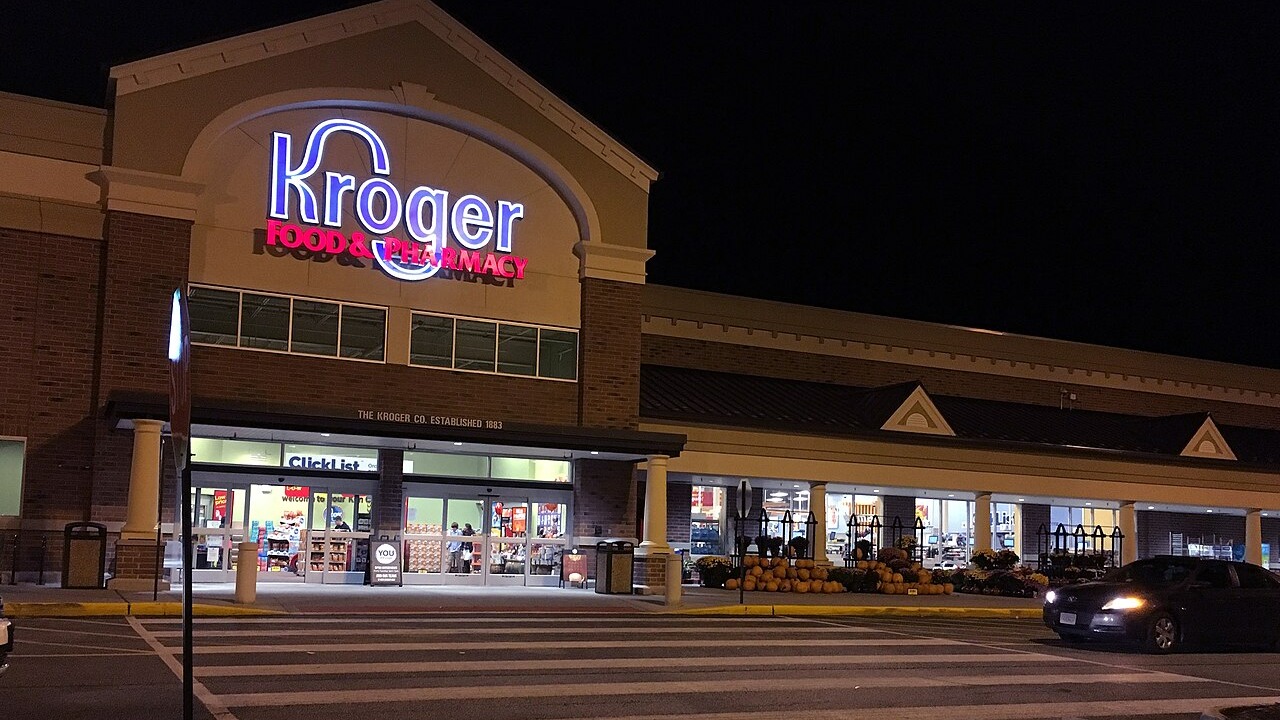
Kroger, the largest grocery chain in the United States, plans to shut down roughly 60 stores over the next 18 months, a move that will eliminate locations across its sprawling network of supermarkets. The company disclosed $100 million in store-closure costs during its first fiscal quarter of 2025, the first concrete financial signal of the scale of cuts ahead. The closures follow the failed merger with Albertsons and represent a deliberate bet that a leaner footprint will deliver stronger profits.
Post-Albertsons Strategy Drives the 60-Store Cut
The timeline here matters. Kroger spent more than two years pursuing its proposed acquisition of Albertsons, a deal that would have combined the two largest traditional grocery operators in the country. That merger collapsed after regulatory opposition, leaving Kroger to confront the same competitive pressures it hoped the deal would solve, but without the added scale. Closing 60 stores is one of the clearest responses to that new reality, signaling that management is turning inward to optimize what it already owns rather than chase transformational consolidation.
Kroger’s latest quarterly filing with the SEC, its Q1 2025 report, shows the company recognized $100 million in charges tied to the planned closures. That figure covers lease obligations, asset write-downs, and other exit costs associated with the approximately 60 locations slated to go dark. The filing does not break down which banners, regions, or individual addresses are affected. It offers a dollar total and a store count, but no geographic map or description of whether the shuttered sites are underperforming legacy stores, overlapping locations in dense markets, or experiments that never gained traction.
The company has said it will offer affected employees positions at other Kroger-operated locations, according to reporting from the Associated Press. Kroger has not named specific stores or disclosed how many workers face displacement. For employees in markets where the nearest alternative Kroger site is dozens of miles away, a transfer offer may not amount to much, especially for hourly workers who rely on public transportation or have caregiving obligations that limit commute times.
What the $100 Million Charge Reveals and What It Hides
A $100 million one-time charge against a company of Kroger’s size is not catastrophic on its own. The grocery chain operates thousands of stores under banners including Ralphs, Fred Meyer, Harris Teeter, and others. Trimming 60 locations represents a modest percentage of total doors. But the charge signals a shift in how management views its real estate portfolio after the Albertsons deal fell apart. Instead of counting on merger synergies, Kroger is signaling that some stores simply do not clear its updated bar for profitability or strategic relevance.
The 10-Q does not quantify projected annual savings from the closures. It does not estimate how much revenue will be lost or how much of that revenue might migrate to nearby Kroger stores. Investors are left to model those outcomes on their own, extrapolating from average sales per store and typical grocery margins. The absence of forward-looking savings guidance suggests either that the analysis is still underway or that Kroger prefers to let results speak over the coming quarters rather than make promises it may struggle to keep.
One testable hypothesis is that the closures are concentrated in higher-cost urban and suburban markets where labor expenses have risen fastest. Several states where Kroger operates have enacted minimum-wage increases in recent years, and union contracts in certain divisions have pushed hourly pay higher. If the company is pruning stores where wage growth has outpaced sales growth, that pattern should become visible when future quarterly filings report store counts by division. Cross-referencing those numbers with state-level wage data and union contract timelines would confirm or challenge the idea that labor costs, rather than weak demand alone, are driving the cuts.
Another possibility is that Kroger is accelerating a shift toward formats and regions where it sees more defensible advantages. That could mean favoring larger combination stores with more space for fresh foods and private-label products, or leaning into markets where it has strong brand loyalty and less direct overlap with discount rivals. Without a detailed list of closures, these remain educated guesses, but the decision to absorb a sizable charge in a single quarter implies a desire to reset the store base quickly rather than allow marginal locations to linger.
Implications for Communities, Workers, and Investors
For communities, the impact of 60 closures will be uneven. In dense neighborhoods with multiple grocery options, a shuttered Kroger may shift traffic to competitors with minimal disruption. In smaller towns or low-income urban areas where Kroger is one of the only full-service grocers, a closure can deepen food-access challenges and push residents toward higher-priced convenience stores or longer trips for basic staples. Local officials will likely press for clarity on which stores are at risk so they can plan for potential food deserts.
For workers, Kroger’s promise of transfer opportunities offers some protection but not certainty. Even when positions are available, they may be at different pay scales, schedules, or departments, and workers may have to choose between uprooting their routines or exiting the company altogether. Union locals will be watching how many employees actually land comparable roles and whether the company uses the closures to rebalance staffing levels or weaken bargaining leverage in future negotiations.
Investors, meanwhile, will focus on whether the closures translate into better margins and more consistent earnings growth. If Kroger can show that pruning weaker stores boosts profitability without ceding too much market share, the $100 million charge will look like a disciplined course correction after a failed merger. If sales growth stalls and competitors fill the gaps left behind, the closures could be read instead as a sign that traditional grocers are struggling to adapt to a market increasingly shaped by e-commerce, warehouse clubs, and hard discounters.
In the absence of a store-by-store roadmap, the 60 planned closures function as a blunt but revealing signal: Kroger is willing to shrink in order to strengthen. How well that strategy works will become clearer as the company reports future quarters, and as customers and workers in affected communities begin to feel the consequences of where, exactly, the lights go out.