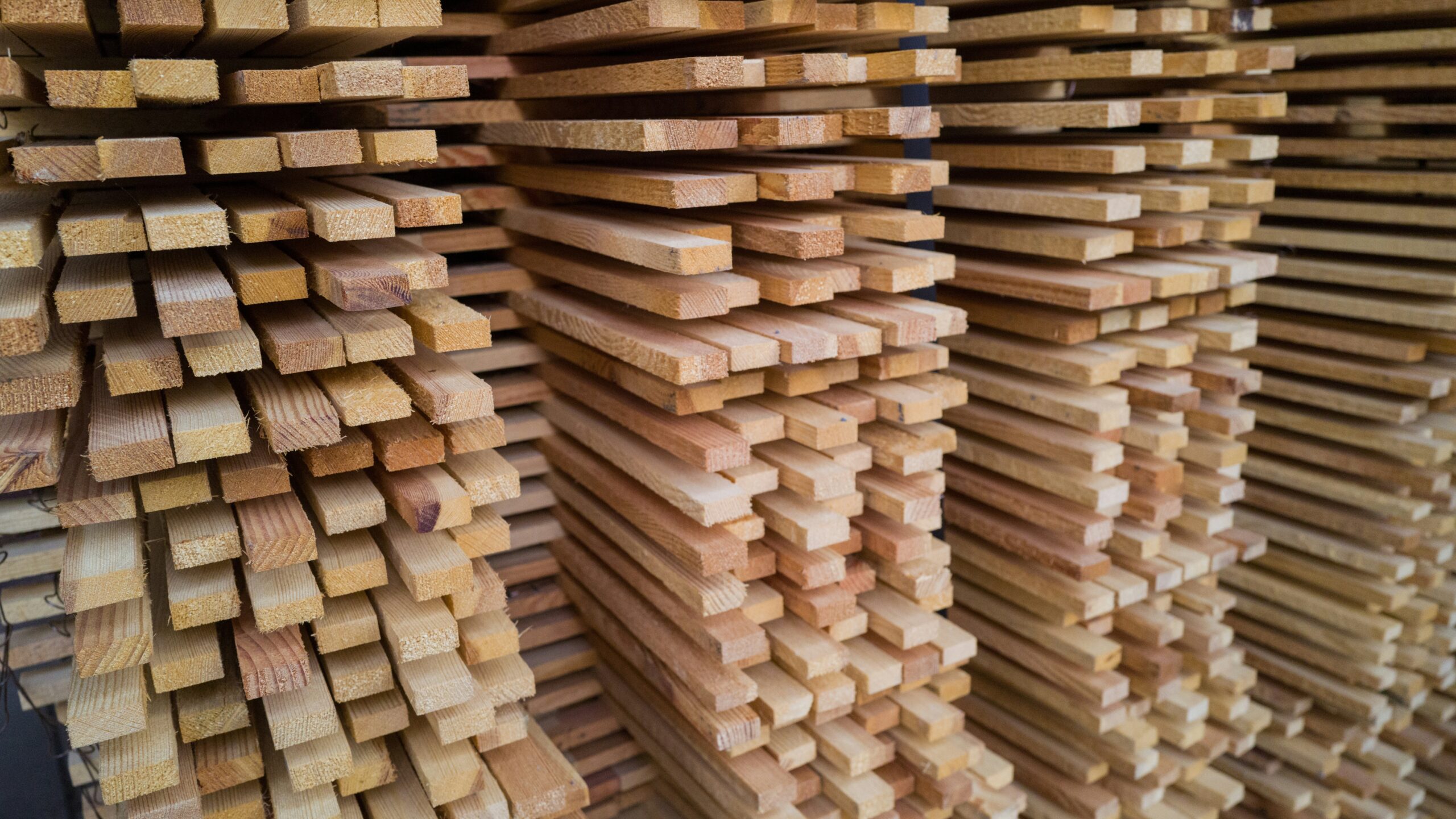
The purchase order for framing lumber on a new single-family home is getting harder to sign. Builders breaking ground on a typical 1,800-square-foot house in spring 2026 are paying an estimated $10,900 more in material costs than they were a year ago, according to cost modeling published by the National Association of Home Builders (NAHB). Lumber is the biggest driver: wholesale softwood prices have climbed 8.7% year over year, based on the Bureau of Labor Statistics Producer Price Index through early 2026.
But lumber is only part of the story. A series of escalating Section 232 tariffs on imported steel, aluminum, and copper has raised the landed cost of the metal products woven into every residential build, from joist hangers and hurricane straps to copper wiring and plumbing fittings. Those increases are now showing up on builder invoices alongside the wood, compounding the squeeze on an industry already struggling with a national housing shortage.
What Section 232 tariffs mean for construction
Section 232 of the Trade Expansion Act of 1962 gives the president authority to impose tariffs on imports deemed a threat to national security. The provision sat mostly dormant for decades before becoming a centerpiece of recent trade policy. On June 4, 2025, President Donald J. Trump signed a proclamation raising Section 232 duties on covered steel and aluminum articles from 25% to 50%. The order also extended coverage to “derivative articles,” meaning finished goods containing steel or aluminum components, not just raw ingots and coils, became subject to the higher rate.
For residential builders, the derivative list hits close to home: structural screws, metal roofing panels, steel rebar, connector plates, and dozens of other fasteners and fittings that hold a wood-framed house together. A companion White House fact sheet described the increase as necessary to protect domestic industrial capacity. The construction industry, which consumes roughly 43% of all structural steel shipped domestically according to the American Institute of Steel Construction, absorbed it as a direct cost hit on materials already in tight supply.
The tariff program expanded further in early 2026, when the administration extended Section 232 duties to copper imports. Copper wiring, plumbing fittings, and electrical panels are standard line items in residential construction. Electrical rough-ins and domestic water lines, both copper-intensive systems, are particularly exposed to the added cost.
How the costs add up in a single home
Lumber remains the single largest material expense in a wood-framed house, typically accounting for roughly a quarter of total construction costs. The 8.7% year-over-year increase in the BLS Producer Price Index reflects several overlapping forces. Canadian softwood lumber is still subject to countervailing and anti-dumping duties that the U.S. Department of Commerce has set above 14% for most major producers in recent determinations. Mill capacity in the Pacific Northwest has not fully recovered from pandemic-era disruptions. And seasonal demand from spring building activity tightens supply every year between March and June.
Layered on top of that baseline, the Section 232 tariffs have made the metal products that accompany every stick of lumber more expensive. Connector hardware from manufacturers like Simpson Strong-Tie, structural fastener packs, and steel beam components all carry higher import costs that manufacturers pass downstream. When a framing contractor prices a job, those metal accessories are bundled into the bid alongside the wood, so tariff-driven metal inflation shows up in the same line item as the lumber itself.
The NAHB’s $10,900 per-home estimate combines these overlapping pressures into a single composite figure, based on a representative bill of materials for an 1,800-square-foot single-family home. The number is a national average, and actual costs vary by region, builder, and design. A home in hurricane-prone coastal Florida, where building codes require more metal connectors and impact-rated hardware, will absorb a larger share of the tariff increase than a comparable house in a low-wind inland zone.
“Every cost increase that gets added to a new home has a measurable effect on who can afford to buy one,” NAHB Chairman Carl Harris said in a statement earlier this year, calling on the administration to exempt building materials from the tariff program.
What it means for buyers and monthly payments
For a buyer financing the full $10,900 increase at a 30-year fixed mortgage rate near 6.8%, the added material cost translates to roughly $71 per month in additional principal and interest. That figure may sound modest on its own, but it lands in a market where the median new-home sale price already exceeds $400,000, according to U.S. Census Bureau data, and where affordability constraints have pushed first-time buyers to the margins.
The NAHB has long estimated that every $1,000 increase in the price of a new home prices roughly 100,000 households out of the market nationally. By that math, the $10,900 increase could sideline more than a million potential buyers.
Builders respond to margin compression in familiar ways: they shrink floor plans, substitute materials where code allows, delay land acquisitions, or pause projects entirely. Housing starts for single-family homes have fluctuated in recent months, and several publicly traded homebuilders, including D.R. Horton and Lennar, flagged material costs as a headwind in their most recent earnings calls. The broader risk is that tariff-driven cost increases slow the supply response to a housing deficit that the National Association of Realtors has estimated at roughly 4 million units.
How this compares to the 2021 lumber spike
Builders who weathered the 2020-2021 lumber shock will recognize the pattern, if not the intensity. Random Lengths composite framing lumber prices peaked above $1,700 per thousand board feet in May 2021, more than quadruple pre-pandemic levels, before crashing back below $400 by mid-2022. That episode was driven primarily by sawmill shutdowns, a surge in DIY remodeling demand, and pandemic-era supply-chain bottlenecks.
The current environment is different in character. Prices are elevated but not parabolic; the 8.7% year-over-year climb is a grind, not a spike. The driver this time is structural trade policy, specifically tariffs that are unlikely to reverse quickly, rather than a temporary demand shock. That distinction matters for planning. Builders who waited out the 2021 spike by delaying starts may not have the same luxury if tariffs remain in place through 2026 and beyond. A demand shock eventually burns itself out; a tariff stays until someone removes it.
What builders and policymakers are doing about it
The NAHB has formally requested that the administration exempt key building materials from Section 232 tariffs, arguing that the duties undermine the president’s own stated goal of increasing housing supply. Several bipartisan bills introduced in Congress in early 2026 would require economic impact assessments before Section 232 tariffs can be applied to construction inputs, though none had advanced past committee as of May 2026.
On the ground, builders are adapting where they can. Some are locking in lumber contracts earlier in the season to hedge against mid-year price swings. Others are shifting to engineered wood products, like laminated veneer lumber and I-joists, which use less raw material per linear foot and can partially offset rising softwood costs. A few large production builders have begun sourcing domestically manufactured steel connectors to avoid the tariff on imported derivative articles, though domestic supply remains limited.
None of these workarounds eliminates the cost increase. They redistribute it, delay it, or shave a few percentage points off the total. For the builder writing a purchase order in May 2026, the invoice is higher than it was a year ago, and the policy environment that pushed it there shows no sign of changing soon. The question is not whether the cost gets paid, but who absorbs it: the contractor, the buyer, or some combination of both.