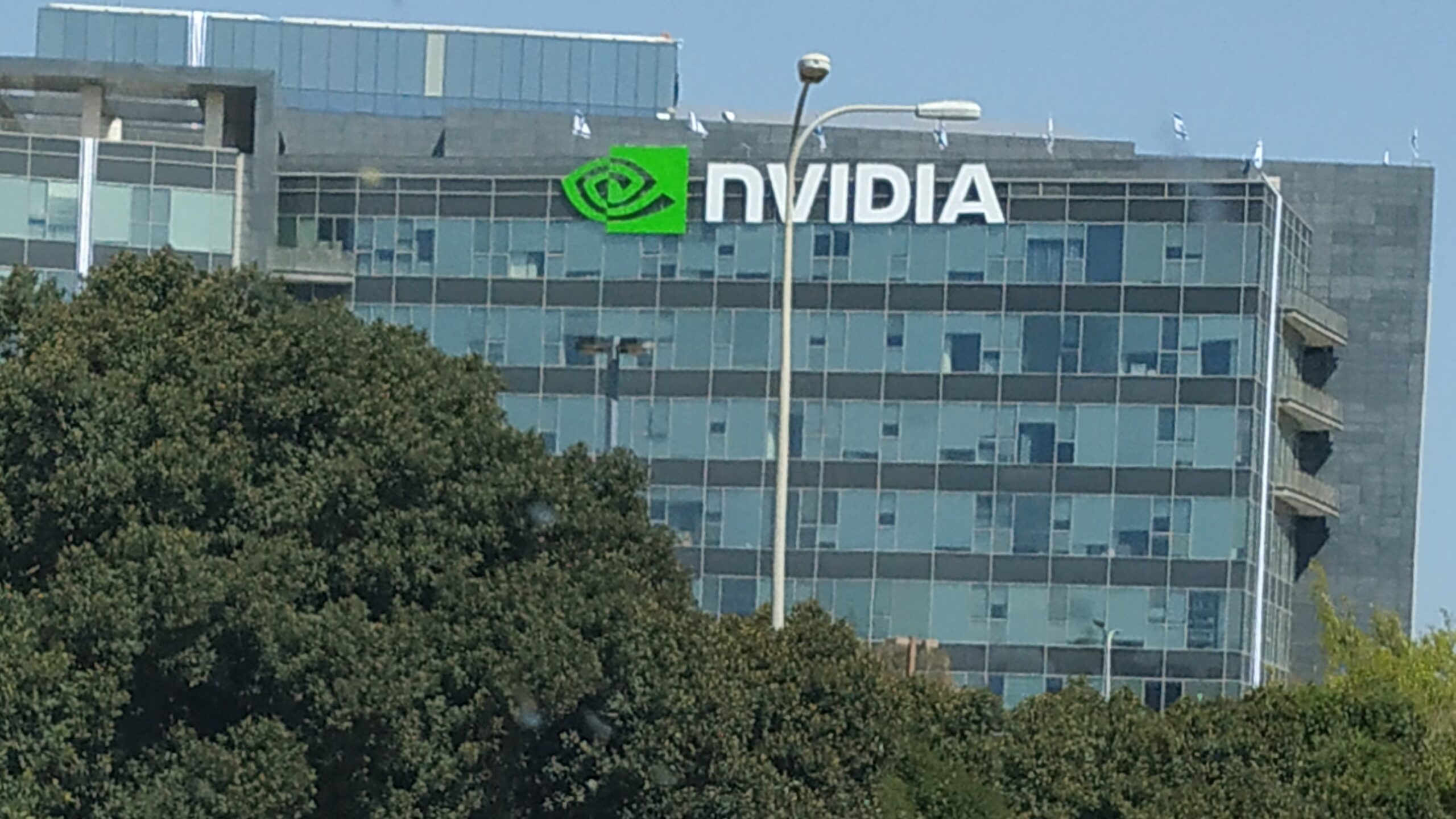
When Nvidia’s share price ticked past $203 on October 29, 2025, the numbers on trading terminals spelled out something that had never happened before: a single chipmaker was worth $5 trillion. Six months later, the figure still defies easy comprehension. One company, headquartered in a glass-walled campus in Santa Clara, California, now carries a valuation larger than the entire annual economic output of Japan, Germany, India, or the United Kingdom.
The milestone was reported in real time by the Associated Press and Bloomberg News, both drawing on live exchange data. According to the International Monetary Fund’s World Economic Outlook database, updated in April 2026, only two sovereign nations produce more than $5 trillion in nominal output per year: the United States and China. Every other economy on Earth falls short of the number Wall Street has pinned to Nvidia.
What the verified sources confirm
Two independent reporting accounts confirm the milestone. The Associated Press documented Nvidia’s entry into what it called the $5 trillion club, tracing the company’s rapid rise by the numbers. Bloomberg News separately reported that Nvidia crossed the threshold during an extended AI-driven rally, making it the first publicly traded firm to achieve that valuation. Both outlets based their coverage on live market data and standard valuation arithmetic, multiplying the intraday share price by the number of outstanding shares.
The economy-size comparison rests on official macroeconomic data from two institutions. The IMF’s WEO database, in its April 2026 vintage, provides nominal GDP figures in current U.S. dollars for every country and includes projections for subsequent years. Those figures show that only the United States and China have nominal output above $5 trillion, while all other national economies fall below that threshold.
The World Bank’s global indicators corroborate this picture. Its compiled GDP series for major economies and the world total, accessible through the institution’s broader data portal, align with the IMF’s ranking: the United States and China stand alone in the multi-trillion-dollar range above $5 trillion, while economies like Japan, Germany, India, and the United Kingdom occupy lower tiers. Together, these datasets establish the factual backbone of the headline claim.
What $5 trillion actually means, and what it does not
The GDP comparison is vivid, but it demands a caveat. Market capitalization reflects what investors collectively believe a company’s future cash flows are worth today, discounted back to the present. GDP measures the value of goods and services a country actually produces in a given year. One is a bet on the future; the other is a record of the present. They are fundamentally different metrics, and equating them overstates what a stock price can tell us about real economic power.
That said, the comparison is useful precisely because it captures scale. The IMF’s WEO data for 2025 puts Japan’s nominal GDP at roughly $4.4 trillion, Germany’s at about $4.6 trillion, and India’s and the United Kingdom’s below $4 trillion each. The World Bank’s GDP indicators tell the same story. Nvidia’s valuation, on the day it crossed $5 trillion, exceeded all of them.
What remains uncertain
Several gaps limit how far the comparison can be pushed. No official stock exchange record for the intraday market-cap calculation on October 29, 2025, has been identified in the available reporting. While exchanges routinely publish end-of-day statistics, the precise instant at which Nvidia’s valuation ticked above $5 trillion is reconstructed from price feeds rather than documented in a standalone filing. Both the AP and Bloomberg accounts rely on standard newswire methodology, but the exact second Nvidia crossed the threshold and whether it held that level through the closing bell are not confirmed by a primary exchange document in the sources reviewed here.
Nvidia itself has not issued a public executive statement about the milestone in the materials examined. The company’s silence means there is no on-the-record management perspective on what the valuation signals about future revenue expectations, competitive positioning, or AI demand forecasts. Without such commentary, any attempt to interpret corporate intent or internal confidence levels would be speculative and falls outside what the evidence can support.
A direct analytical link between AI-sector growth and national GDP trajectories is also absent from the institutional data consulted. The IMF and World Bank datasets measure aggregate output by sector and country, but within the sources reviewed there is no dedicated study tying Nvidia’s market-cap surge to revisions in GDP projections for any specific economy. Some contextual discussion appears in IMF communications about how AI investment might influence productivity over time, but these materials stop short of presenting a quantified, peer-reviewed estimate that would connect Nvidia’s stock performance to macroeconomic outcomes in a formal way.
How to read the evidence
The strongest evidence sits in two layers. The first layer is institutional data: the IMF’s WEO Database and the World Bank’s GDP indicators are primary datasets compiled by international organizations with transparent methodologies and regular revisions. They confirm the GDP side of the comparison with high reliability, establishing that only the United States and China currently produce more than $5 trillion in nominal output. The second layer is high-accountability financial journalism from the AP and Bloomberg, both of which reported the $5 trillion event in real time with access to professional market terminals and exchange feeds.
What the evidence does not support is any causal story about what Nvidia’s valuation means for the global economy as a whole. Market capitalization reflects investor expectations about future cash flows, discounted at prevailing interest rates, and can move rapidly with changes in sentiment or monetary policy. GDP, by contrast, measures the value of goods and services produced within a country’s borders over a year and changes comparatively slowly, influenced by labor markets, capital investment, technology, and policy choices. Equating the two, or inferring that Nvidia’s valuation will translate into proportional gains in global output, would conflate fundamentally different metrics.
Why the $5 trillion comparison is a snapshot, not a forecast
The comparison is best understood as a striking snapshot of market concentration and investor enthusiasm for AI rather than as a forecast. It highlights how a single company at the center of a transformative technology wave can, at least temporarily, command a valuation that rivals the economic output of entire nations. At the same time, the uncertainties around intraday measurement, the absence of corporate comment, and the lack of formal macroeconomic studies connecting this valuation to GDP all argue for caution. The verified facts show that Nvidia briefly stood alongside the world’s largest economies in dollar terms; they do not, on their own, reveal how durable that status will be or how deeply it will reshape the real economy in the years ahead.