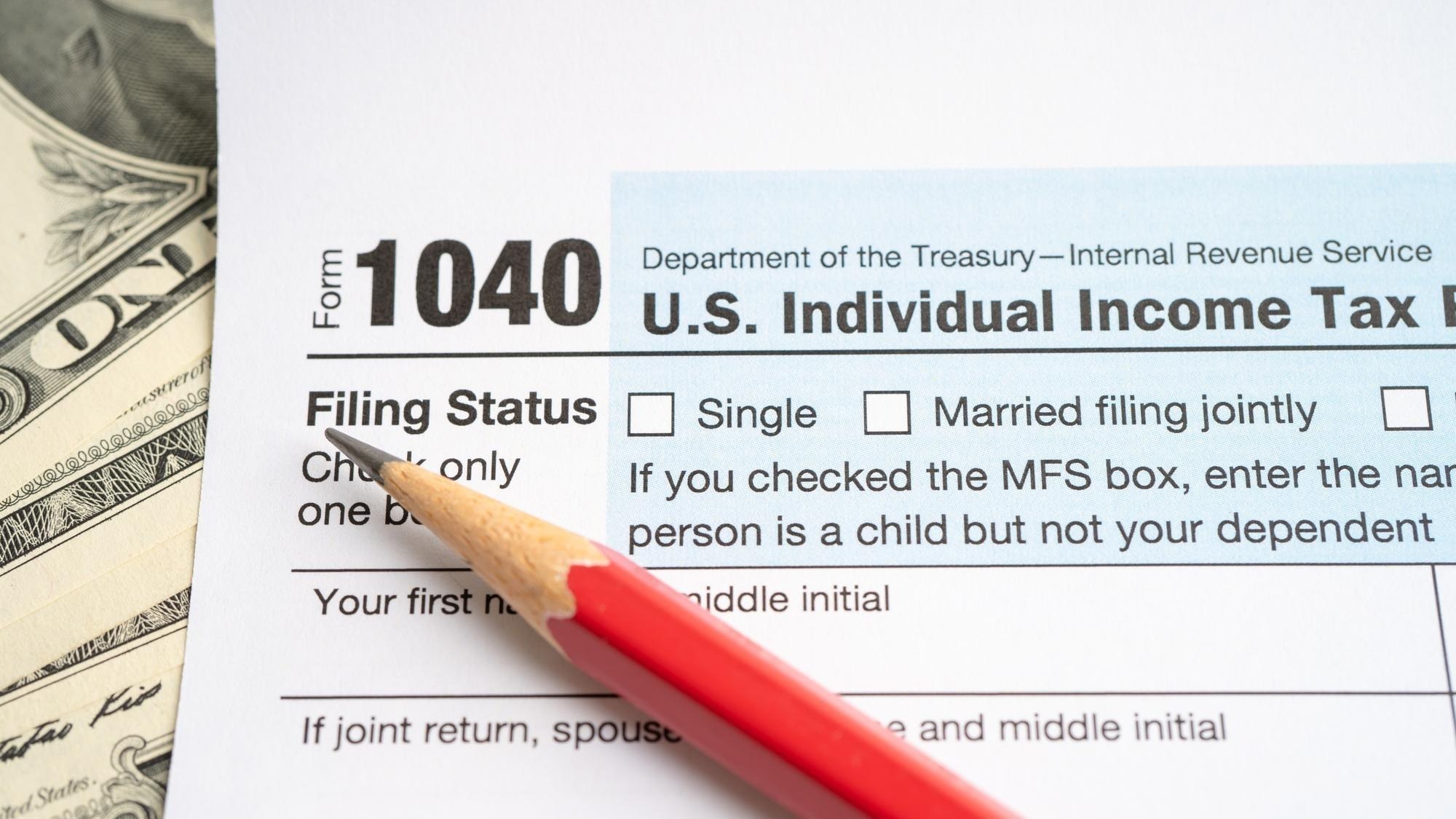
More than 29 million workers claimed the new deduction for overtime pay in its first full filing season, the U.S. Department of the Treasury reported this summer, with the average filer writing off more than $3,100. The break, created by the 2025 Working Families Tax Cuts, lets eligible workers deduct the portion of overtime pay that exceeds their regular hourly rate. For most of 2025, though, that money did not show up as extra cash in a weekly or biweekly paycheck; it showed up months later, when workers filed their tax returns.
How the Overtime Deduction Is Calculated
The deduction applies only to the premium portion of overtime, the “half” in “time-and-a-half” pay that the Fair Labor Standards Act requires employers to pay for hours beyond 40 in a week. It does not cover a worker’s regular hourly earnings for those same hours, only the extra amount tied to the overtime premium itself. For a worker earning $20 an hour who logs 200 overtime hours in a year at time-and-a-half, that overtime pay totals $6,000, but only the $2,000 premium portion, the extra $10 an hour, is eligible for the deduction. The maximum annual deduction is $12,500 for a single filer or $25,000 for a married couple filing jointly, and it is available whether or not the household itemizes deductions.
That $12,500 single-filer cap is lower than the $25,000 cap on the parallel deduction for tips created by the same law, though both use the same $150,000 single and $300,000 joint phase-out thresholds. The two deductions are claimed separately, so a tipped worker who also logs overtime hours in the same job could potentially use both in a single tax year, each subject to its own dollar cap.
Eligibility depends on the pay, not the worker’s age or job title, so older workers who pick up overtime shifts to pad a fixed retirement income qualify on the same terms as any other employee. Like the deduction for seniors created by the same law, the overtime deduction phases out at higher incomes; the IRS’s summary of the Working Families Tax Cuts puts that phase-out at modified adjusted gross income above $150,000 for single filers and $300,000 for joint filers, thresholds twice as high as the ones that apply to the senior deduction.
Free retirement updates: A quiet rule change can shrink a Social Security or Medicare check, and no one warns you. Our free Retirement Shield newsletter catches these early and explains what to do. Get it free.
Why Paychecks Did Not Get Bigger in 2025
Even though the deduction took effect for the 2025 tax year, the IRS made a deliberate decision not to update the federal income tax withholding tables employers use each pay period, and it left Form W-2, Form 1099 and Form 941 unchanged for that year as well. That meant payroll systems kept withholding tax on overtime pay exactly as they had before the law passed, so a worker putting in extra hours in, say, June 2025 saw no difference in that paycheck.
The IRS also granted employers transition relief for 2025, confirmed in a joint Treasury and IRS announcement on penalty relief for tips and overtime reporting, meaning employers were not required to separately break out qualified overtime pay on that year’s W-2 forms and faced no penalty for not doing so. Workers instead had to identify their own qualifying overtime, often using pay stubs or employer-provided estimates, and claim the deduction directly on the new Schedule 1-A when they filed. The upshot is that the entire benefit for 2025 arrived in a single lump sum at tax time, either as a smaller balance due or a larger refund, rather than as a gradual increase spread across a year of paychecks.
Nearly All Claimants Earned Under $200,000
Treasury’s data on who actually claimed the deduction points to a workforce well below the phase-out thresholds. The agency’s first-year results report on the Working Families Tax Cuts found that 75% of filers claiming the overtime deduction had income under $100,000, and 96% had income under $200,000, meaning the $150,000 phase-out threshold for single filers rarely came into play for the people actually using the break. The more than 29 million filers who claimed it made it one of the most widely used individual provisions in the law, behind only the doubled standard deduction and the enhanced deduction for seniors in total claim counts.
Reporting Changes in 2026, But the Deduction Still Ends in 2028
The 2025 filing season’s reporting gap will not repeat indefinitely. Starting with the 2026 tax year, employers are required to report qualified overtime compensation separately, which should make the deduction easier for workers to document and claim without relying on their own pay-stub math. That change affects paperwork and recordkeeping, not necessarily how much federal tax comes out of a given paycheck, so workers should not assume overtime pay will automatically look different on future pay stubs simply because reporting has improved.
Whatever the reporting mechanics look like in a given year, the deduction itself remains temporary. Both the IRS and Treasury describe the no-tax-on-overtime provision as effective only for tax years 2025 through 2028, the same four-year window that applies to the law’s other new individual deductions, after which it expires unless Congress votes to renew it.
This article was produced with the assistance of AI and reviewed by The Financial Wire editorial team.
More Financial Reading
- The ideal retirement withdrawal rate so your savings actually last
- How many CDs can you park at 1 bank? FDIC rules you must know