The Internal Revenue Service says the new $6,000 deduction for people 65 and older begins to phase out once modified adjusted gross income passes $75,000. For joint filers, the phase-out starts above $150,000. The deduction runs for tax years 2025 through 2028.
Modified adjusted gross income, or MAGI, is the income figure the tax form uses after certain adjustments. Retirees often hit it without feeling wealthy, because IRA withdrawals, pensions, interest and the taxable part of Social Security all count toward the total on the return.
The question for retirees is simple: does income sit above the line, and by how much? Anyone 65 or older with income near $75,000 as a single filer, or near $150,000 on a joint return, should look at the numbers before filing. Those below the lines are not affected by the phase-out.
What changed this year: Social Security and Medicare change every year, and nobody sends you a memo. The Retirement Money Brief breaks down what changed and what to do.
Get the Retirement Money Brief →
We may earn a commission from links on this page.
How much the deduction is worth
The IRS says the deduction is $6,000 per eligible individual. A married couple can take $12,000 if both spouses qualify. It comes on top of the extra standard deduction that people 65 and older already get under existing law.
The IRS says a person must be 65 on or before the last day of the tax year. The deduction is open to people who itemize and to those who take the standard deduction. It was created by the 2025 tax law, signed July 4, 2025 as Public Law 119-21.
Where the income lines fall
The IRS describes the lines as modified adjusted gross income over $75,000, or $150,000 for joint filers. They mark where the phase-out begins. They are not cliffs, so crossing one does not erase the deduction in a single step.
The IRS pages do not say at what income the deduction disappears entirely, and they do not give a phase-out rate. Anyone just over a line should expect a smaller deduction, not zero. The exact reduction is worked out on the new tax form.
The same law also has phase-outs for its other new deductions. The IRS lists higher starting points for tips and overtime, at $150,000 and $300,000 for joint filers.
Who gets the full $12,000
The $12,000 figure is a ceiling for a married couple, and only when both spouses are 65 or older. The IRS says the deduction applies per eligible person. A couple with one spouse over 65 gets $6,000 at most.
The $75,000 and $150,000 lines are the same for a couple whether one spouse or both qualify, based on the IRS description. A couple with two eligible spouses is therefore working with a larger deduction against the same joint income line.
Because the deduction is separate from the standard deduction, it also reaches people who itemize. The IRS says it is available to both itemizing and non-itemizing taxpayers.
Where it goes on the return
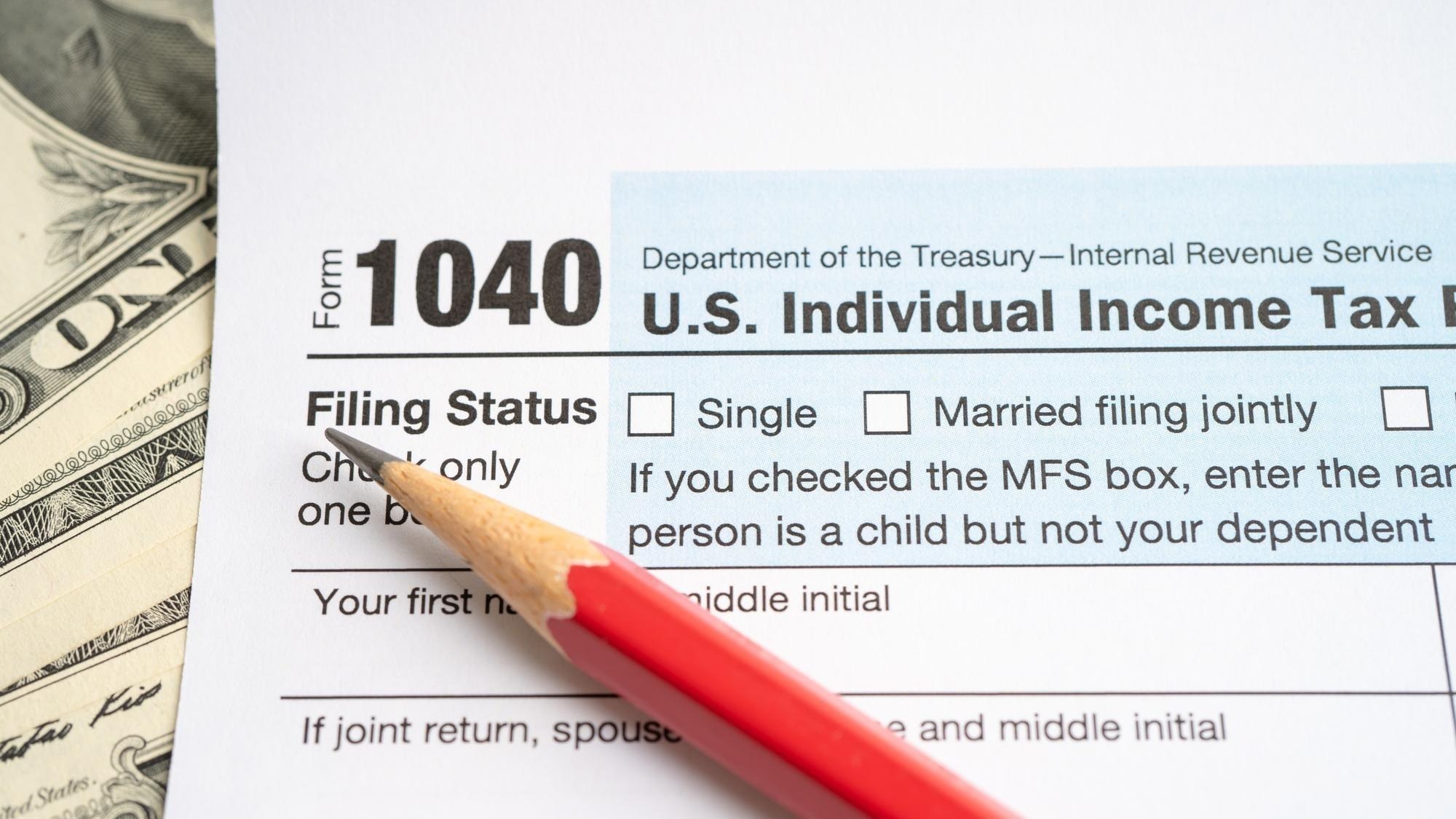
The deduction is claimed on Schedule 1-A, a form that gathers four new deductions. Part V is for the senior deduction and is filled out only if the taxpayer or a spouse is 65 or older. Part I figures the MAGI that drives the phase-out. The schedule attaches to Form 1040 or Form 1040-SR, the version of the return made for seniors.
The IRS says each claimant needs a valid Social Security number. Married couples must file jointly to take it. Couples who file separately cannot claim it, according to the IRS fact sheet on the form.
The total of the Schedule 1-A deductions goes on line 13b of Form 1040. The IRS says the form applies to 2025 tax returns, and the deduction is open to those who itemize or take the standard deduction.
Free help with the return
People who want a second set of eyes can use free preparers. The IRS lists the Tax Counseling for the Elderly program, which serves taxpayers 60 and older, at 800-906-9887. AARP Foundation Tax-Aide is also free and can be reached at 888-227-7669.
The IRS also keeps a page for seniors and retirees. It links to Publication 554, the Tax Guide for Seniors, and Publication 915, which covers how Social Security benefits are taxed.
The IRS first posted its eligibility page for the senior deduction on Feb. 27, 2026, and last updated it Sept. 21, 2026. It is the free official place to confirm the amounts and the 2025 through 2028 window.
What income sits near the line
The 2026 standard deduction is $16,100 for single filers and $32,200 for joint filers. The senior deduction is on top of those amounts. That makes the MAGI figure the main thing to know: it decides how much of the $6,000 survives.
Retirees who can control when they take IRA money may find that a few thousand dollars either side of the line changes the deduction. Which income counts, and when, is the open question for anyone in the $75,000 or $150,000 range.
Is income near the $75,000 or $150,000 line?
A retiree who misses where the phase-out begins can file with the wrong deduction, or leave part of it off the return. Social Security, IRA withdrawals and pensions all feed the same income figure, and the lines move with each source.
Cut Your Retirement Tax Bill: 12 Moves shows each income line that sets a retiree’s tax bill in 2026 numbers. It covers the new $6,000 senior deduction ($12,000 for a couple) for 2025 through 2028, and it puts the 2026 numbers on one page, with the forms for each of its 12 moves.
SEE WHERE YOUR INCOME FALLS AGAINST THE SENIOR DEDUCTION LINES IN THE 12-MOVE TAX GUIDE →
More Financial Reading
- 21 Ways to Stretch a $2,087 Social Security Check
- 15 Places to Find Your Share of the $4.25 Billion States Give Back
- 21 Ways Retirees Can Raise $1,000 Fast Without a Job
This article was produced with AI assistance and edited for accuracy against the sources linked above.