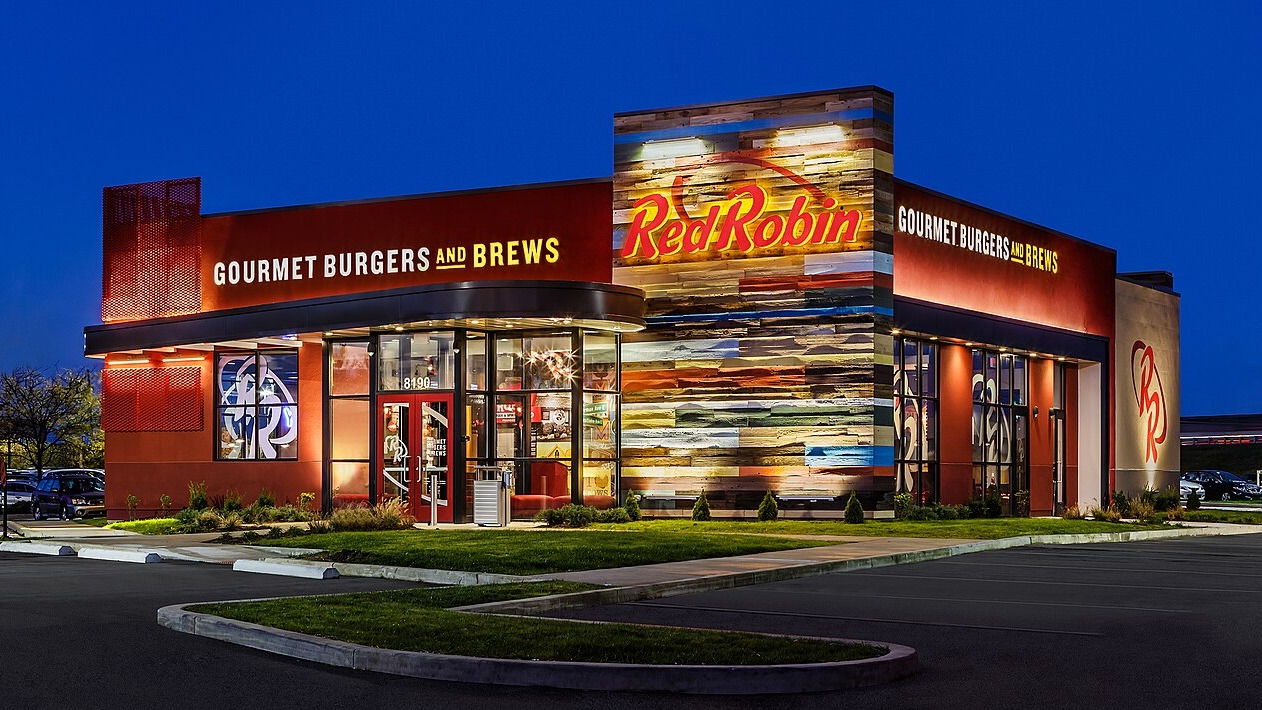
Red Robin Gourmet Burgers is preparing to shut as many as 27 company-operated restaurants this year while selling off 86 locations for $72.5 million, a move designed to shrink the chain’s debt load under its First Choice Plan. The transactions are expected to close in the second half of 2026, and the proceeds will go directly toward paying down outstanding borrowings. For the casual dining chain, the strategy raises a pointed question: whether offloading that many units will stabilize the balance sheet fast enough to offset the revenue and earnings those restaurants currently generate.
Why shedding 86 units and $72.5 million matters right now
Red Robin’s refranchising push is not a routine portfolio trim. The company has entered agreements to sell 86 company-owned restaurants for $72.5 million, with proceeds earmarked for debt reduction. That dollar figure, divided across 86 locations, works out to roughly $843,000 per unit, a price that signals urgency rather than premium valuations. Buyers are acquiring operating restaurants at a steep discount to replacement cost, which tells investors the company prioritized speed and certainty of closing over maximizing sale prices.
The immediate financial consequence is straightforward. Once those 86 units transfer to franchisees, Red Robin loses the direct revenue, labor costs, and EBITDA contribution from each location. In exchange, the company picks up franchise royalty income, which is typically a single-digit percentage of sales. The net effect on quarterly earnings depends on how profitable those 86 restaurants were as company-operated stores. If a significant share were underperforming, the swap could actually improve margins. If many were solid contributors, the hit to same-store sales and adjusted EBITDA from company-operated units could show up within two quarters after closing.
The closures of up to 27 additional restaurants add a second layer of contraction. Unlike refranchised locations, closed units generate zero future revenue in any form. That distinction matters for customers in affected markets, employees facing job losses, and landlords left with vacant spaces. Red Robin has not publicly identified which 27 restaurants are on the closure list, leaving workers and local communities without clarity on timing or location. For investors, the lack of detail complicates efforts to model traffic patterns, regional brand strength, and the potential for competitors to capture displaced demand.
SEC filings and the First Choice Plan’s debt math
The refranchising agreements are documented in a press release filed with the U.S. Securities and Exchange Commission as part of the company’s reporting tied to the fiscal first quarter ended April 19, 2026. The filing identifies the First Choice Plan as the governing framework for the transactions and specifies that proceeds will support both direct debt paydown and refinancing efforts.
The $72.5 million in total proceeds represents a fixed target, not a range. That specificity suggests the agreements are structured with defined purchase prices rather than contingent valuations based on future performance. For a company carrying significant term loan and revolving credit obligations, converting 86 physical restaurants into $72.5 million of immediate liquidity is a deliberate trade: fewer assets, less debt, and a smaller but theoretically healthier operating footprint. The plan hinges on interest savings and a lighter leverage ratio offsetting the earnings drag from a reduced company-operated base.
Red Robin’s decision to pursue refranchising at this scale also reflects a broader shift in how casual dining chains manage capital. By leaning on franchisees to fund remodels, local marketing, and day-to-day operations, the company can focus on menu innovation, brand positioning, and digital channels while keeping capital expenditures lower. However, once locations are sold, the company gives up a measure of control over execution quality, staffing levels, and guest experience, all of which influence long-term brand equity.
What management says about the First Choice Plan
Executives have framed the First Choice Plan as a multi-year effort to simplify operations, improve restaurant-level margins, and restore financial flexibility. On recent investor communications, accessible through the company’s earnings call platform, leaders emphasized that deleveraging is essential to funding menu upgrades and technology investments. Their argument is that a less burdened balance sheet will free up cash flow for initiatives aimed at traffic growth, such as loyalty enhancements and kitchen modernization.
Still, the plan is not without risk. Franchisees taking over the 86 restaurants will need to maintain or improve sales trends to support both their own financing and the royalties owed to Red Robin. If macroeconomic conditions soften or if local operators underinvest, the company could end up with lower total systemwide sales and weaker brand perception, even as reported leverage ratios improve. For shareholders, the trade-off is a bet that a leaner, more franchised Red Robin can generate steadier earnings and withstand cyclical downturns better than a heavily indebted, company-operated model.
What to watch as the deal closes
As the refranchising and closures progress through the second half of 2026, several markers will indicate whether the First Choice Plan is working as intended. Debt balances and interest expense should begin to decline soon after proceeds are applied, providing an early read on the financial impact. Same-store sales trends, both for remaining company-operated units and for the refranchised locations, will show whether the operational handoff is disrupting guest traffic.
Labor metrics and turnover rates at the transferred restaurants will also matter, since service quality can quickly erode if new owners cut too deeply or struggle with hiring. Finally, Red Robin’s ability to articulate a clear growth path once the heavy lifting of refranchising and closures is complete will determine whether this period is seen as a one-time reset or the start of a more durable, asset-light strategy. For now, the company is trading near-term scale for balance-sheet breathing room, wagering that a smaller system can ultimately support a stronger brand.
Free tool for readers: Most people don’t find out they’re off track until it’s too late. You can see where your retirement stands with a free Retirement Safety Score in about five minutes — no sign-up required to see it.