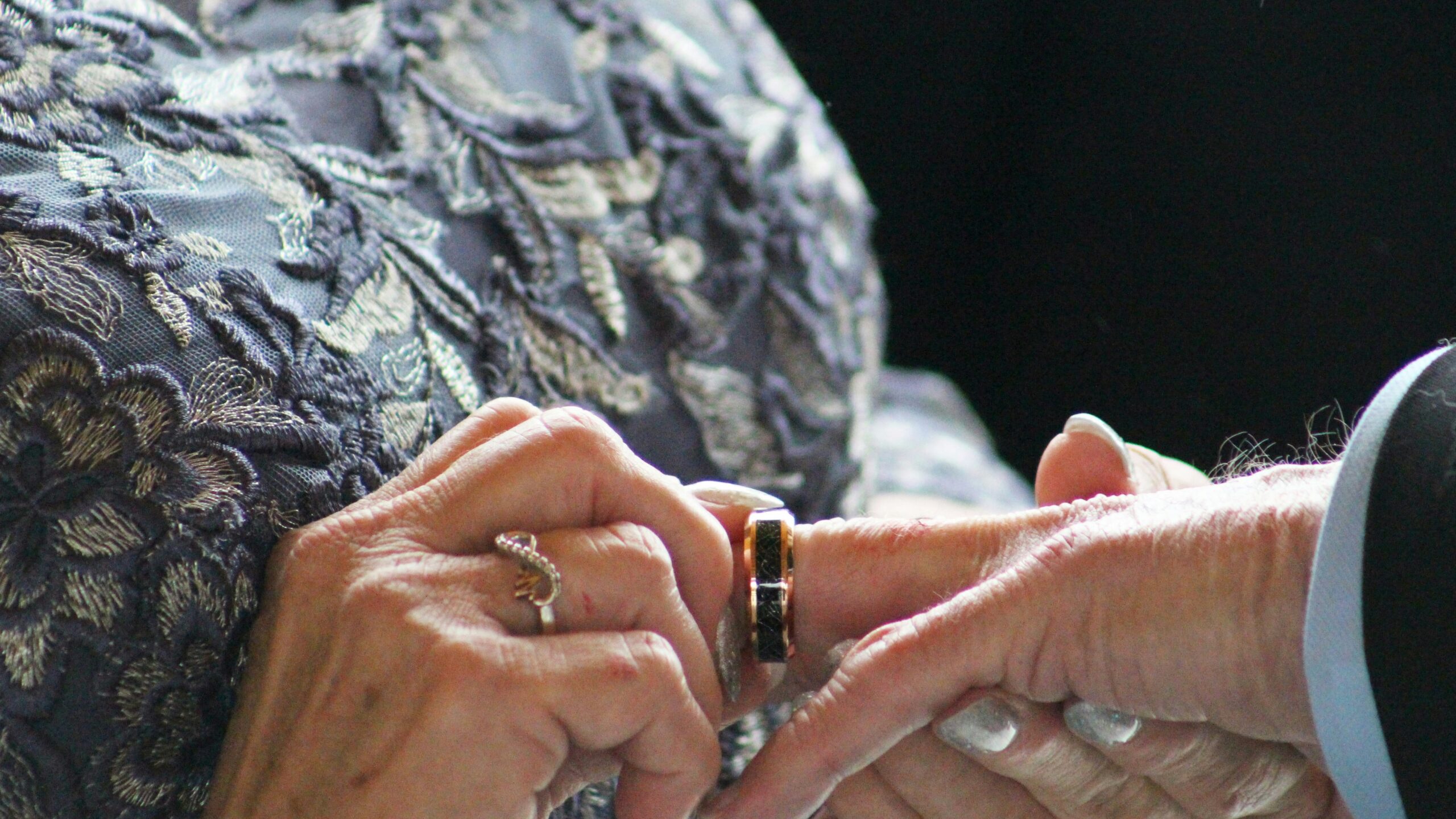
When a husband or wife dies, Social Security can pay the survivor a benefit based on the deceased spouse’s earnings, often for the rest of the survivor’s life. What many widows and widowers do not realize is that a decision as personal as whether and when to remarry can quietly switch that benefit off. The entire rule turns on a single birthday, and getting the timing wrong can cost a household thousands of dollars a year.
Why age 60 is the dividing line
Social Security draws a hard line at age 60 for surviving spouses. A remarriage before that age and a remarriage after it lead to opposite outcomes for the survivor benefit, even when nothing else about the two marriages differs. The distinction has nothing to do with the new spouse’s income or health and everything to do with the survivor’s age on the wedding day. Because that age is fixed and easy to check, it is one of the few Social Security rules a person can plan around with real precision.
According to the agency, a surviving spouse who remarries before age 60 cannot collect survivor benefits on the late spouse’s record while that new marriage lasts. A surviving spouse who waits until age 60 or later to remarry keeps full eligibility for those benefits, as though the remarriage had never happened at all. For someone approaching that birthday, a gap of only a few months between one wedding date and another can be the difference between keeping and forfeiting a monthly payment that may run for decades.
Free for readers: Social Security and Medicare change every year, and nobody sends a memo. The free Retirement Shield newsletter breaks down what changed and what to do. Get it free in your inbox.
The exceptions worth knowing
The rule bends in a couple of situations. A survivor who has a qualifying disability gets the same protection starting at age 50 rather than 60, so a disabled widow or widower who remarries after 50 can still draw survivor benefits. The agency’s guidance on the effect of remarriage also makes clear that only the survivor’s age at the time of the new marriage matters, not how long that marriage ends up lasting or what the new spouse happens to earn. The clock stops the moment the vows are exchanged.
A survivor who remarried too early is not necessarily shut out forever, either. If that later marriage ends by death, divorce, or annulment, eligibility on the first spouse’s record can be restored. The same age-60 test extends to a surviving divorced spouse, as long as the original marriage lasted at least 10 years, which means a divorce does not automatically erase a survivor claim on a former husband or wife. These layers are one reason the agency encourages survivors to ask rather than assume a benefit is gone for good.
How the survivor benefit fits with a person’s own check
The survivor benefit is separate from the retirement benefit a person earns on their own work record, and the remarriage rule applies specifically to the survivor benefit. That separation opens a planning door. A widow or widower can sometimes collect one benefit for a while and switch to the other later, taking whichever is larger at a given age. Preserving the survivor benefit by timing a remarriage correctly keeps that flexibility intact, rather than trading it away over a wedding date that could have waited a few weeks.
The living-spouse rules work differently, which adds to the confusion. Benefits paid to a current husband or wife are tied to that ongoing marriage, while a survivor benefit reaches back to a marriage that death already ended. Remarriage can end a spousal benefit drawn on a living former partner, yet a survivor benefit from a deceased spouse follows the age-60 test instead. Sorting out which category applies is worth doing carefully, because the wrong assumption can lead a survivor to give up a benefit the rules would actually have let them keep. When the situation is not obvious, the agency can look at the specific dates and records and say plainly which benefits remain on the table.
What is actually at stake in dollars
The money involved is substantial. A surviving spouse who has reached full retirement age can receive up to 100 percent of what the deceased worker was collecting, so the benefit in question can run into thousands of dollars a year and continue for the rest of the survivor’s life. For a survivor with limited other income, that payment is frequently the difference between a comfortable retirement and a strained one, which is exactly why the timing rule deserves attention before, not after, a new marriage.
The stakes climb higher for survivors who are still years away from claiming their own retirement benefit. A younger widow or widower who remarries before 60 and loses access to the survivor benefit may be giving up years of payments that could have bridged the gap to a later, larger retirement check of their own. Because the survivor benefit and a person’s own retirement benefit can be started at different ages, protecting the survivor benefit preserves a valuable timing option instead of collapsing every choice into one decision made under emotional pressure. A survivor who keeps that door open can, for instance, live on the survivor benefit for a stretch and let a personal retirement benefit grow toward its maximum, or do the reverse, whichever produces more over a lifetime. Losing the survivor benefit to an early remarriage quietly removes that entire strategy from the table, and the cost of that lost flexibility rarely shows up on any single monthly statement.
That is also why some survivors deliberately schedule a remarriage for just after a 60th birthday, a piece of timing that Social Security’s own guidance openly acknowledges. Anyone weighing the decision can review how remarriage affects benefits and confirm the specifics with the agency before setting a date. Because the benefit follows the survivor for life, a short wait can protect an income stream worth far more than the ceremony that would have put it at risk.
Free for readers: One number can cost or save hundreds a month in retirement. The free Retirement Shield newsletter surfaces the ones worth knowing. Sign up free.
This article was researched and drafted with AI assistance and reviewed against the linked primary sources.