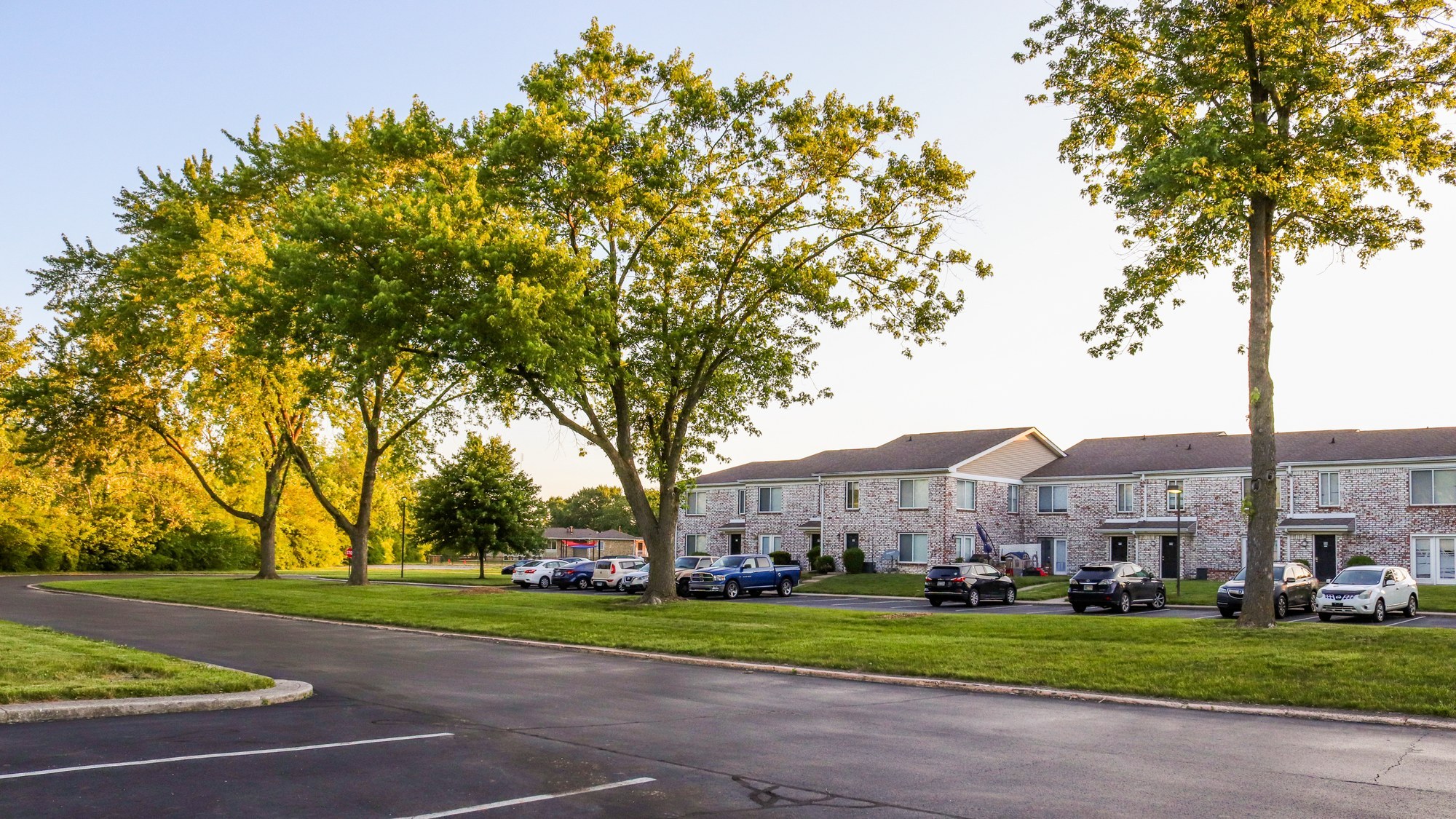
Renters paid a national median of $1,384 in October, which is $58 a month, or 4%, below the mid-2022 peak, according to Apartment List’s National Rent Report published Oct. 28. One-bedroom apartments ran a median $1,215 and two-bedrooms $1,369. Compared with a year earlier, the median is up $1, or 0.1%, the first positive annual reading in more than three years.
For anyone renting on a fixed income, the question is whether the next renewal notice will carry a bigger number. Nationally the median barely moved over the past twelve months, but a median blends very different markets, so a landlord’s quote is worth setting against what similar apartments nearby are asking right now.
Retirement deadlines, in your inbox: Miss an enrollment or claim deadline and the money can be gone. Join the Retirement Money Brief and we’ll send you our 2026 Government Check Reality Tracker as a welcome gift.
Get the Brief + the check tracker →
We may earn a commission from links on this page.
Is rent falling, or just flat?
Month to month, the national median slipped 0.3% in October, the second straight monthly decline, the report says. Its authors, chief economist Chris Salviati and lead economic researcher Rob Warnock, put the drop from the mid-2022 high at $58 a month. Over twelve months the median gained only a dollar.
The government’s gauge tells a slightly different story. The Bureau of Labor Statistics said in its September consumer price index, released Oct. 14, that rent of primary residence rose 0.2% over the month, while the broader shelter index, which also covers homeowners’ costs, climbed 3.2% over twelve months. The October index is due Nov. 10.
Why are nearly a third of landlords offering free rent?
Apartment List says 32% of multifamily properties nationally are offering concessions worth at least one month’s free rent, up four points from 28% a year earlier. A concession leaves the posted rent alone and trims what a tenant pays in the first year, which is one reason the headline median can sit still while deals get better.
Vacancies point the same way. Apartment List’s vacancy index stood at 7.0% in October, down from a February 2026 peak of 7.3% but still above the 6.4% average of 2017 to 2019. The Census Bureau’s third-quarter housing vacancy survey, released Oct. 28, put the rental vacancy rate at 7.6%, against 7.1% a year earlier, and the homeownership rate at 65.5%.
What do one- and two-bedrooms cost across the country?
A median one-bedroom at $1,215 sits $169 below the $1,384 national median for all apartments, and a second bedroom adds $154 a month, to $1,369. Those are national middles. Apartment List’s city tables show the same one-bedroom costing more than twice as much in some places as in others.
Over a full year, those medians come to $14,580 for a one-bedroom, $16,428 for a two-bedroom and $16,608 at the $1,384 all-apartment median. Because the national figure is up only $1 from last October, a tenant whose renewal arrives well above that is facing a local increase, not a national one, and has a reason to ask the landlord about it.
Renters who get help from a federal voucher are tied to a different yardstick. HUD’s Fair Market Rents for fiscal year 2027 generally take effect Oct. 1, and the agency says they set Housing Choice Voucher payment standards, rent ceilings for HOME and Emergency Solutions Grants units and flat rents in public housing. Areas that filed valid reevaluation requests keep their fiscal 2026 figures.
What does flat rent mean for anyone who owns?
A steady national rent median does not hold down the other bills tied to a home. The same CPI release shows shelter costs, which include owners’ housing costs, still up 3.2% from a year earlier. Property taxes, insurance and upkeep follow their own schedules, whatever tenants are paying.
The Census Bureau’s survey adds that the homeownership rate was 65.5% in the third quarter, against 65.3% a year earlier, a difference it said was not statistically different. About two in three households own, so for most of the country the monthly housing cost is a mortgage, a tax bill and an insurance premium rather than a rent check.
Paying more for housing than the rent figures suggest?
A national median of $1,384 says nothing about one lease or one tax bill. Shelter costs are still running 3.2% above last year, and a household that never audits its own housing line can keep paying more than the going rate.
Cut Your House Costs is written for homeowners, so it covers the owner’s side of this same question. The 11-page guide includes the home-cost audit worksheet, a lower home insurance bill by shopping and asking for every discount, and a large-print edition.
Get the home-cost audit worksheet and ten ways to trim the house bill →
This article was produced with AI assistance and edited for accuracy against the sources linked above.