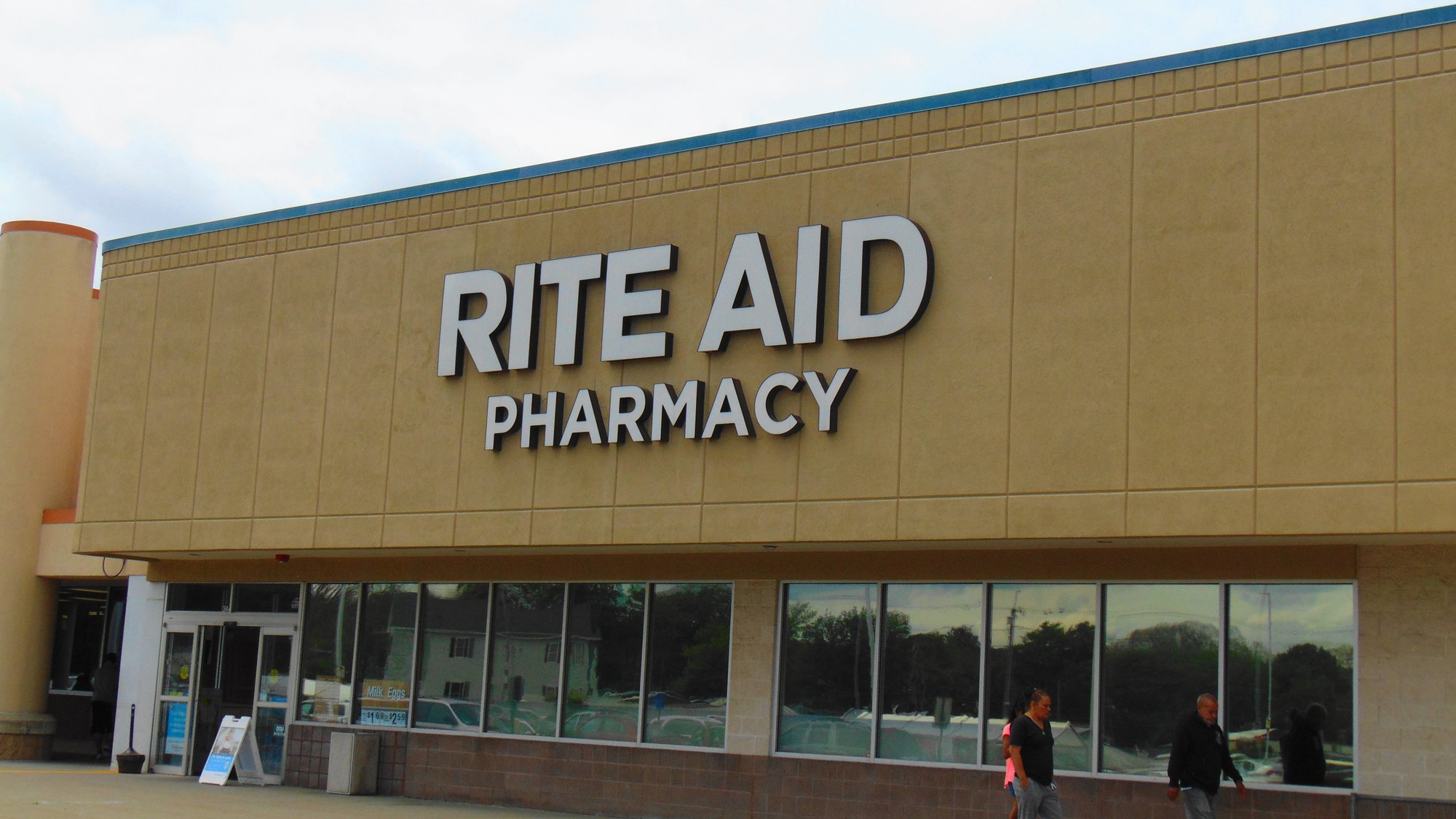
Rite Aid no longer operates as a retail pharmacy chain. The company filed for Chapter 11 bankruptcy protection a second time in May, less than two years after an earlier bankruptcy filing in October 2023, and by early October it had closed every remaining store nationwide. The prescription files that once sat behind those counters did not disappear along with the storefronts — they were sold off in pieces to competitors, and for many longtime customers, especially older adults managing several medications, the transfer happened without so much as a phone call.
Where the prescription files actually landed
The wind-down stretched over roughly two years. Rite Aid’s first bankruptcy filing, in October 2023, closed hundreds of underperforming stores but left a smaller national footprint operating. The second filing, in May 2025, proved terminal: instead of reorganizing, the company moved to liquidate, and the last stores shut their doors by early October. For a patient filling a monthly maintenance medication, that timeline meant the transfer could have landed at any point across a two-year stretch, not on a single clean date — which is part of why so many prescription moves went unnoticed until a refill came due.
The sale agreements that unwound Rite Aid transitioned pharmacy assets from more than 1,000 of its locations across the country to a handful of competitors. CVS Pharmacy absorbed the largest share of the business, taking on prescription files tied to roughly 625 former Rite Aid locations along with 64 physical stores in Idaho, Oregon and Washington that CVS kept open under its own name. The remaining Rite Aid locations were divided among Walgreens, Albertsons, Kroger and Giant Eagle, with the receiving pharmacy determined mostly by geography — whichever chain already had a location near a closing Rite Aid store. None of that required the patient’s signature. Under the pharmacy-licensing rules that govern prescription records, a closing pharmacy can transfer active files to another licensed pharmacy without individual patient authorization, which is why many customers learned about the move only when they called in a routine refill and reached an unfamiliar pharmacy at the other end of the line.
Free prescription checklist: When a drug’s price or coverage rule changes, the next refill is where it shows up. Get the free coverage and pharmacy checklist.
A transferred file does not guarantee the same price
Landing at a new pharmacy does not automatically preserve what a patient was paying under Rite Aid. Medicare Part D and Medicare Advantage plans sort pharmacies into contracted network tiers, commonly labeled preferred and standard, and the price a plan charges for the same drug and the same day’s supply can differ sharply between the two. A chain that held preferred status under a plan’s Rite Aid-era contract has no guarantee of holding that same status once the file moves to CVS, Walgreens or Kroger, and a plan’s own pharmacy directory — not the receiving pharmacy’s paperwork — is the only reliable way to check which tier applies now.
What to confirm before the next refill comes due
The fix is a phone call rather than a form. Patients whose prescriptions moved should confirm three things directly with either the new pharmacy or their Part D or Medicare Advantage plan: that the assigned pharmacy is actually contracted at the preferred network tier for that plan, that any prior authorization on file for a specialty or high-cost medication transferred along with the prescription itself, and that the quantity, dosage and next refill date on record match what the patient was previously receiving. Prior authorizations do not always follow a transferred file automatically, and a lapsed authorization can delay a refill for a medication someone has taken without interruption for years. Medicare’s Plan Finder tool at Medicare.gov also lists which pharmacies are contracted, and at which tier, for any Part D or Medicare Advantage plan, which settles the question in a few minutes without a hold line. Anyone who has not heard from a receiving pharmacy at all should not assume no news is good news — Rite Aid’s closures happened on a rolling schedule through 2025, and some transfers were still being finalized months after a given store’s doors closed.
When a pharmacy closes its doors
A pharmacy chain’s collapse is exactly the kind of disruption that turns a routine refill into a coverage problem, since a new pharmacy, a new network tier and a new out-of-pocket number can all change at once. The same math that determines whether a transferred prescription still costs what it used to is the math behind this year’s Part D benefit design, including the point where a drug plan stops charging anything at all.
The Medicare Cost & Coverage Protection Kit is a 10-page kit with 51 state Medicare cost-help packs and the prior-authorization appeal steps for a refill that stalls after a transfer like this one.
See The Medicare Cost & Coverage Protection Kit.
This article was researched and drafted with the assistance of AI and reviewed by an editor.