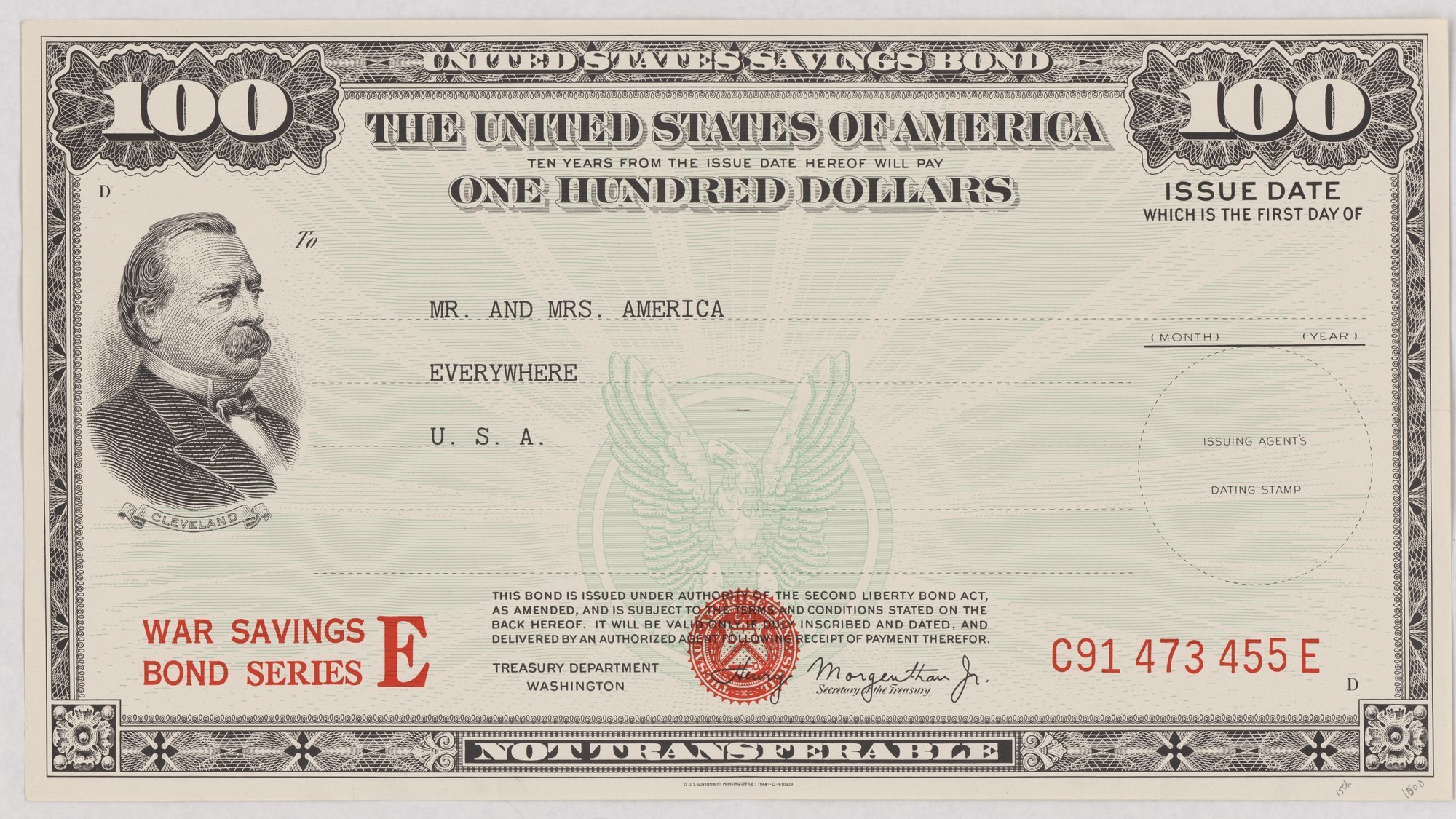
The U.S. Treasury’s twice-yearly rate reset left Series I savings bonds paying a 4.26 percent annual composite rate for any bond purchased between May 1 and October 31, 2026, and that window is about to close. A bond bought anytime before the switch to November’s new rate carries the 4.26 percent figure for a full six months from its purchase date, regardless of when in the window it was bought. For a saver deciding whether to buy before the deadline or wait for whatever comes next, the mechanics behind that number, and what happens once the six months run out, matter more than the headline rate by itself.
A Composite Rate Built From Two Separate Pieces
The rate advertised on any given I bond is not a single number set by policy but a composite of two pieces that move independently of each other. One piece is a fixed rate that Treasury sets when a new six-month window opens and that never changes again for that particular bond, no matter how many years it ends up being held. The other piece is a variable rate tied to inflation, recalculated every six months and applied uniformly to every I bond outstanding, old and new, for that stretch.
For the May 2026 through October 2026 window, Treasury combined a fixed rate of 0.90 percent with an inflation-linked variable component to produce the 4.26 percent composite rate now in effect. That figure is what shows up on a bond bought in any of those six months, and it holds steady for that bond’s first six months even though the inflation piece underneath it will already reset once by the time those six months are up.
Free retirement updates: Want plain-English help keeping more of your money in retirement? The free Retirement Shield newsletter covers the benefits, deadlines, and money mistakes that cost retirees, a couple times a week. Subscribe free.
The Fixed Portion Stays Attached for as Long as the Bond Is Held
The 0.90 percent fixed rate matters beyond the current six-month window because it does not reset along with the inflation component. Once a bond is issued, its fixed rate stays locked to that specific bond for as long as it earns interest, which can run for decades. A bond bought in this window keeps its 0.90 percent fixed rate permanently, even after the variable, inflation-linked half of the composite formula moves up or down at every future reset. That structure is what makes the timing of a purchase matter beyond the immediate six-month rate: buying before the fixed rate changes locks in that portion for the life of the bond, separate from whatever the composite figure happens to read on any given day.
Why the Calendar Cutoff Falls on November 1
Treasury recalculates both pieces of the I bond rate on a fixed schedule, each May 1 and November 1, using updated inflation data alongside a fixed rate Treasury sets independently at each reset. A bond purchased on October 31 still earns the 4.26 percent composite rate for its first six months, exactly like a bond bought back on May 1, because the rate that applies is whichever composite rate was in effect on the bond’s issue date. Once November 1 arrives, Treasury will publish new fixed and variable components, and any bond issued from that date forward will carry whatever combination results, which may land above or below 4.26 percent depending on where inflation and Treasury’s fixed-rate decision fall next.
The next reset is scheduled for November 1, 2026, when both pieces get recalculated for bonds issued from that point through the following April. Buying before that date locks in the current composite rate for six months and the current fixed rate for as long as the bond is held, a distinction that only matters to someone who understands the two-part structure sitting underneath the single number on the rate release.
Each Bond Runs on Its Own Six-Month Clock, Not the Calendar
A detail that trips up first-time buyers is that the six-month rate period belongs to the individual bond, not to the calendar reset dates themselves. A bond purchased in early May starts its own six-month clock that runs to early November, at which point it moves to whatever rate is current for that new period, not necessarily the exact figure Treasury just set for brand-new bonds. A bond purchased on October 31 works the same way, running its clock forward to the following April, then updating again. The composite rate attached to a given bond only changes on that bond’s own semiannual anniversary, which means two bonds bought a week apart inside the same window can end up shifting to a new rate on two different calendar dates, even though both started at 4.26 percent.
That structure is also why the fixed-rate portion carries more long-term weight than the headline composite figure. The variable, inflation-linked half of the rate will keep resetting for as long as a bond is held, rising or falling with future inflation data on a schedule Treasury controls independently of any individual owner’s purchase date. The fixed rate set at purchase is the one piece of the formula an I bond buyer locks in permanently, and it is set only twice a year, at each May 1 and November 1 reset, based on decisions Treasury makes at that time.
The Benefits That Never Reset On Their Own
A savings bond at least announces its own schedule: Treasury publishes the reset dates, and the rate arrives whether or not anyone asks for it. The benefit programs older households qualify for run the opposite way. The income limits change every year, the paperwork sits with a state office, and nothing moves in a household’s favor unless somebody files for it. Medicare Savings Programs that cover the Part B premium, state unclaimed-property funds and home weatherization assistance all go unclaimed for years for that reason alone.
The Benefits Checklist is a 63-page guide to eleven of those programs, with the 2026 income limits, a 50-state directory of the offices that handle each one, and a printable tracker.
Read the 2026 limits and the state contacts in The Benefits Checklist.
This article was produced with the assistance of AI and reviewed by The Financial Wire editorial team.