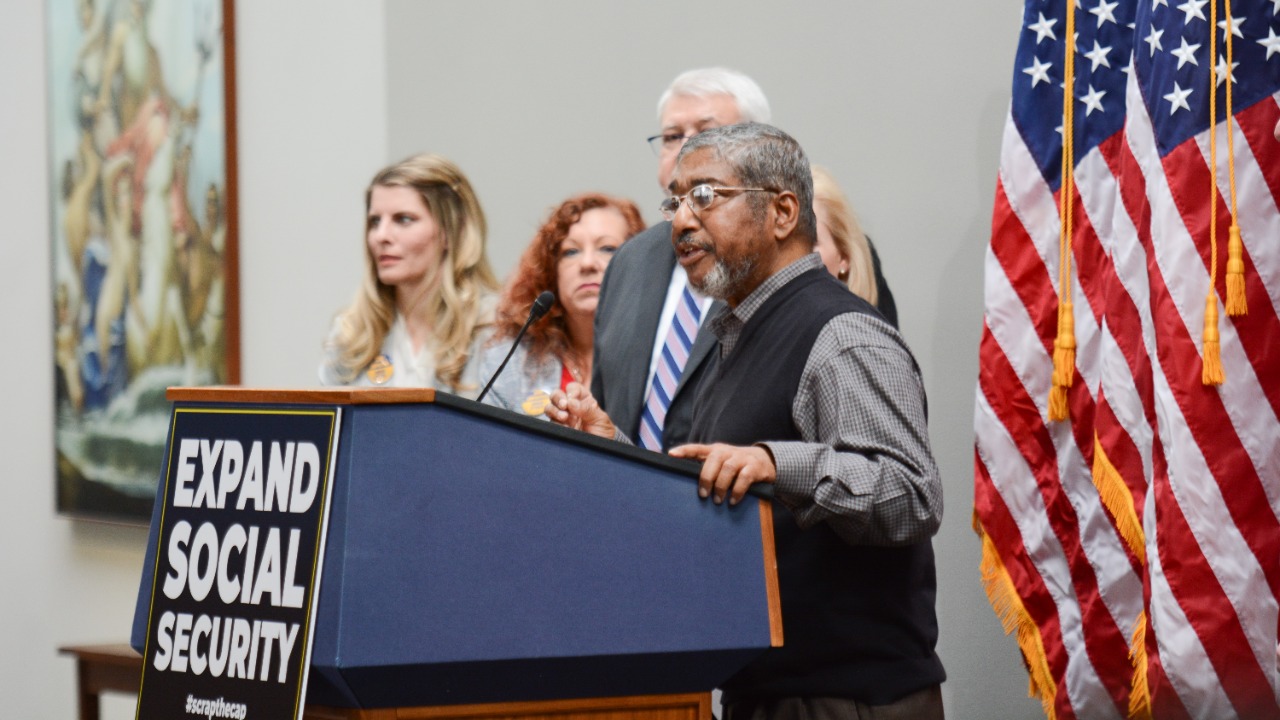
Social Security’s financing debate just took a sharper turn. A new Congressional Budget Office forecast moved up the expected depletion date for the program’s main retirement trust fund. The new estimate puts the Old-Age and Survivors Insurance fund, the account that pays retirement and survivor benefits, on track to run out of reserves in 2032. That is one year earlier than CBO had projected before.
This does not mean Social Security would disappear. Payroll taxes would still be collected, and benefits would still be paid. But the cushion that has allowed the government to cover the gap between incoming revenue and promised benefits is projected to run out sooner than expected. If lawmakers do nothing, the result would be automatic cuts for millions of retirees and survivors who depend on those monthly checks.
CBO Moves the Retirement Fund Date to 2032
The new forecast matters because it comes from the Congressional Budget Office’s February 2026 budget outlook. This carries weight on Capitol Hill and shapes how lawmakers view the federal fiscal picture. Under that projection, the Old-Age and Survivors Insurance trust fund would be exhausted in 2032. That is one year earlier than CBO projected in its prior baseline. That is the fund that supports retirement and survivor benefits and represents the core of Social Security for most households.
That timeline is more aggressive than the one most Americans saw in last year’s official trustees report. In June 2025, the Social Security Administration said the OASI trust fund was projected to run out in 2033. Meanwhile, the combined OASI and Disability Insurance trust funds were projected to be depleted in 2034. In other words, the newer CBO estimate suggests the retirement side of the program is closer to the edge than the last trustees report indicated.
This distinction is important because public discussion often centers on the combined Social Security trust funds. This can make the system look slightly more stable because the disability fund remains in better shape. But retirees do not receive benefits from an abstract combined total. The immediate pressure point is the retirement fund itself, and that is the account CBO now says could be exhausted by 2032.
What a 2032 Depletion Date Would Mean for Benefits
Once reserves are exhausted, Social Security would not be able to continue paying full scheduled retirement and survivor benefits unless Congress stepped in. The program would still collect payroll taxes and some income tax revenue on benefits. However, those incoming funds would cover only part of what beneficiaries are legally scheduled to receive.
That makes the issue less about “bankruptcy” and more about the size of the automatic reduction that would follow inaction. Under the trustees’ 2025 report, the retirement trust fund would be able to pay 77 percent of scheduled benefits once OASI reserves were depleted. The combined funds, if viewed together, were projected to support 81 percent of scheduled benefits after depletion. Either way, the gap is large enough to be felt immediately in household budgets. For a retiree receiving $2,000 a month, a 23 percent cut would amount to about $460 less each month. For someone receiving $1,500, the reduction would be about $345. Those are not abstract numbers for households that use Social Security to cover rent, groceries, utilities, and prescription costs.
For many older Americans, the program is the largest or only dependable source of monthly income. The scale of the possible disruption helps explain why each one-year change in a depletion forecast gets attention. Moving the date from 2033 to 2032 does not just change a number in a table. It shortens the time lawmakers have to spread out any fix and raises the odds that future changes would need to be steeper or more abrupt.
Why CBO and the Trustees Are Not Saying the Exact Same Thing
At first glance, the 2032 CBO estimate and the 2033 retirement-fund estimate in the 2025 trustees report may look contradictory. They are not. The two projections come from different institutions, published at different times, using different economic and demographic assumptions. The trustees report is the Social Security system’s official long-range financial checkup. CBO, by contrast, produces budget baselines that lawmakers use in fiscal planning and legislative scoring.
Those projections are updated on a different schedule and reflect CBO’s own assumptions about wages, employment, inflation, interest rates, population growth, and benefit claiming patterns. That is why a newer CBO estimate can move ahead of the trustees’ earlier forecast without implying that one side made a clerical error. It means the underlying assumptions have shifted enough to bring the expected exhaustion date closer.
In practical terms, both sets of projections point in the same direction: the retirement fund is moving toward depletion within the next decade, and the margin for delay is getting thinner. The larger takeaway is that the deterioration is no longer a distant policy problem. A forecast of 2032 places the issue squarely inside the planning horizon for workers in their 50s and early 60s, not just younger Americans trying to imagine retirement decades from now.
Budget Rules Can Make the Problem Look Less Immediate
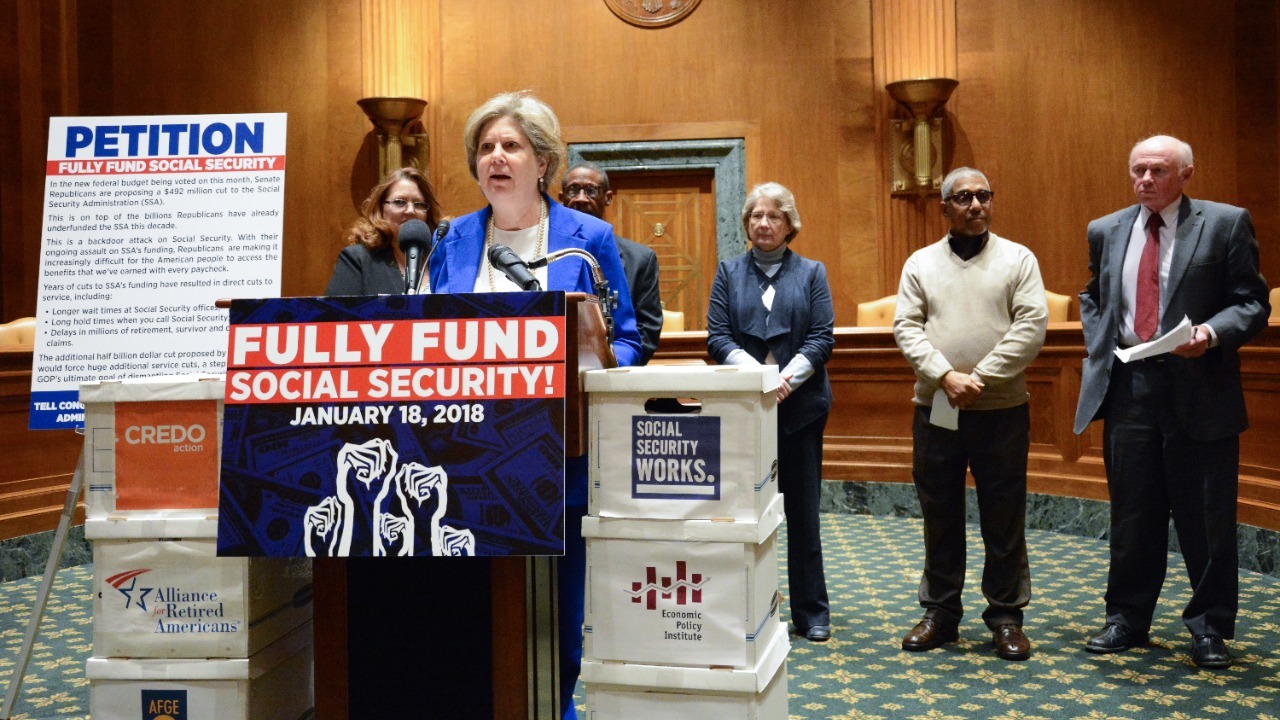
One reason the politics around Social Security can feel oddly detached from the math is that federal budget rules do not always present the risk in the most intuitive way. CBO has explained that, under baseline construction rules, it must assume scheduled payments from federal trust funds continue in full even if a trust fund has been exhausted and there is no legal authority to make those payments. That accounting treatment is useful for maintaining a consistent baseline, but it can also blur the practical consequences of inaction.
Under current law, the Social Security Administration cannot pay benefits above what is available in the trust fund plus incoming dedicated revenue. Yet the budget baseline can still make future spending appear smoother than the actual benefit-payment rules would allow. The result is a debate in which the official budget framework can understate how disruptive trust fund exhaustion would be for actual beneficiaries. On paper, the problem can look like a long-term fiscal management issue. In real life, it would show up as smaller monthly checks.
The Window for a Softer Fix Is Narrowing
Lawmakers still have options. They can raise additional revenue by increasing payroll taxes or expanding the amount of wages subject to tax. Also, they can slow benefit growth, especially for higher earners. They can raise the full retirement age over time, redirect revenue, or combine several changes into a broader package. None of those choices is politically easy, but all are less disruptive when enacted earlier. That is the core message behind the new 2032 projection.
The longer Congress waits, the fewer gradual solutions remain. Acting well before depletion would allow policymakers to phase in changes, protect current retirees more effectively, and avoid a sudden across-the-board cut driven by law rather than design. Social Security is not on the verge of vanishing. It is on the verge of paying less than promised unless Congress updates the program’s finances. The new CBO forecast does not invent that problem, but it does make the timetable harder to ignore.
Sources: Congressional Budget Office Director’s Statement on the Budget and Economic Outlook; CBO Social Security Trust Funds Baseline, February 2026; Social Security Administration press release on the 2025 Trustees Report; 2025 Social Security Trustees Report.

Paul Anderson is a finance writer and editor at The Financial Wire. He has spent seven years writing about investment strategies and the global economy for digital publications across the US and UK. His work focuses on making sense of economic policy, cost-of-living issues, and the stories that affect everyday Americans.