Investors with taxable income below roughly $49,000 can legally owe nothing to the federal government on profits from stocks, real estate, or other assets held longer than a year. That zero-rate bracket, written directly into the Internal Revenue Code, is now set to shift for tax year 2026 after the IRS published inflation adjustments tied to the One, Big, Beautiful Bill. For filers planning asset sales or retirement withdrawals, the size of that shift will determine whether their gains stay inside the tax-free zone or spill into the 15% tier.
How the 0% capital gains rate works and why 2026 changes the math
Federal law splits long-term capital gains into three rate tiers: 0%, 15%, and 20%. The applicable rate depends on where a filer’s taxable income falls relative to statutory thresholds. The statute that controls this structure is Section 1(h) of the Internal Revenue Code, which assigns the 0% rate to portions of adjusted net capital gain that fit within the lowest income band. A single filer whose taxable income, including gains, stays under the threshold pays no federal tax on those long-term profits.
Each year the IRS adjusts these thresholds for inflation so that rising prices do not silently push more people into higher brackets. For tax year 2026, the agency released updated figures through Internal Revenue Bulletin 2025-45, which contains the formal revenue procedure covering capital gains rate items among other Code provisions. Those adjustments now incorporate amendments from the One, Big, Beautiful Bill, according to an IRS newsroom announcement describing how the law’s changes affect inflation-linked items. The bill modifies the indexing formulas used for several provisions, so the 2026 brackets may differ from what standard cost-of-living adjustments alone would have produced.
Whether those legislative amendments expand the 0% bracket enough to bring a measurably larger group of filers into the tax-free zone remains difficult to confirm with precision. The exact dollar thresholds for 2026 are referenced in the revenue procedure but are not broken out in the newsroom summary. Without the specific numbers, any claim that a particular percentage of additional filers will qualify is speculative. What is clear is that the bracket will be wider than in 2025 by some margin, because inflation indexing and the new bill’s formula changes both push in that direction.
Applying the zero rate through IRS worksheets and Schedule D
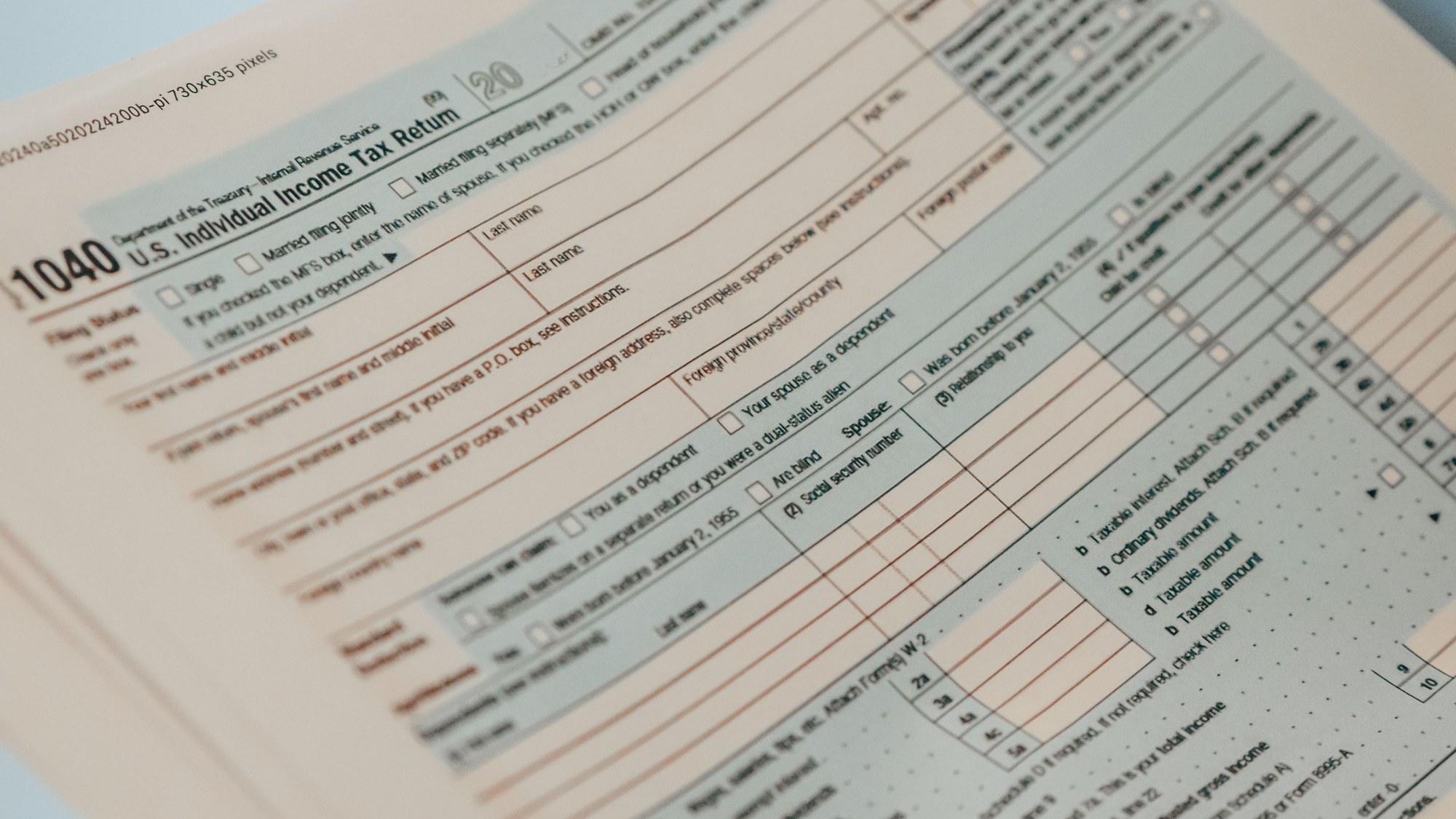
Qualifying for the 0% rate is not automatic. Taxpayers must report gains and losses on Schedule D of Form 1040, and the IRS instructions for that form route most filers to the Qualified Dividends and Capital Gain Tax Worksheet found in the main Form 1040 instructions. That worksheet is where the actual rate calculation happens: it compares taxable income against the threshold and applies the 0% rate to the portion of net capital gain that fits below the line. Filers who skip this step or use simplified filing methods risk overpaying.
The IRS outlines the basic rules for long-term gains and qualified dividends in its Topic 409 guidance, emphasizing that the preferential rates apply only when assets are held longer than one year and properly reported. In practice, the worksheet effectively stacks ordinary income first, then layers long-term capital gains and qualified dividends on top. The income within the 0% band is taxed at zero, the next slice at 15%, and any remaining amount-above the upper threshold-at 20%. This ordering matters for retirees and lower- to middle-income investors who may be able to realize substantial gains while still staying inside the 0% zone.
Software and professional preparers generally perform these calculations automatically, but taxpayers who prepare their own returns should follow the sequence in the instructions carefully. Missing a step can cause the software or paper forms to default to ordinary income rates, which are typically higher than the preferential capital gains brackets. For anyone selling appreciated assets in 2026, double-checking that the Qualified Dividends and Capital Gain Tax Worksheet was used can be the difference between a zero bill and an unexpected tax charge.
Planning around the 2026 thresholds
The coming changes to the 0% bracket increase the value of timing. Investors with flexibility over when to sell may want to compare taxable income projections for 2025 and 2026 to see which year offers more room under the threshold. Because the 0% band is tied to taxable income, not gross income, strategies such as maximizing pre-tax retirement contributions or bunching deductions into a single year can create additional space for tax-free gains.
Retirees drawing from multiple account types face especially nuanced choices. Filling up the 0% capital gains bracket with sales from a taxable brokerage account while keeping ordinary income low can, in some cases, reduce lifetime tax costs. However, pushing too much income into a single year could affect other items that key off adjusted gross income, such as certain credits or surcharges. The interaction between the One, Big, Beautiful Bill’s indexing changes and existing phaseouts makes personalized projections more important than ever.
Because the official 2026 thresholds are contained in technical IRS materials, many individual filers will not see the exact numbers until consumer tax tools and preparers incorporate them. Taxpayers who want to verify how the new brackets apply to their own situation can use the IRS’s online account portal to review past returns, estimated tax payments, and transcripts before modeling different income scenarios with a professional or trusted software.
Ultimately, the 0% long-term capital gains rate remains one of the most powerful tax benefits available to lower- and moderate-income investors. The 2026 adjustments, shaped both by inflation and by the One, Big, Beautiful Bill, will modestly widen that opportunity. Understanding how the brackets work, and how they are implemented through Schedule D and the related worksheets, can help taxpayers capture the full value of the law as it stands.