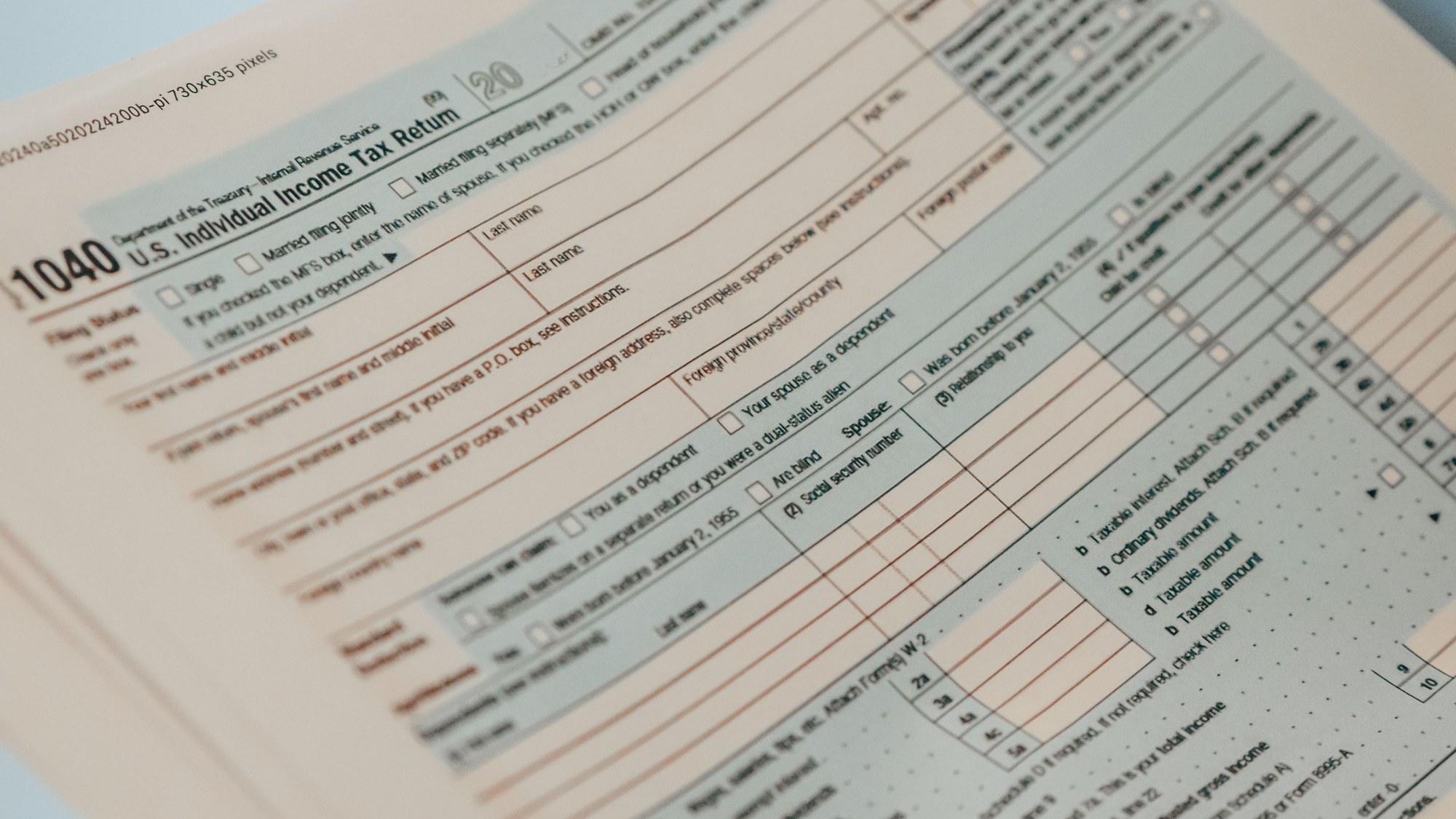
Roughly 150 million individual tax returns will land at the IRS for the 2026 filing season, and the vast majority of those filers will skip Schedule A entirely. The agency confirmed that the standard deduction for married couples filing jointly will rise to $32,200 for tax year 2026, up from $31,500 in 2025. Single filers and those married filing separately will claim $16,100, while heads of household will receive $24,150. Those figures, driven by inflation indexing and a permanent statutory increase, set the bar high enough that most taxpayers will find no benefit in listing individual deductions one by one.
How the $32,200 threshold reshapes filing decisions
The math behind the standard-versus-itemized choice is simple: if a filer’s combined mortgage interest, state and local taxes, charitable gifts, and other allowable write-offs do not exceed the standard amount, claiming the flat deduction saves time and often saves money. At $32,200 for joint filers, the 2026 standard deduction sits well above the total itemized claims that many middle-income households can assemble. The IRS announcement published the exact dollar figures and noted that the amounts reflect both annual inflation adjustments and changes enacted through Public Law 119-21, commonly known as the One, Big, Beautiful Bill Act.
That law amended Internal Revenue Code Section 63(c)(7), making the enlarged standard deduction permanent rather than temporary. Before the amendment, taxpayers and planners faced recurring uncertainty about whether the higher thresholds would expire and revert to prior-law levels. The statutory change, documented in Revenue Procedure 2025-32 within Internal Revenue Bulletin 2025-45, locked in a 2025 base of $31,500 for joint filers and directed the IRS to index that base going forward. The $700 jump from 2025 to 2026 reflects that indexing formula applied to the new, higher starting point, rather than a fresh act of Congress.
The underlying framework lives in the text of Section 63, which defines taxable income and sets out the mechanics of the standard deduction. With the 63(c)(7) amendment now in place, the statute instructs the IRS to adjust the standard deduction annually using a chained inflation measure. That automatic mechanism means future increases will be incremental and predictable, rather than subject to sudden jumps or cliffs tied to expiring provisions.
The practical effect for households is straightforward. Homeowners carrying a modest mortgage, residents of states with moderate income taxes, and couples whose charitable giving falls below $32,200 in combined deductions will all default to the standard amount. Only filers with large mortgages, heavy state and local tax burdens (still capped at $10,000 under the SALT limitation), or substantial charitable contributions will find itemizing worthwhile. For many, the higher standard deduction will also simplify recordkeeping: fewer receipts to track and fewer forms to complete, especially for those who previously itemized only marginally above the old thresholds.
IRS data already shows itemizers concentrated at higher incomes
Historical filing data supports the expectation that the 2026 increase will push even more taxpayers away from itemizing. The IRS Statistics of Income division publishes Publication 1304, which includes detailed tables breaking out returns with itemized deductions by adjusted gross income. Those tables consistently show that itemized claims cluster among higher-AGI filers, while the broad middle of the income distribution takes the standard deduction. Each time Congress has raised the standard amount, the concentration has tightened, with itemizing increasingly becoming a feature of upper-income returns.
In recent years, the share of returns claiming Schedule A has fallen sharply compared with pre-expansion levels, and the pattern is pronounced: relatively few filers below the six-figure income range itemize, while a majority of those at higher income levels still do. The 2026 standard deduction increase, layered on top of the permanent statutory change, is likely to reinforce that pattern. For a typical middle-income couple without unusually high housing costs or charitable commitments, the gap between their potential itemized deductions and the $32,200 benchmark will be too wide to bridge.
Planners expect that dynamic to influence behavior at the margins. Some higher-income taxpayers may choose to bunch charitable contributions into a single year, alternating between years in which they itemize and years in which they fall back on the standard deduction. Others may accelerate or defer deductible expenses, such as elective medical procedures, to cross the threshold in a specific year. But for the majority of filers, the decision will be made for them: the standard deduction will dominate, and Schedule A will remain unused.
For the IRS, fewer itemized returns can translate into administrative efficiencies. Standard deduction claims are easier to process and less prone to disputes over documentation or valuation, particularly for categories like charitable donations and miscellaneous deductions. At the same time, policymakers will continue to watch how the higher threshold shapes taxpayer behavior, charitable giving patterns, and the distribution of tax benefits across income levels. With the 2026 amounts now set and the statutory framework made permanent, taxpayers have clearer rules to plan around, even if that planning increasingly starts and ends with a single line on the Form 1040.