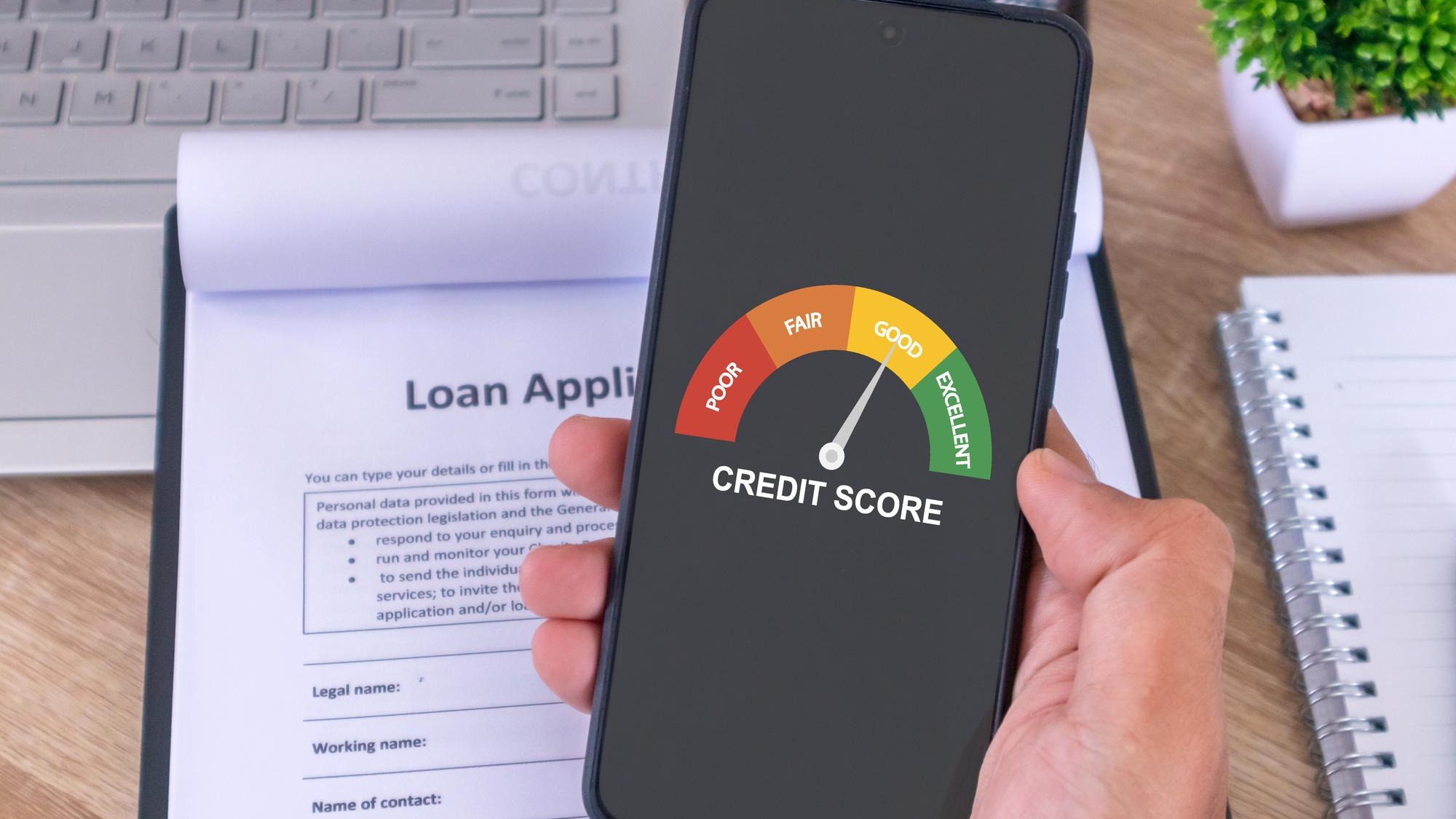
Last spring, a borrower in Dallas called her credit card issuer to cancel a Visa she hadn’t swiped in three years. She had no balance on it, no annual fee, and no reason to keep the plastic. Six weeks later, when she applied for a mortgage, her FICO score had dropped from 741 to 709. The culprit wasn’t a missed payment or a new debt. It was the credit limit and account history she had just voluntarily erased.
Stories like hers surface constantly in lending forums, and they collide with a set of statistics you’ve probably seen recycled across personal finance sites: the “average American” supposedly carries 4.2 credit cards with a combined $7,200 balance, and closing the oldest account will cost exactly 30 points. Those numbers are tidy, shareable, and not quite right. The verified data tells a more nuanced story, and the difference matters if you’re weighing whether to close a card in 2026.
How many cards and how much debt Americans actually carry
The Consumer Financial Protection Bureau published its congressionally mandated 2025 review of the consumer credit card market, drawing on issuer-level submissions and anonymized credit files through the end of 2024. A companion figure dataset provides the raw numbers behind the report’s charts, making independent verification possible.
According to Experian’s annual consumer credit review, the average American held roughly 3.9 open credit card accounts as of late 2024, and average card debt per borrower climbed 3.5 percent to $6,730. The Federal Reserve Bank of New York’s Quarterly Report on Household Debt and Credit placed total U.S. credit card balances at $1.21 trillion by Q4 2024, the highest nominal level on record.
Those figures are sobering enough without embellishment. Yet the rounder, more dramatic claim that Americans carry “4.2 cards with a combined $7,200 balance” appears across dozens of personal finance articles without a traceable primary source. No dataset reviewed for this piece produces those exact numbers. The verified benchmarks sit slightly lower, and the gap matters when readers use national averages to benchmark their own finances.
What closing a card actually does to your credit score
The warning that canceling your oldest card will shave exactly 30 points off your score has become gospel in online money advice. It is also one of the least documented claims in consumer credit.
Credit-scoring models do factor in the length of your borrowing history. FICO, whose scores the company says are used in roughly 90 percent of U.S. lending decisions, assigns about 15 percent of a score’s weight to credit history length. That bucket includes the age of your oldest account, the age of your newest, and the average across all accounts. Close a card you’ve held for 18 years while your remaining accounts average six years, and that average drops noticeably.
But the damage is never a fixed number. It shifts based on several variables working at once:
- How many other accounts you have. A borrower with 10 accounts who closes one old card barely moves the average-age needle. Someone with three accounts feels it much more.
- The credit limit on the closed card. When that limit vanishes from your profile, your overall utilization ratio (total balances divided by total limits) can spike. Utilization carries roughly 30 percent of a FICO score’s weight, double the influence of account age.
- Where your utilization already sits. A borrower carrying $6,700 across $25,000 in total limits is at about 27 percent utilization. Close a card with a $7,000 limit and that ratio jumps to roughly 37 percent overnight, crossing the 30 percent threshold that lenders commonly treat as a risk signal.
- Which scoring model your lender pulls. FICO continues to include closed accounts in age-of-credit calculations for up to 10 years after closure. VantageScore models may drop closed accounts sooner, which can accelerate the hit to average account age.
No published study from FICO, VantageScore, or any of the three major bureaus pins the impact of closing an oldest account at exactly 30 points. For a borrower with a thin file and high utilization, the real damage could be worse. For someone with a deep, diverse history and low balances, it might barely register. The 30-point figure is a plausible midrange scenario, not a rule.
Why the utilization spike often hurts more than the shorter history
Most credit advice zeroes in on the “shortening your history” risk, but the faster and frequently larger score hit comes from the utilization jump, because scoring models detect it immediately.
Walk through the math with verified averages. A borrower with four open cards, $6,730 in total balances, and $28,000 in combined limits sits at about 24 percent utilization. She closes one card that carried a $7,000 limit and no balance. Her debt doesn’t change, but her available credit drops to $21,000 and her utilization climbs to 32 percent. That shift shows up the next time her remaining issuers report to the bureaus, often within a single billing cycle, well before any age-of-accounts effect materializes.
The CFPB’s 2025 report documents that revolving utilization rates have been rising alongside balances, meaning many borrowers are already operating near the thresholds where small changes carry outsized consequences. Removing available credit by closing an account is riskier in that environment than it would have been in 2019, when aggregate balances were hundreds of billions of dollars lower.
When closing a card is still the right call
None of this argues for hoarding every piece of plastic forever. Several situations justify closing an account, even at the cost of a temporary score dip:
- The annual fee no longer pays for itself. Spending $95 or $250 a year purely to preserve an account’s age is rarely a good trade. Before you cancel, call the issuer and ask for a product change to a no-annual-fee card. Most major issuers will do this, and it keeps the account open, the limit intact, and the history aging.
- The open line fuels overspending. If available credit consistently leads to impulse purchases and growing balances, the behavioral cost dwarfs any scoring benefit. Carrying revolving debt at the APRs the CFPB documented for 2024, north of 23 percent on many accounts, is far more expensive than a modest score decline.
- You’re not applying for credit soon. Score impacts from a closure tend to be sharpest in the first few months. If no mortgage, auto loan, or lease application is on your calendar for the next six to twelve months, you have runway for recovery.
How to soften the blow before you cancel
If you’ve decided a card needs to go, a few steps taken in advance can limit the fallout:
- Pay down balances on your remaining cards first. Reducing your total debt before you lose a credit limit offsets the utilization spike. Even a partial paydown helps.
- Request a credit limit increase on a card you’re keeping. A higher limit on a surviving account replaces some of the available credit you’re about to surrender. Many issuers process these requests with a soft inquiry that won’t affect your score.
- Ask for a product change instead of a closure. Worth repeating because it’s the single most effective move: converting a premium card to a basic, no-fee version preserves the account, the limit, and the history.
- Check your credit report 30 to 60 days after closing. Confirm the account shows as “closed by consumer” and that your remaining limits and balances are reported accurately. Errors in reported limits can inflate your utilization ratio and drag your score down for reasons that have nothing to do with your actual behavior.
Your own numbers matter more than any national average
The verified data is clear enough without rounding up for effect. Average card debt per borrower reached $6,730 in 2024. Total U.S. revolving balances hit a record $1.21 trillion. Interest rates on many accounts topped 23 percent. Those figures set the backdrop, but they don’t dictate what you should do with the Amex or Chase card sitting in your sock drawer.
A borrower with two cards and high utilization faces a completely different calculus than someone with eight accounts and minimal debt. Sweeping claims that assign a precise point penalty to every closure, or inflate averages for shareability, can push people toward decisions that don’t fit their situation.
Before making changes to your card lineup this summer, pull your free reports from AnnualCreditReport.com, review your utilization across every account, and run a score simulator if your bank or issuer offers one. The smartest credit decision in June 2026 is the one built on your own numbers, not on a headline stat that may not apply to you.