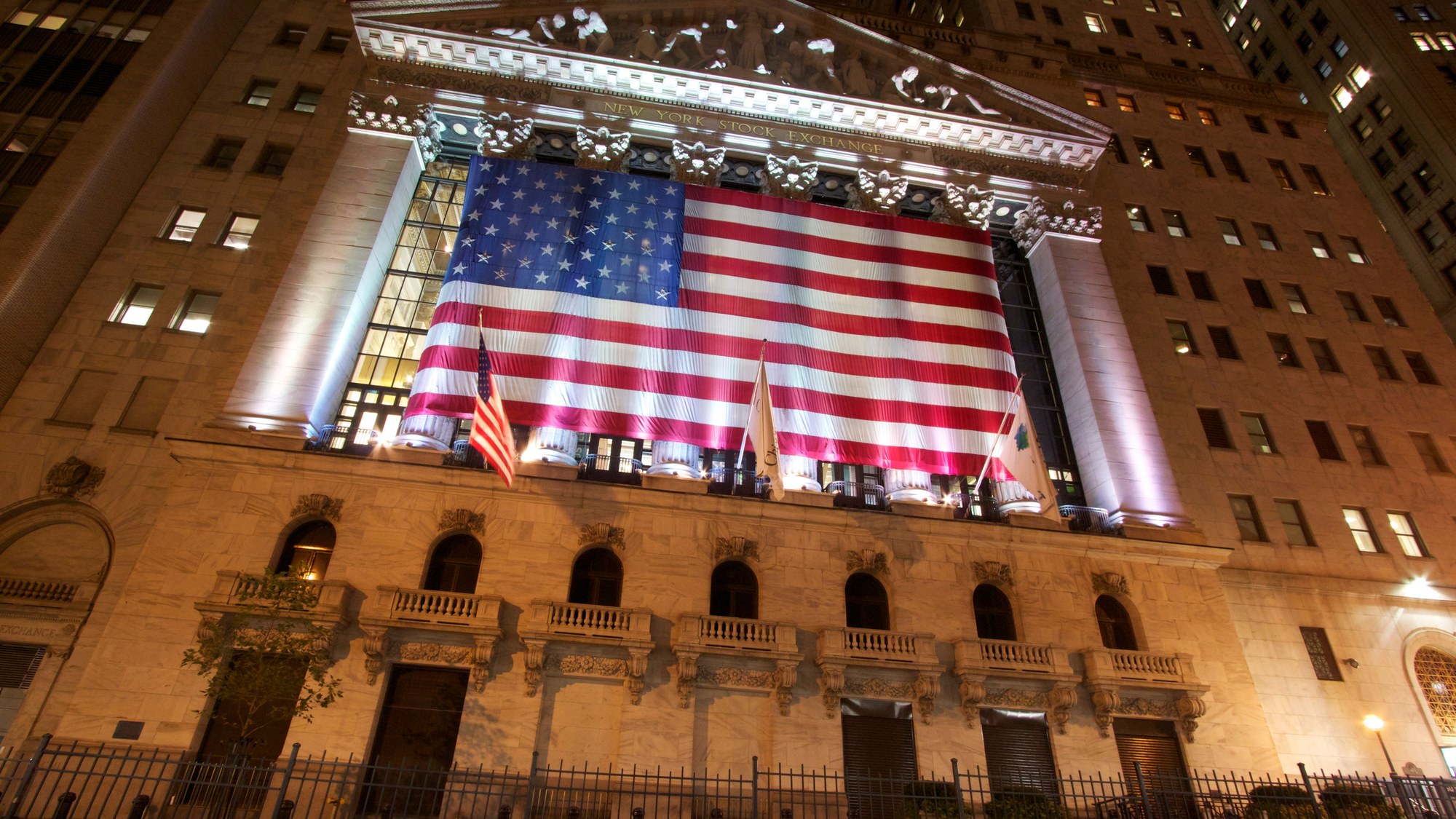
The Dow Jones Industrial Average jumped 1,569.40 points, or 3.03%, to close at 53,356.12 on Wednesday, Nov. 4, the day after the midterm elections, TheStreet’s market wrap shows. Motley Fool’s market report called it the Dow’s best post-midterm performance in 44 years. The rally followed projections that Democrats won both chambers of Congress: CBS News projected a Democratic Senate, and the Associated Press reported the party also won the House, Al Jazeera said.
The Dow closed at about 51,787 the day before, which makes Wednesday’s gain 3.03% in a single session. The broader indexes rose too, by roughly half as much in percentage terms. The S&P 500 gained 119.70 points, or 1.58%, to 7,688.62, and the Nasdaq Composite added 364.50 points, or 1.44%, to 25,736.51, according to TheStreet. The Russell 2000 index of smaller companies rose 1.58% to 2,856.96.
What does a 3% day mean in a retirement account?
For anyone with a 401(k), an IRA or a stock fund in a brokerage account, a day like Wednesday changes real balances. An account that moved exactly with the Dow would have gained about $6,060 on every $200,000 invested, on paper, in one session. Funds that track the S&P 500 or the Nasdaq would have gained about $3,160 or $2,880 on the same $200,000. The same math runs the other way on a down day, which is why a single close says little about where the market goes next.
Retirement deadlines, in your inbox: Miss an enrollment or claim deadline and the money can be gone. Join the Retirement Money Brief and we’ll send you our 2026 Government Check Reality Tracker as a welcome gift.
Get the Brief + the check tracker →
We may earn a commission from links on this page.
Why did stocks jump after the election?
Analysts pointed first to relief that the vote was over. Justin Buell of Continuity Group said, “Stocks have historically tended to rally after the midterms regardless of the outcome,” and that the election came “at the perfect time to rescue the stock market” from volatility tied to artificial intelligence spending, according to TheStreet. Motley Fool said election uncertainty “dissipated” on Wednesday.
Daniela Hathorn of Capital.com said the recovery reflected that “a change in congressional control does not necessarily translate into an immediate change in economic policy.” She added that part of the rebound reflected President Donald Trump’s conciliatory comments after the results. Trump said, “My message is, congratulations to the Democrats, and I look forward to working with you for the good of our country.”
The picture in Congress is still being counted. Democrats’ total in the 100-seat Senate has reached 54, with leads in two other races and several contests too close to call, Al Jazeera reported. Senate Democratic leader Chuck Schumer and House Democratic leader Hakeem Jeffries said cutting costs is their first job, with Schumer saying, “We are going to work hard to drive costs down with the president or without him.”
Republicans still control both chambers for now. Fox News’s Chad Pergram wrote that Democrats “will control the keys to the congressional car early next year,” and that Trump has signaled he will veto extreme measures from a Democratic-controlled Congress while offering to work together on certain issues. Those control calls are projections, and the vote counts stay unofficial until each state certifies its results.
Technology stocks had been sensitive to worries about greater scrutiny of AI investment and data center expansion, TheStreet reported. Alphabet’s shares rose more than 3% Wednesday as the broader market recovered, Motley Fool said, and McDonald’s gained 6.53% after upbeat quarterly earnings.
What moved alongside the Dow: oil, bonds and gold?
Oil fell sharply. Brent crude dropped about $10 a barrel after the election results and traded below $100 for the first time in weeks, TheStreet reported, with signs of diplomatic de-escalation in the Iran conflict also cited. Energy stocks had the steepest declines of the day. Motley Fool described lower energy prices and borrowing costs as a broader positive for stocks.
In the bond market, the 10-year Treasury yield fell about 6 basis points to 4.89%, Motley Fool said. A basis point is one-hundredth of a percentage point, so the drop was about 0.06 percentage point. Yields move opposite to bond prices, so a falling yield means Treasury prices rose. Gold rose 3.38% to $4,073.70, the same report said.
Wednesday’s session was broad: all three major indexes and the small-company Russell 2000 closed higher, and gold, oil and bond yields all moved at once, according to TheStreet and Motley Fool. That is the kind of day that sends people to their statements to ask whether anything should change.
Does one big day change anything for money that cannot take a hit?
The 44-year comparison measures one session. The Dow’s close of 53,356.12 is a snapshot of Wednesday afternoon, not a forecast, and balances that jumped Wednesday are no steadier than they were Tuesday. Buell’s point that stocks tend to rally after midterms whatever the outcome describes a pattern, which is a different thing from a promise about the weeks ahead.
That is the question for anyone who plans to spend the money within a few years. Money needed for rent, taxes or medical bills next year belongs in a different category from money meant to ride out a swing, and a one-day gain does not change which category it sits in. Hathorn’s caution that a change in congressional control does not necessarily change policy right away is a reminder that Wednesday’s mood and Wednesday’s math can part ways.
Is the money you need soon still where a 3% swing can’t touch it?
A 3.03% gain in one session can reverse in the next, and money set aside for next year’s bills rides the same swings as the rest of the account. A strong Wednesday does not move that money out of reach of a weak Thursday.
Make Your Savings Pay You is a guide to the places cash can sit instead: insured high-yield savings, CDs, Treasury bills and I bonds. Inside are every dollar insured, even above $250,000 at one bank, and Treasury bills from $100, free of state and local income tax, plus a cash map worksheet for sorting money needed soon from money that can wait.
Get the guide to insured places for cash you need soon →
This article was produced with AI assistance and edited for accuracy against the sources linked above.