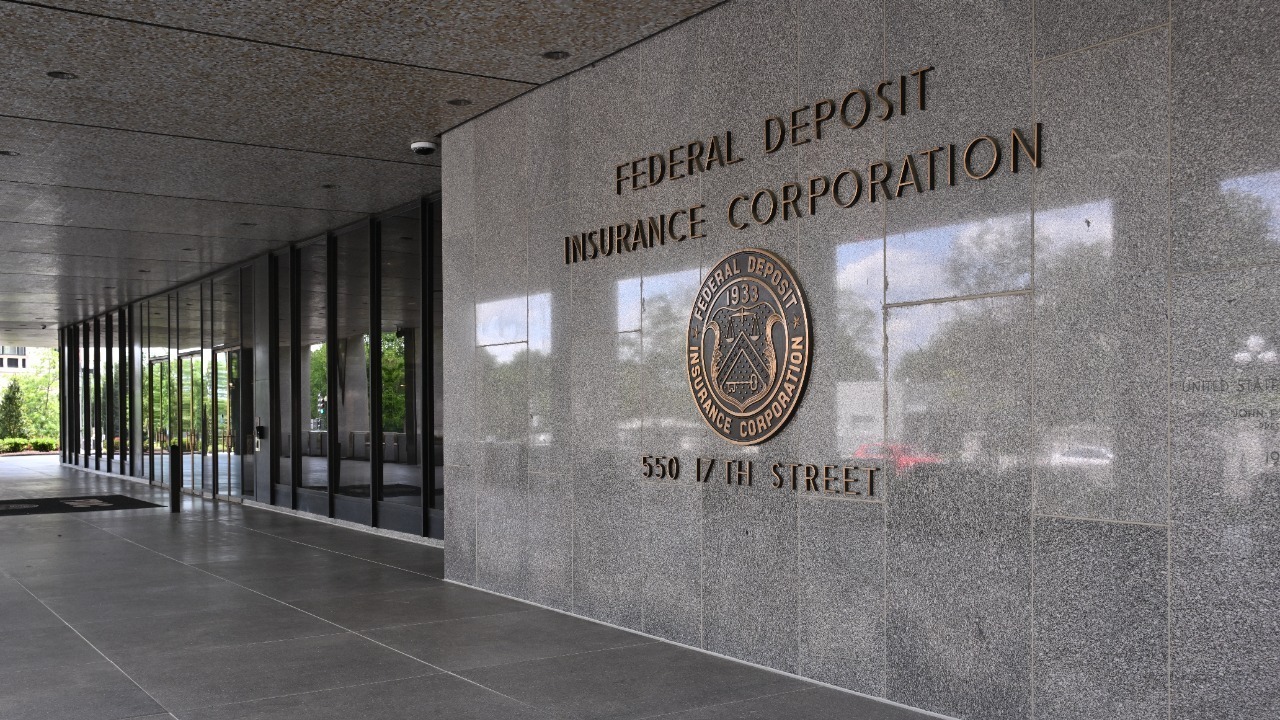
As of May 29, 2026, a joint final rule from the Office of the Comptroller of the Currency, the FDIC, and the National Credit Union Administration is 11 days from taking effect. When the FDIC released a batch of internal documents in early 2025, the letters inside confirmed what gun dealers, crypto firms, and religious nonprofits had alleged for years: federal examiners had been quietly pressuring banks to drop customers whose industries or viewpoints regulators found objectionable. No fraud charges. No court orders. Just a supervisor’s judgment that the relationship posed a “reputational risk.”
That practice is about to lose its legal footing. On June 9, 2026, the joint final rule takes effect, stripping “reputation risk” from the federal bank-examination playbook and barring examiners from pushing institutions to close accounts based on a customer’s political beliefs, religious affiliations, or lawful line of work.
What the rule actually does
The regulation does two concrete things. First, it prohibits federal banking agencies from criticizing or penalizing a bank based on reputation risk during supervisory examinations. Second, it bars regulators from requiring, instructing, or encouraging institutions to terminate accounts because of a customer’s political, social, cultural, or religious views.
That language dismantles a tool examiners have leaned on for more than a decade. Under the old framework, a regulator could flag a customer relationship as problematic without pointing to any measurable financial harm. A state-licensed cannabis dispensary, a cryptocurrency exchange, a firearms retailer, a religious nonprofit with polarizing positions: any of them could be tagged as a reputational liability, prompting the bank to quietly sever the relationship rather than risk a negative exam finding.
FDIC Chairman Travis Hill was blunt about the rationale. In a statement accompanying the final rule, he said reputation risk had been used to “pressure banks into debanking law-abiding customers” whom supervisors viewed unfavorably. Hill framed the regulation as a return to examinations grounded in quantifiable financial metrics rather than subjective judgments about how a customer might play in a news cycle.
The rule also carries out an executive order signed in 2025 directing financial regulators to take concrete steps to prevent Americans from being denied banking services because of their beliefs, affiliations, or lawful business activities.
Who this protects, and what it doesn’t change
After June 9, a bank examiner cannot cite a customer’s public statements, political donations, industry sector, or advocacy work as grounds for pressuring the bank to end the relationship. That protection extends to individual depositors, small businesses, nonprofits, and any other lawful account holder at a federally supervised institution.
But the rule has clear limits. It governs regulator conduct, not private business decisions. Banks still retain their contractual right to close accounts for legitimate reasons: fraud, money-laundering concerns, sanctions violations, chronic overdrafts, or simple unprofitability. If a bank decides on its own that a customer segment is not worth the compliance cost, this rule does not block that decision. It blocks a federal examiner from being the one who nudges the bank toward it.
That distinction matters most for customers who suspect their accounts were closed not by the bank’s independent judgment but at the direction of a regulator. After June 9, those customers will have a clearer basis for filing complaints through the OCC’s customer assistance process or the parallel channels at the FDIC and NCUA.
One notable gap: the rule applies only to federally supervised institutions. A state-chartered bank examined solely by its state regulator falls outside its direct scope, though many state-chartered banks also carry FDIC insurance and would be covered through that relationship.
The backstory: Operation Choke Point and its aftermath
The debanking debate did not begin this year. Its roots trace to Operation Choke Point, a Department of Justice initiative launched in 2013 that used bank oversight to restrict financial access for industries the administration considered high-risk, including payday lenders, firearms dealers, and adult entertainment companies. A 2014 staff report from the House Oversight Committee and a subsequent FDIC Office of Inspector General review documented cases in which examiners pressured banks to cut ties with entire business categories. The program drew bipartisan criticism and was officially ended in 2017, but its effects persisted. Banks that had been stung by examiner scrutiny continued to avoid whole customer categories long after the formal pressure stopped.
A second wave of complaints surfaced around 2022 and 2023, when cryptocurrency companies and fintech startups reported widespread account closures and banking-access denials. Nic Carter, a venture investor and vocal critic, popularized the term “Operation Choke Point 2.0” in a series of columns arguing that regulators were using informal guidance and reputation-risk concerns to discourage banks from serving the digital-asset sector. Internal FDIC documents released in early 2025, including so-called “pause letters” instructing banks to halt crypto-related activities, lent weight to those claims.
The new rule is a direct response to both chapters. By formally removing reputation risk from the supervisory toolkit, regulators are attempting to close the mechanism that made those campaigns possible in the first place.
What critics and skeptics are watching
Not everyone views the rule as an unqualified win. Dennis Kelleher, president of the financial-reform advocacy group Better Markets, has argued that reputation risk, while imperfect, served a legitimate purpose by giving examiners a way to flag relationships that posed genuine threats to a bank’s franchise value or public trust, even when those threats did not fit neatly into categories like credit quality or liquidity. Removing the concept entirely, critics contend, could leave examiners without adequate tools to address emerging risks that have not yet been codified in regulation.
There is also a measurement problem. No federal agency has published data quantifying how many account closures were driven by reputation-risk findings before the rule. Without that baseline, it will be difficult to determine whether the regulation actually reduces politically motivated debanking or simply shifts the decision-making further into banks’ own internal processes, where it is harder to track.
Enforcement is another open question. The rule constrains supervisory behavior, but it does not create a private right of action for customers. Most disputes will play out through internal agency oversight, inspector general reviews, or congressional inquiries rather than courtroom litigation. How aggressively those channels are used will determine whether the rule functions as a real deterrent or a largely symbolic policy statement.
Pending legal and legislative challenges
The federal rule does not operate in a vacuum. Several state legislatures have introduced or passed their own anti-debanking statutes that mirror or go beyond the federal regulation by granting affected customers a private right of action in state court. Whether those state-level measures reinforce the federal rule or create conflicting compliance obligations for multistate banks remains an open question. Meanwhile, consumer advocacy organizations have signaled they may challenge the rule’s scope in court, arguing that eliminating reputation risk as a supervisory category exceeds the agencies’ rulemaking authority or conflicts with existing consumer-protection mandates. No lawsuit had been filed as of late May 2026, but the comment letters submitted during the rulemaking period suggest litigation is a real possibility. The interplay between federal and state efforts will shape how much practical protection account holders actually receive.
How banks are likely to respond
On the supervisory side, exam manuals and training materials will need to be revised to strip out references to reputation risk as a standalone category. Examiners who previously flagged customer relationships over fears of media or political backlash will now have to tie any criticism to concrete safety-and-soundness concerns: credit quality, liquidity, operational resilience, or compliance with a specific statute.
Banks themselves face a subtler adjustment. Many large institutions built internal “reputational risk” frameworks that mirrored the language their primary regulators used. Even though the new rule does not directly govern private policies, institutions that keep the term in their internal risk models may feel pressure to clarify how those policies differ from the now-prohibited supervisory standard. Some compliance teams are already narrowing the concept to focus on fraud, consumer harm, or legal violations rather than customer viewpoints.
Account-closure recordkeeping is changing in parallel. When banks close accounts that could appear politically sensitive, legal counsel will want a clear paper trail emphasizing financial and legal rationales. That documentation could become critical evidence if a customer later alleges the closure was effectively compelled by a regulator in violation of the rule.
What June 9 changes for account holders
The rule’s real test begins the day it takes effect. Advocacy groups, industry associations, and congressional oversight committees will be watching for two things: whether examiner behavior actually changes, and whether account-closure complaints from politically exposed customers decline.
For individual account holders, the practical shift is straightforward. Anyone who believes a bank closed or restricted an account after June 9 because of political views, religious affiliation, or a lawful business activity now has a specific federal regulation to cite when filing a complaint with the OCC, FDIC, or NCUA. The rule does not guarantee that every account will stay open. But it does guarantee that the federal government is no longer supposed to be the reason one gets shut down.