In 2014, a licensed firearms dealer in Wisconsin discovered his bank account had been closed with 30 days’ notice and no meaningful explanation. He was not accused of fraud, money laundering, or any legal violation. His business simply fell into a category that federal examiners considered a “reputation risk” for the bank. Variations of that story have played out hundreds of times across industries ranging from crypto startups to religious nonprofits to adult entertainers. On June 9, 2026, the regulatory mechanism behind those closures officially disappears.
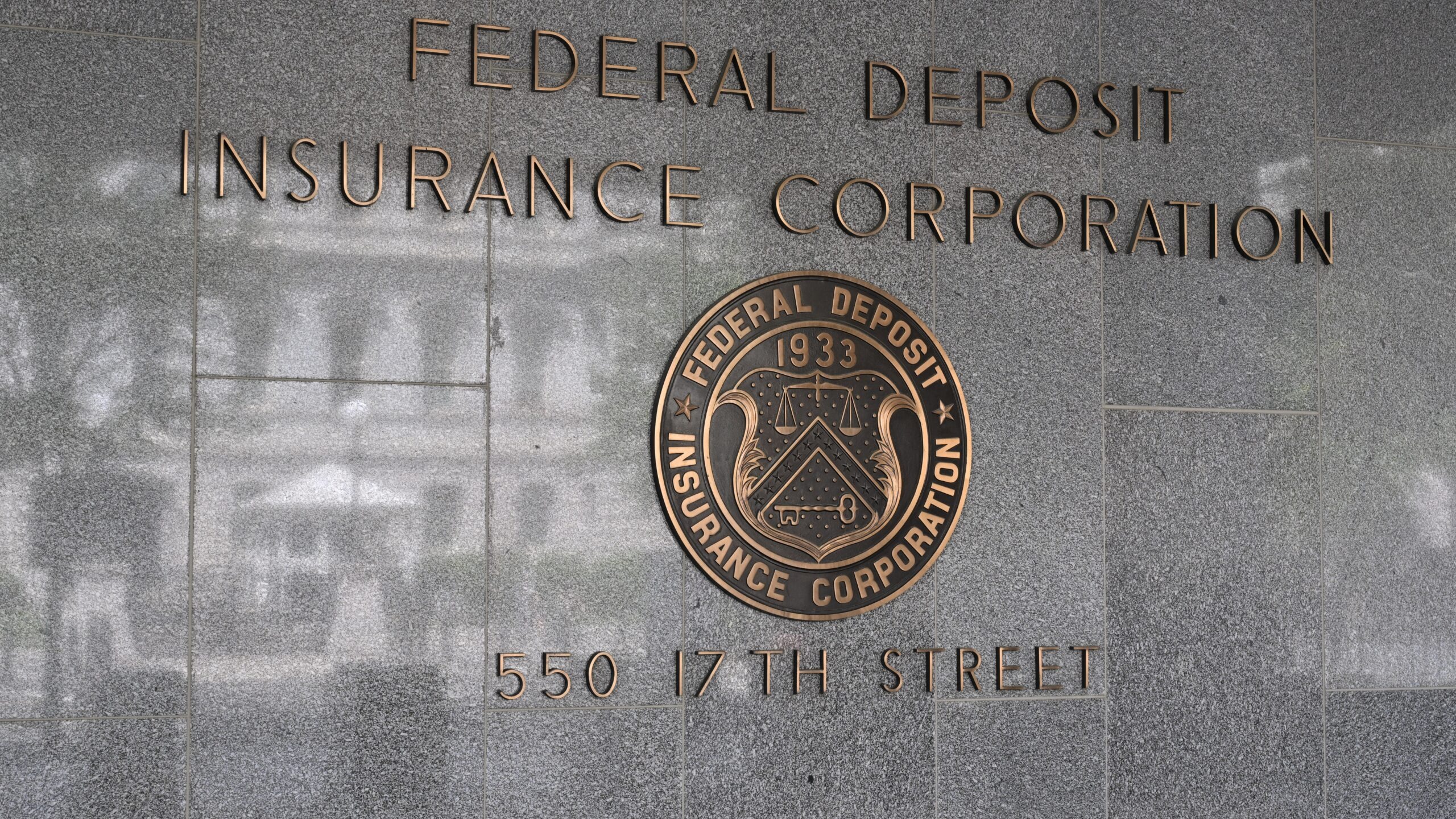
A joint final rule published by the FDIC, the Office of the Comptroller of the Currency, and other federal banking agencies on April 10, 2026, strips “reputation risk” from the federal supervisory framework entirely. After the effective date, no examiner at any covered agency can cite a customer’s political views, religious affiliation, industry category, or public profile as grounds for questioning whether a bank should maintain that account.
What “reputation risk” was and why it mattered
During routine bank examinations, federal supervisors evaluate institutions across several risk categories: credit risk, operational risk, compliance risk, and others. For decades, “reputation risk” sat alongside those concrete measures, handing examiners broad, subjective authority to flag customer relationships that might embarrass a bank or attract negative press.
The standard had no fixed definition. An examiner in one region might consider a state-legal cannabis dispensary a reputation risk; another might target a politically active nonprofit or a cryptocurrency exchange. FDIC Chairman Travis Hill, in his public statement on the final rule, said the reputation risk framework “can be subjective and can pressure banks toward debanking.” That subjectivity made it nearly impossible for customers to challenge closures or for banks to push back against examiner suggestions.
The controversy predates the current administration by more than a decade. Starting in 2013, a Department of Justice initiative known as Operation Choke Point used similar regulatory pressure to cut off banking access for payday lenders, firearms dealers, and other legal-but-disfavored industries. The DOJ formally ended the program in August 2017, but critics argued that reputation risk remained the quiet mechanism through which the same dynamic persisted under different names. When the FDIC released previously redacted supervisory letters in early 2025, several showed examiners explicitly referencing reputational concerns when recommending that banks sever relationships with lawful businesses.
How the rule works
The regulation grew out of a proposal the FDIC circulated to bar the agency from encouraging account closures based on political, social, cultural, or religious views. The proposal drew thousands of public comments during the notice-and-comment period, with the vast majority supporting the change. The agencies finalized the prohibition and published it as a joint final rule in the Federal Register in April 2026.
Under the new standard, examiners retain full authority to scrutinize everything involving concrete legal obligations: anti-money-laundering compliance, sanctions rules, consumer protection statutes, creditworthiness, and safety and soundness. What they can no longer do is treat public controversy, advocacy, or unpopular speech as an independent reason to question a bank’s choice of customers. A bank that decides to serve a lawful but polarizing client cannot be second-guessed by regulators solely because of perceived image damage.
The OCC had already begun parallel work through what the agency designated OCC Bulletin 2025-4, which directed staff to remove reputation risk language from all supervisory handbooks and guidance documents. Both agencies acted under an executive order on fair banking access signed in February 2025, which directed federal regulators to prevent denial of financial services based on constitutionally or statutorily protected beliefs. The FDIC’s formal response to that order described the prior regime as one that had enabled “debanking politically disfavored customers.”
Why the rule drew support from unexpected corners
Banking trade associations and civil-liberties organizations rarely land on the same side of regulatory fights. This one was different. Industry groups, including the American Bankers Association, had long argued that vague reputation standards exposed banks to political whiplash: a customer considered acceptable under one administration could become a liability under the next. Free-speech advocates warned that banks were functioning as unelected gatekeepers for lawful expression, with no transparency and no appeals process.
By codifying a narrower set of permissible supervisory concerns, the rule aims to reduce regulatory uncertainty for institutions and lower the risk that access to basic financial services depends on ideological alignment rather than legal compliance.
What the rule does not fix
The regulation is clear about what examiners can no longer do, but several gaps remain.
No baseline data. No federal agency has published figures on how many accounts were closed specifically because of reputation risk pressure. Without that baseline, measuring whether debanking incidents actually decline will be difficult. The FDIC Office of Inspector General and the OCC’s enforcement databases contain process records, but neither agency has committed to releasing post-rule compliance metrics or complaint tallies.
Substitution risk. Banks retain full authority to close accounts for legitimate reasons: anti-money-laundering concerns, credit risk, operational burden, or violations of terms of service. Skeptics worry that institutions could invoke those categories as a pretext for the same outcomes, simply swapping one justification for another. The rule does not create a private right of action, meaning customers who believe they were dropped for their views will still need to rely on existing anti-discrimination laws, contractual claims, or regulatory complaints rather than suing under the new standard itself.
Uneven enforcement. Large banks with deep compliance departments are better positioned to push back against informal suggestions from supervisors. Smaller community banks, which depend more heavily on examiner goodwill, may feel pressure to accommodate preferences even when those preferences no longer have a regulatory basis. How consistently examiners apply the change across regions and institution sizes will depend on updated training materials, internal guidance, and future examination manuals that the agencies have not yet released.
State-level gaps. The rule covers institutions supervised by the FDIC, the OCC, and other federal banking agencies. State-chartered banks that fall outside direct federal supervision may still operate under state regulatory frameworks that have not adopted equivalent protections. Customers of those institutions could face the same dynamics the federal rule is designed to eliminate.
No guarantee of permanence. Because the prohibition is embedded in formal regulation rather than a policy memo, reversing it would require a full notice-and-comment rulemaking process. That offers meaningful insulation from rapid political shifts, but not immunity. A future administration could attempt to reintroduce broader supervisory concepts under different labels or expand adjacent risk categories in ways that recreate similar pressures.
What actually changes for banks and customers after June 9
For bank customers, the practical shift is concrete: starting June 9, 2026, no federal examiner can pressure your bank to close your account because of who you are, what you believe, or what legal industry you operate in. If you run a gun shop, a cannabis dispensary in a legal state, a crypto exchange, or a religious charity, the regulatory apparatus that once treated your account as a liability to your bank no longer exists.
For banks, the rule provides firmer legal footing to resist informal regulatory nudges that previously carried real consequences during examinations. Compliance officers can point to a published federal regulation rather than trying to interpret shifting supervisory moods.
The harder question is whether the agencies will follow through with the transparency and oversight needed to make the new standard stick. The rule removes a tool that critics say was misused for more than a decade. Whether that removal translates into lasting change depends on enforcement, data collection, and the willingness of regulators to hold themselves accountable to the standard they just set.