A gun shop owner who loses his business checking account. A religious nonprofit that gets a terse closure letter with no explanation. A crypto startup that watches three banking partners walk away in a single quarter. For years, these stories have circulated through industries that sit on the political margins of American finance, always with the same unanswered question: did the bank decide on its own, or did a federal examiner push it?
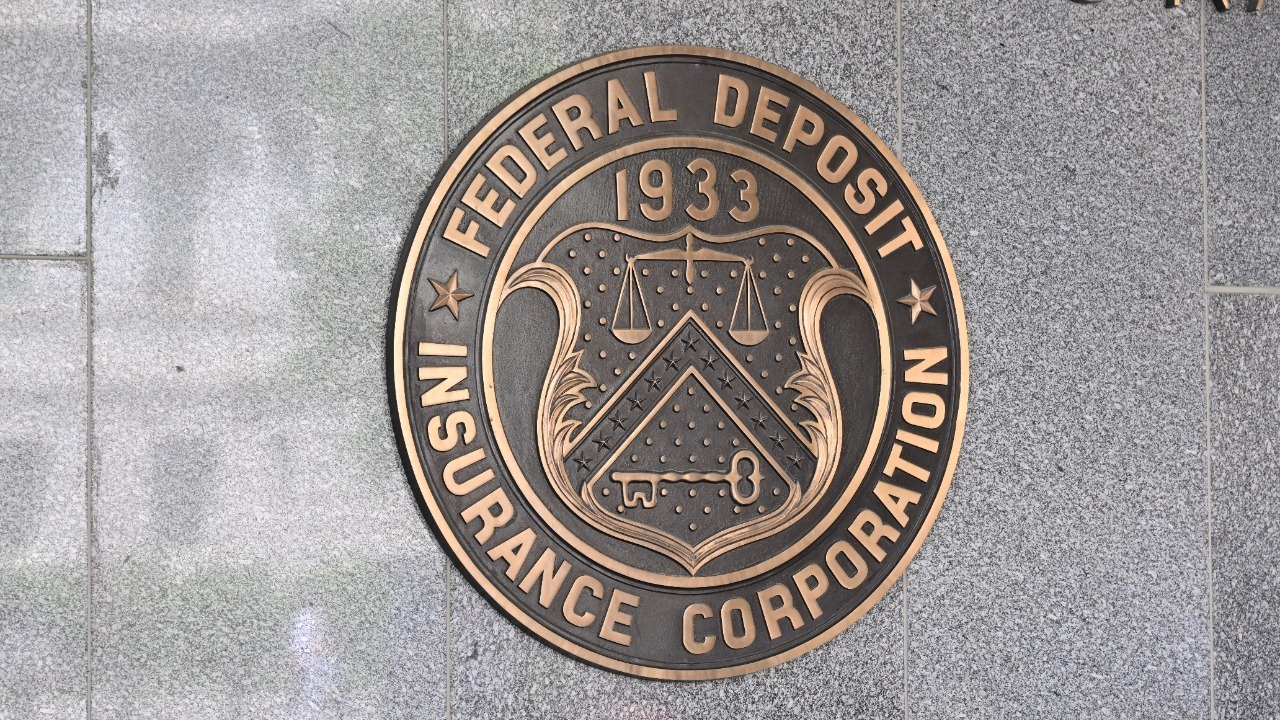
Starting on or around June 9, 2026, that question will carry new legal weight. The FDIC and the Office of the Comptroller of the Currency have finalized a joint rule that prohibits federal examiners from pressuring banks to close customer accounts based on political, religious, social, or cultural viewpoints. The rule takes effect 60 days after its publication in the Federal Register, and the compliance deadline is now less than three weeks away.
For the millions of Americans whose livelihoods depend on reliable access to the banking system, the countdown is no longer abstract.
What the rule actually does
As described in an OCC news release, the final rule bars regulators from requiring, instructing, or encouraging banks to terminate customer relationships on the basis of lawful viewpoints or constitutionally protected speech. It targets a supervisory concept called “reputation risk,” a label examiners previously applied when they judged that a bank’s association with certain customers could damage the institution’s public image.
That label carried real consequences. When an examiner flagged a customer relationship as a reputation risk, the bank faced implicit pressure to cut ties or risk a negative supervisory rating. The customer, meanwhile, often received a brief closure notice with no meaningful explanation and no clear path to challenge the decision.
Under the new rule, examiners lose that lever entirely when the only basis for concern is what a customer believes, says, or advocates.
An accompanying OCC bulletin spells out the mechanics: it defines the reputation-risk language being removed, details what examiners can and cannot do when reviewing a bank’s customer base, and confirms the 60-day effective date. Critically, the bulletin makes clear that examiners retain full authority to scrutinize accounts that pose legal, operational, or financial risks. What they can no longer do is treat a customer’s lawful political activity or religious affiliation as a standalone reason to question the relationship.
The backstory: from Operation Choke Point to a presidential order
The new rule did not emerge from nowhere. Its roots trace back more than a decade to Operation Choke Point, a Department of Justice initiative launched during the Obama administration that pressured banks to sever ties with industries the government considered high-risk, including payday lenders, firearms dealers, and adult entertainment businesses. Although the DOJ formally ended the program in 2017, critics argued that the underlying supervisory culture persisted: examiners continued to use reputation-risk language to discourage banks from serving politically disfavored customers.
The Trump administration moved to close that gap. Executive Order 14331, titled “Guaranteeing Fair Banking for All Americans,” directed federal banking agencies to strip reputation-risk language from their supervisory guidance. The FDIC and OCC responded with a joint proposal mirroring the order’s directives, opened a public comment period, and finalized the rule after reviewing submissions from industry groups, civil-liberties organizations, and individual consumers.
FDIC Chairman Travis Hill was blunt about the problem the rule addresses. In a formal statement tied to the Board’s adoption of the rule, Hill said the prior supervisory focus on reputation risk had pressured banks into “debanking” law-abiding customers. His framing was notable for how directly it acknowledged the pattern: this was not a theoretical concern buried in regulatory footnotes but a problem with documented consequences for real people and real businesses.
Who was getting debanked, and how it worked
The public comments filed during the rulemaking’s open comment period offer the most detailed window into the scope of the problem. Trade associations representing firearms dealers described members who said banks cited vague reputational concerns when declining or terminating their accounts. Nonprofit advocacy organizations reported similar experiences. Payment processors serving politically contentious industries flagged cases where banking partners pulled back without pointing to any specific legal violation.
The pattern extended well beyond any single sector. Crypto-related businesses, religious organizations with traditional stances on social issues, and conservative advocacy groups all surfaced in public comments as having experienced abrupt account terminations. No primary FDIC or OCC record quantifies the total number of closures tied to reputation-risk guidance, so the true scale remains unknown. But the breadth of the complaints, spanning multiple industries, geographies, and institution sizes, suggests the problem was not confined to a handful of outliers.
It is worth being precise about what these accounts do and do not prove. Public comments are self-reported. They do not come with attached examination reports or enforcement documents, so they cannot definitively establish that federal examiners ordered specific closures. But they document something that matters just as much from a policy standpoint: a climate in which banks believed, whether correctly or not, that regulators expected them to distance themselves from entire categories of lawful customers. Whether the pressure arrived through explicit instructions or through the subtler signal of a negative exam rating, the result for the account holder was identical: a closed account and few options.
What the rule does not cover
The new protections have clear boundaries, and understanding them is essential for anyone who thinks this rule makes their bank account bulletproof.
Banks retain every existing tool to manage genuine legal and financial risk. If a customer is under investigation for money laundering, violating sanctions, or committing fraud, regulators can still press the bank to act, up to and including terminating the relationship. The rule’s constraint is narrow: it applies only when the basis for supervisory pressure is disapproval of a customer’s lawful viewpoints or associations.
That distinction matters because it answers the most common objection to anti-debanking rules. Critics have argued that restricting banks’ ability to drop customers could interfere with anti-money-laundering enforcement or expose institutions to compliance risk. The final rule sidesteps that concern by leaving all existing legal and operational risk authorities intact. What it removes is the discretionary gray zone where “reputation” served as a catch-all justification for decisions rooted more in politics than in safety and soundness.
There is also a significant practical gap. The rule does not create a private right of action, meaning affected customers cannot sue their bank in federal court under this provision alone. And as of late May 2026, the agencies have not outlined a dedicated complaint process or public reporting framework for customers who believe they were debanked in violation of the new rule. Without a clear enforcement mechanism, the protection exists on paper but lacks an obvious path for individuals to invoke it. Regulators may address this through subsequent guidance, but nothing has been announced yet.
How the federal rule compares to state-level protections
The federal rule does not operate in isolation. Several states have already enacted their own anti-debanking statutes targeting politically motivated account closures, and some go further than what federal regulators have done.
Key differences: some state laws impose direct obligations on banks themselves, not just on federal examiners. Others create private rights of action that let affected customers sue in state court, a remedy the federal rule does not provide. The federal rule’s scope is limited to supervisory conduct by FDIC and OCC examiners, meaning it addresses the regulatory pressure side of the equation but does not reach bank-initiated closures that occur without examiner involvement.
In states with their own laws on the books, customers may have overlapping protections, but the enforcement mechanisms and legal standards can differ significantly. Where no state law exists, the federal rule may be the only formal barrier against reputation-risk-driven account terminations. Customers who want to understand their full range of protections will need to check both federal and state law, and in many cases, consult an attorney familiar with banking regulation.
What changes inside banks after June 9
Once the rule takes effect, banks and their examiners will operate under a different set of ground rules. Examiners conducting safety-and-soundness reviews will no longer be able to cite reputation risk as a reason to question a bank’s relationship with a lawful customer. Banks, in turn, will need to ensure that any account closures they initiate are grounded in documented legal or operational concerns rather than in subjective judgments about a customer’s public profile.
That shift could ripple through compliance departments in ways that are difficult to predict. Smaller community banks, which often lack large legal teams, may face new pressure to keep more detailed records of their internal deliberations around account terminations. Larger institutions may need to retrain examiners and update internal policies that previously referenced reputation risk as a factor in customer-relationship decisions.
The deeper question is whether the rule survives contact with real disputes. When a customer challenges an account closure as politically motivated and the bank insists the decision was based on legitimate risk, someone will have to adjudicate that disagreement. The agencies have not yet said how they plan to handle those cases. Until that process takes shape and produces a track record, the rule’s practical impact will depend heavily on whether banks treat it as a genuine constraint or as a formality they can navigate with better paperwork.
What to do if you think you have been debanked
Even without a dedicated federal complaint process, customers who believe they have been dropped for political reasons are not entirely without options. Here is what banking attorneys and consumer advocates generally recommend:
- Request a written explanation. Banks are not always required to provide one, but asking creates a paper trail. If the bank cites “reputational concerns” or similarly vague language, that documentation could become important later.
- File a complaint with the relevant federal regulator. For FDIC-insured banks, that means the FDIC. For national banks and federal savings associations, it means the OCC. Both agencies accept consumer complaints through their websites.
- Check your state’s laws. If your state has an anti-debanking statute with a private right of action, you may have legal recourse that the federal rule does not provide.
- Contact your elected representatives. Congressional inquiries to banking regulators can prompt agency review of specific cases, particularly when a pattern of complaints emerges.
- Consult a banking or civil-rights attorney. The intersection of federal supervisory rules, state statutes, and bank contracts is complex enough that professional guidance is often necessary.
None of these steps guarantees a restored account. But taken together, they create the kind of documented record that regulators and lawmakers need to determine whether the new rule is working as intended, or whether stronger enforcement tools are required.
Why the June 9 deadline matters for every bank customer
For now, the rule represents the most concrete federal action to date against politically motivated debanking. Whether it delivers on that promise will become clear only after June 9, when the protections move from the Federal Register into the daily reality of American banking.