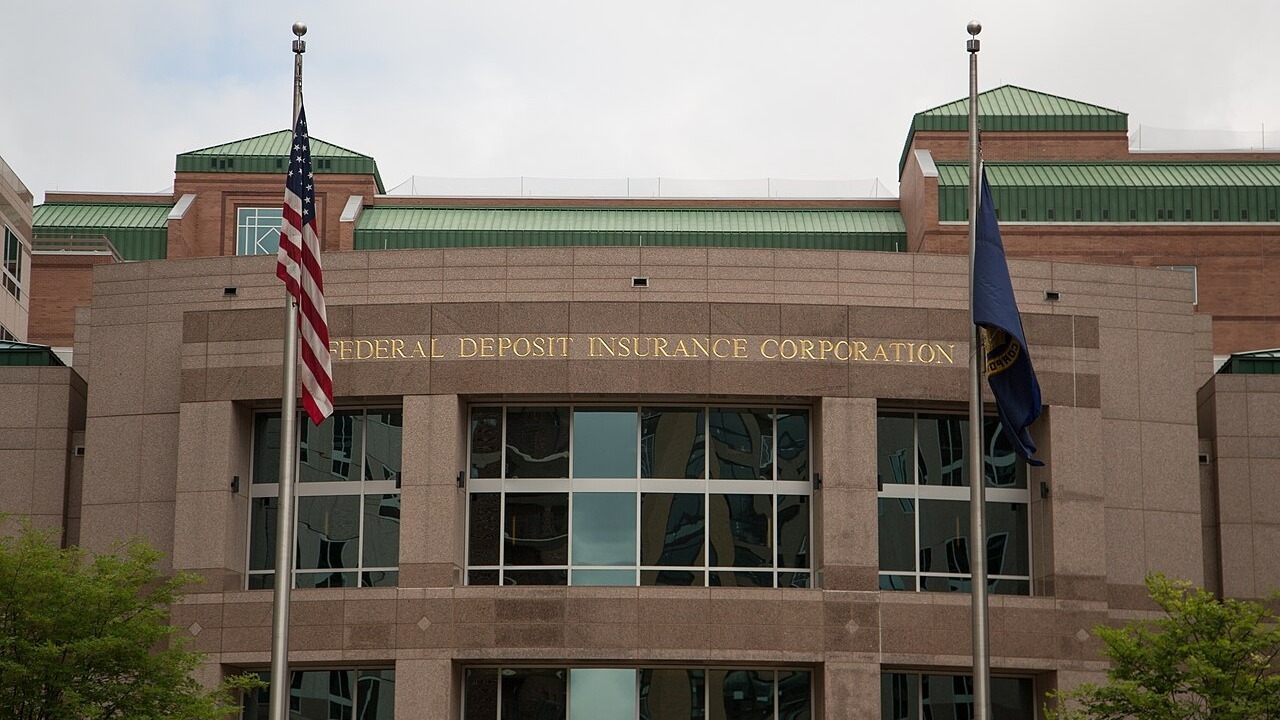
Starting June 9, federal bank regulators will no longer be allowed to push banks into closing customer accounts because of a person’s political beliefs, religious views, or constitutionally protected speech. The joint rule from the FDIC and the Office of the Comptroller of the Currency was published in the Federal Register on April 10, 2026, with a 60-day implementation window that expires in three days. The regulation strips “reputation risk” from the supervisory toolkit that examiners have used for years to pressure banks into dropping customers deemed controversial, a change the agencies formally described in a final rule announcement.
What the June 9 rule changes for bank customers
The practical effect is direct: after June 9, no federal examiner can require, instruct, or encourage a bank to terminate an account based on a customer’s political, social, cultural, or religious views. That prohibition also covers any action tied to constitutionally protected speech. FDIC Chairman Travis Hill framed the change as ending a pattern in which examiners criticized institutions based on reputational risk and used that criticism to justify account closures targeting specific viewpoints.
The agencies did not stop at the rule itself. The OCC confirmed that regulators have already reissued multiple interagency guidance documents with all references to reputation risk removed, a cleanup effort designed to prevent examiners from citing older manuals to justify the same behavior under a different label. The rule’s origin traces to an executive order on fair banking access. Hill committed early on to blocking examiner pressure that would direct or encourage account closures based on political, social, or religious views, and the final regulation delivers on that pledge by codifying those limits in binding supervisory rules.
Banks retain full authority to manage legitimate safety-and-soundness risks. Nothing in the rule prevents a bank from closing an account over fraud, money laundering, sanctions violations, or credit exposure. The change is narrower than critics or supporters sometimes describe: it targets the specific regulatory mechanism, reputation risk, that examiners used to pressure banks into dropping otherwise compliant customers. In practice, that means regulators must tie any supervisory criticism to concrete financial, legal, or operational risks rather than the possibility that a customer’s views could draw public controversy.
OCC debanking review and the evidence gap
The OCC released preliminary findings from its review of large banks’ debanking activities, confirming that the agency examined how major institutions handled account terminations that appeared connected to customer viewpoints rather than traditional risk factors. According to an OCC summary, examiners looked at internal policies, escalation procedures, and board-level reporting around account closures to understand when reputational concerns influenced decisions. That review helped build the case for the joint rule by documenting how reputational themes had seeped into supervisory expectations.
But neither the FDIC nor the OCC has published a dataset listing which banks were flagged, how many accounts were closed under reputation-risk pressure, or which political or religious categories were most affected. The agencies have described patterns in qualitative terms, but they have not released bank-specific findings, citing confidentiality rules that govern examination materials and supervisory communications.
This data gap matters for anyone trying to measure whether the rule actually works. One reasonable test would be to track quarterly FDIC call-report data after June 9 for a detectable drop in voluntary account terminations at banks previously flagged in the OCC review, controlling for standard credit-risk variables. Without a public baseline of past enforcement actions tied to reputation risk, though, that comparison lacks a starting point. The agencies have not released bank-submitted compliance plans or internal policy changes showing how institutions plan to adjust their account-closure criteria after the effective date, leaving outside analysts to infer changes from aggregate statistics and anecdotal reports.
What the rule does not resolve for account holders
The regulation binds federal examiners, not banks themselves. A bank can still choose on its own to end a relationship with a customer whose views it dislikes, so long as the decision is not coerced or encouraged by regulators and does not violate other laws such as fair lending or civil rights statutes. The rule removes a source of government leverage but does not create an affirmative right to an account or a duty for banks to be viewpoint-neutral in their private business decisions.
That limitation leaves several unresolved questions for account holders who worry about debanking. Customers who believe they were dropped because of their politics or religion may no longer be able to point to reputation-risk guidance as a likely driver, but they still face the same practical barriers to challenging a closure. Most deposit and payment contracts allow banks to terminate accounts with little explanation, and the new rule does not require institutions to provide more detailed reasons.
For now, the main protection is indirect: by narrowing what examiners can say and do, the rule reduces the chance that a bank will feel behind-the-scenes pressure to cut ties with controversial clients. Over time, patterns in enforcement actions, supervisory letters, and bank disclosures may show whether that change has real bite. If complaints about politically or religiously motivated account closures persist, lawmakers could face calls to go further, either by mandating clearer explanations for terminations or by imposing explicit viewpoint-neutrality requirements on large institutions.
In the meantime, customers who are concerned about debanking have a few practical steps. They can diversify relationships across more than one bank, monitor account notices closely for early warning signs of closure, and document any communications that suggest non-financial reasons for termination. None of these steps guarantees protection, but in an environment where regulators have narrowed their own role without dictating bank behavior, vigilance by account holders remains an important backstop.