Mark McCloskey kept his bank account for more than two decades. Then he pointed a rifle at protesters outside his St. Louis home during the 2020 unrest, became a national lightning rod, and within months received a letter from his bank: account closed, no further explanation. McCloskey is far from alone. Gun shop owners, cryptocurrency startups, religious nonprofits, and politically outspoken individuals across the country have described the same experience: a terse notice, a shuttered account, and no clear connection to any financial wrongdoing.
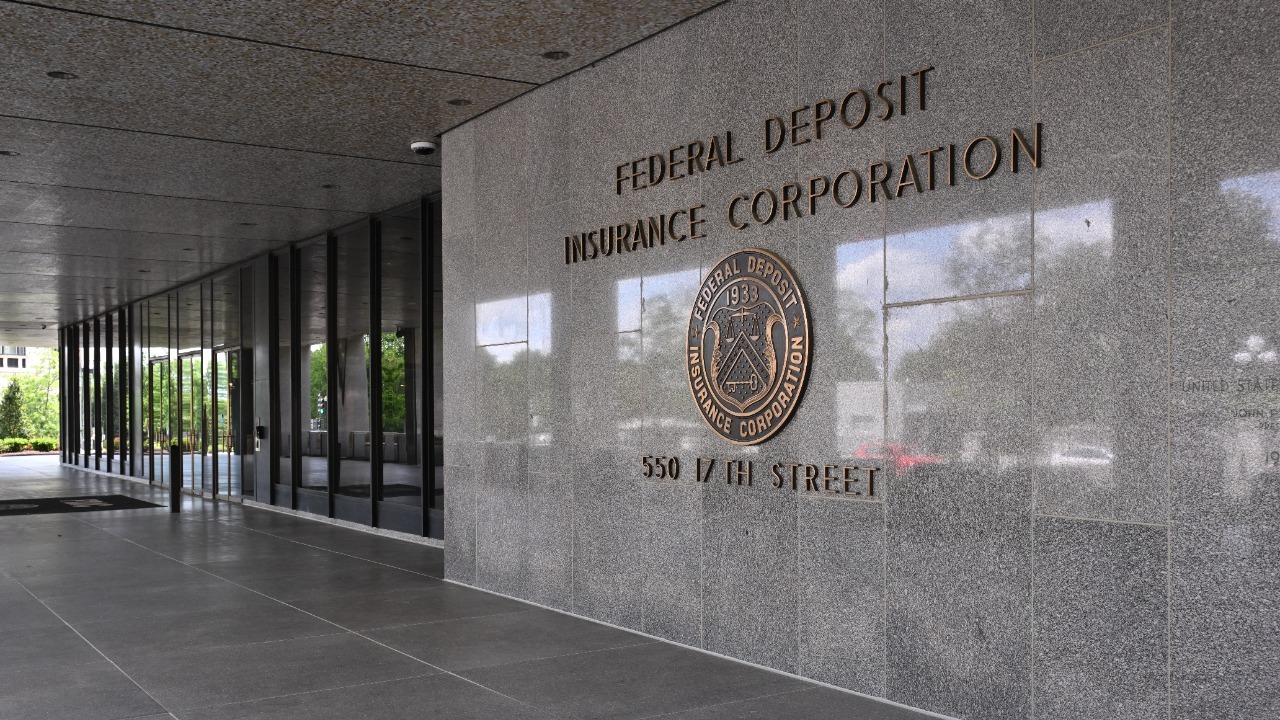
In many of those cases, the pressure did not originate with the bank. It came from federal examiners who flagged these customers as “reputational risks,” a supervisory concept so elastic it could encompass anyone whose public profile might generate bad headlines. That practice is now formally over. In spring 2026, the FDIC and the Office of the Comptroller of the Currency finalized rules that strip “reputational risk” from the supervisory toolkit, barring examiners from pushing banks to drop account holders over their political opinions, religious beliefs, or any other form of constitutionally protected expression.
The FDIC’s rule takes effect 30 days after its Federal Register publication. The OCC’s companion rule follows a 60-day effective window. Together, they represent the most significant federal regulatory changes targeting viewpoint-based account closures since the controversy over Operation Choke Point, the Obama-era initiative that critics say weaponized bank regulation to cut off legal but politically disfavored industries from the financial system.
What the rules actually change
Under the old framework, federal examiners could cite “reputational risk” when evaluating whether a bank was operating safely and soundly. In practice, that gave an examiner the authority to pressure a bank into severing ties with a customer whose business or beliefs might attract negative attention, even if the customer had broken no laws and posed no measurable financial threat. The new rules eliminate that lever entirely.
According to the OCC, its new bulletin prohibits examiners from using reputational risk as a basis for any supervisory action, formal or informal. The agency has described the bulletin as part of a broader effort to depoliticize the federal banking system, though the full text and final bulletin number have not been independently confirmed for this article. Going forward, any criticism of a bank’s customer relationships must be grounded in concrete, measurable concerns: credit quality, liquidity, legal compliance, or operational resilience. Speculative worries about public backlash no longer qualify.
The FDIC’s rule mirrors that approach. In a public statement accompanying the final rule, FDIC Chairman Travis Hill said the prior emphasis on reputational risk “adds little to safety and soundness” and had the effect of pressuring banks into “debanking law-abiding customers.” Under the revised supervisory program, FDIC examiners are formally barred from criticizing a bank simply because it serves customers whose views are unpopular or controversial, provided those customers are not violating the law or creating concrete financial exposure.
The executive order that set this in motion
Both agencies trace their authority to an executive order titled “Guaranteeing Fair Banking For All Americans,” issued in 2025. The directive, discussed in FDIC remarks on its implementation, ordered federal regulators to ensure that access to banking is not conditioned on a customer’s viewpoint. It also called on agencies to review and revise any supervisory guidance, examination procedures, or licensing criteria that could enable viewpoint-based discrimination.
The OCC responded by announcing a broader initiative to “depoliticize the federal banking system,” which included plans to scrub references to reputational risk from examiner handbooks and to revisit how the concept had been applied in Community Reinvestment Act evaluations and licensing decisions. The FDIC’s final rule followed a parallel rulemaking track, with Hill’s statement confirming that the agency’s internal examiner procedures have already been updated to reflect the new standard.
Why this matters beyond politics
The debate over debanking is not purely partisan, even though it has become a flashpoint in culture-war politics. Operation Choke Point, launched by the Department of Justice in 2013, drew bipartisan criticism after reports emerged that DOJ and the FDIC had used informal pressure to cut off payday lenders, firearms dealers, and other legal businesses from banking services. A series of congressional hearings in 2014 and 2015 featured testimony from small business owners who said they lost accounts without warning or recourse. The FDIC’s own Office of Inspector General later found that the agency had failed to adequately supervise how its guidance was being applied in the field.
More recently, the issue has expanded well beyond firearms and payday lending. Cryptocurrency companies have argued that banks routinely refuse them service under regulatory pressure, a phenomenon the industry calls “Operation Choke Point 2.0.” Religious organizations have reported account closures they attribute to their positions on social issues. And high-profile individuals, from political commentators to public figures embroiled in controversy, have described being dropped by banks with no explanation tied to financial risk.
Several states moved to address the problem before the federal government acted. Florida enacted SB 214 in 2023, prohibiting financial institutions from denying or canceling services based on political or religious viewpoints. Texas passed SB 751, which took effect in September 2023 and includes similar protections against viewpoint-based denial of financial services. The new federal rules now create a nationwide floor, though they operate differently: rather than directly regulating the bank-customer relationship, they limit how federal examiners can influence it behind the scenes.
What the rules do not do
The new framework has clear boundaries, and they are worth understanding. Nothing in the FDIC or OCC rules forces a bank to serve every lawful customer. Banks retain broad discretion to choose their clients based on legitimate business considerations, including profitability, compliance costs, and genuine risk exposure. What the rules prohibit is federal regulators tipping the scales by treating a customer’s beliefs or public reputation as a supervisory concern.
That distinction matters more than it might seem. Critics of the rules, including some consumer advocacy groups, have argued that reputational risk is a legitimate consideration in banking supervision because a bank’s association with certain clients can erode public trust and, eventually, financial stability. Supporters counter that the concept was too vague and too easily weaponized, giving examiners a tool to enforce political preferences rather than financial prudence.
Neither agency has released data on how many account closures in prior years were driven by reputational risk concerns. Without that baseline, measuring the real-world impact of the new rules will be difficult. It is also unclear how examiners will document their reasoning when they do object to a bank’s customer relationships, or how disputes between banks and examiners over what constitutes a “concrete” risk will be resolved.
How bank examinations will test the new framework
The practical test comes during bank examinations, which occur on regular cycles and are typically not public. Under the new rules, if an examiner believes a bank’s relationship with a particular customer poses a problem, the examiner must point to a specific, measurable risk: a legal violation, a credit concern, an operational vulnerability. A vague reference to the customer’s reputation or public profile will no longer suffice.
Banks, for their part, will need to ensure that their own internal account-closure decisions can withstand scrutiny. If a pattern emerges in which a bank disproportionately drops customers with certain political or religious affiliations, regulators, lawmakers, or the customers themselves could argue that the bank is doing informally what examiners can no longer do officially. The rules do not create a private right of action for debanked customers, meaning individuals cannot sue under these specific regulations if their accounts are closed. However, a customer who believes a bank terminated an account based on political or religious viewpoints can file a complaint with the relevant federal regulator: the FDIC for state-chartered insured banks, or the OCC for nationally chartered banks. Those agencies retain the authority to investigate whether a bank’s practices are consistent with the new supervisory standards. The shift in regulatory posture could also embolden future litigation under state anti-discrimination statutes or encourage additional state-level legislation.
Where enforcement meets the examination room
Rules on paper and rules in practice are different things, and everyone involved in this debate knows it. Federal bank examiners wield enormous informal influence. A raised eyebrow during an examination, a pointed question about a particular client relationship, can carry as much weight as a formal enforcement action. The new rules change what examiners are allowed to say and write. Whether they change the subtle dynamics of a closed-door examination is a question that will play out over years, not weeks.
For the gun dealer in rural Georgia, the crypto firm in Miami, or the religious charity in the Midwest, the regulatory architecture has shifted in their favor. The culture of bank supervision, built over decades of informal norms and unwritten expectations, will take longer to follow.