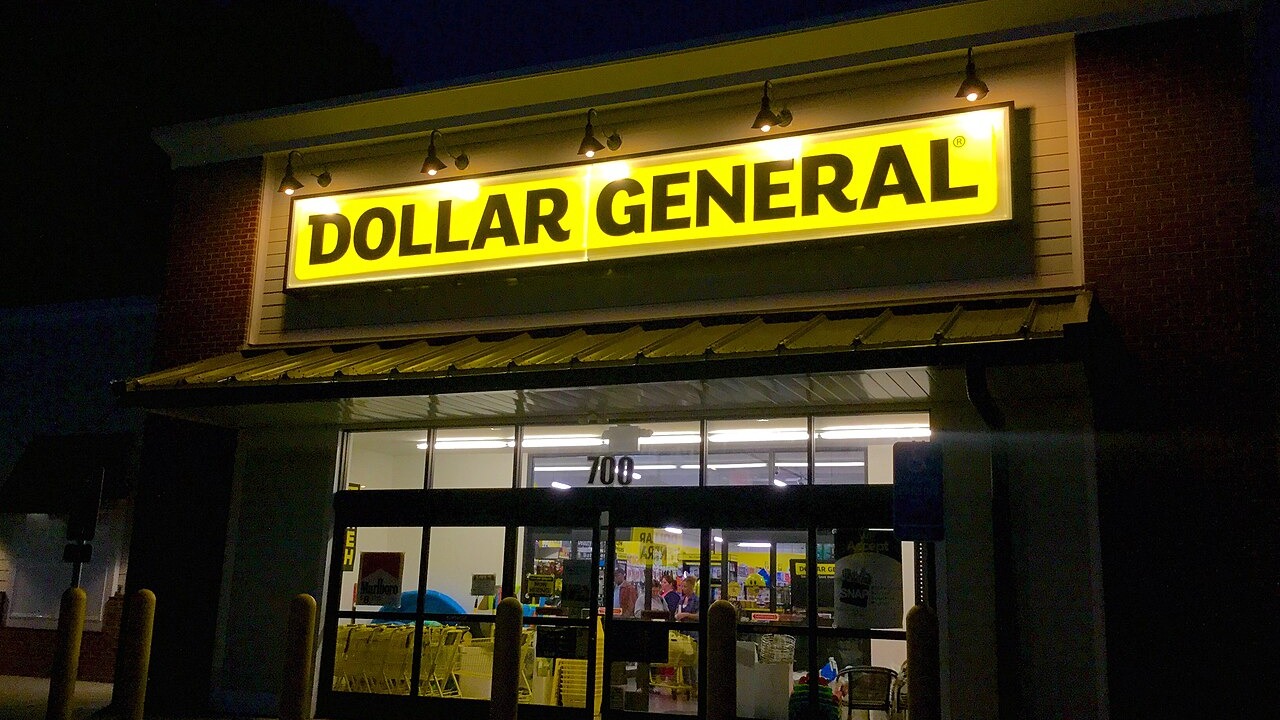
The Federal Trade Commission and 20 states sued Dollar General on Oct. 26, accusing the discount chain of charging customers more at the register than the prices shown on its shelves, price tags and advertisements. The complaint, filed in federal court in the Middle District of Tennessee, covers a chain of more than 21,000 stores. Everything in it is an allegation that a judge will have to decide.
The agency’s announcement says Dollar General has done this “routinely,” for years, and that the company knew about the problem and did not fix it. Dollar General has not been found liable for anything, and no penalty, refund or settlement exists yet.
What an overcharge costs a household on a tight budget
A shelf-price mismatch is easy to miss. A few cents on a cleaning product, a dollar on a canned good, a higher price on a medication-adjacent item: none of it looks like much on a single receipt. On a fixed income, where a monthly grocery and household budget is set to the dollar, small differences repeated every trip add up to real money over a year.
Shoppers at any of the chain’s stores, including the ones in the 20 plaintiff states and the many in states that did not join, are the people the question lands on. Anyone who buys at Dollar General on Social Security, a pension or SNAP benefits has a direct stake in whether the number on the tag is the number charged. The FTC’s complaint does not say every purchase at every store was wrong; it alleges a pattern.
The practical step is the same whether or not the lawsuit succeeds. Before leaving the register, compare the total against the tags on the items. After the trip, compare the receipt line by line against what was on the shelf. A photo of the shelf tag taken before the item goes into the cart is the simplest record, because the tag is the evidence if the price rings up higher.
Retirement deadlines, in your inbox: Miss an enrollment or claim deadline and the money can be gone. Join the Retirement Money Brief and we’ll send you our Scam & Identity-Theft Action Card as a welcome gift.
Get the Brief + the scam action card →
We may earn a commission from links on this page.
What the FTC says Dollar General did
According to the FTC’s press release, the complaint alleges that Dollar General mislabeled prices and rang up more at the register than the amount displayed. The agency says the company received “tens of thousands of complaints” from customers and still did not adopt policies adequate to correct the problem. The Commission authorized staff to file by a vote of 2-0.
The agency frames the harm in terms of who shops there. The release says Dollar General’s low prices are “critical to its low- and fixed-income customers who rely on the accuracy of Dollar General’s pricing.” That is the FTC’s description of the chain’s customer base and why accurate shelf tags matter, and it is where the “low- and fixed-income” language in the case comes from.
Christopher Mufarrige, director of the FTC’s Bureau of Consumer Protection, said in the release that Dollar General “has betrayed the trust of millions of American consumers.” He added that the action “underscores the agency’s commitment to lowering costs for consumers.”
Which states joined and what they want
The 20 states named in the case are Alabama, Arizona, Arkansas, California, Connecticut, Florida, Illinois, Iowa, Kansas, Louisiana, Michigan, Mississippi, Nebraska, New Jersey, North Carolina, Ohio, Oklahoma, Tennessee, Utah and Wisconsin. The FTC’s case page shows California participating through the Los Angeles County Counsel and Utah through its Division of Consumer Protection.
The case page lists the filing as a complaint for a permanent injunction, a monetary judgment, civil penalties and other relief. It puts no dollar figure on any of those, and it describes the cost to consumers only as “millions of dollars.” How much anyone could eventually recover, and whether shoppers would be repaid at all, is not stated anywhere in the FTC’s materials.
The complaint says the conduct violated the FTC Act, the Gramm-Leach-Bliley Act and state laws. The case is listed as pending.
What to do at the register and after
If a price rings up higher than the tag, the point to raise is at the register, before paying. Ask the cashier to show the shelf price, ask for a manager if the system will not correct it, and keep the receipt either way. Corrections made on the spot are the fastest remedy, and they leave a record of the problem.
If the overcharge is found later, take the receipt and the photo back to the store and ask for the difference. If the store refuses or the problem repeats, the FTC takes reports at reportfraud.ftc.gov, which is free. Reports are how patterns get documented, and the agency cited customer complaints as part of the basis for this case.
A state attorney general’s consumer protection office also takes complaints, which matters for shoppers in states whose officials did not sign on to the lawsuit. Keeping the store number, the date and the item names with each complaint makes it far easier for an investigator to see a pattern.
What happens next in the case
The lawsuit is at its first stage. Dollar General will have the chance to respond to the complaint in court, and nothing the plaintiffs allege has been proved. The FTC’s materials do not set out a timetable, and they do not describe any process for shoppers to claim money, so there is nothing to file today to be included in a recovery.
If the court ultimately orders payments to consumers, the FTC typically announces how affected customers can apply. Until then, the receipts and photos kept now are the only proof any individual shopper has of what was charged compared with what was posted.
Does the receipt match the shelf?
A wrong price at one register is a small loss, and the lawsuit offers no refund path yet. The costlier mistake is letting a bad charge stand because the call or the conversation to fix it feels awkward, on a bill that repeats every month.
“101 Phone Scripts to Lower Your Bills” turns that into words on a page: “101 calls, word for word, for every company you pay,” from stores and phone companies to banks. It also covers “subscriptions and pharmacy: cancel, pause, generics, cash prices,” and ends with a call log that records who was spoken to, what was saved and the reference number.
Get the scripts that fix a wrong charge, word for word →
This article was produced with AI assistance and edited for accuracy against the sources linked above.